In recent days, xinhong base production has been announced, with the initial sale of sierra sea no. 2a in west china, hong kong, receiving approximately 42,000 registrations of intent to buy a house, 213 men in the form of purchase orders, oversubscribed more than 196 times, and updated the august 2023 record of more than 38,000 votes in the oil ponds. The first 213 apartments were sold on 10 january, and were sold on the same day。
In fact, the heat in the hong kong building has continued to spread from 2025 to early 2026, and a major push has been behind the continuing effects of a comprehensive “spicy” policy (i. E., the removal of all building “spicy tricks”, including the elimination of the buyer's stamp duty, the new home stamp tax and additional stamp duty). According to chen yongjie, vice-president of the asia-pacific region and president of the housing department, hong kong's first-hand private housing stock was 20,000 in 2025, a new “first-hand example”。
Against this background, the industry is generally optimistic about the developments in the hong kong building city in 2026 and believes that it has entered a more healthy and sustainable comprehensive up-to-date cycle。
It's been a year since the number of second-hand deals went up
Two years ago, hong kong house city was completely “sick”. After a period of adaptation, a clear return to warming was finally achieved in 2025。
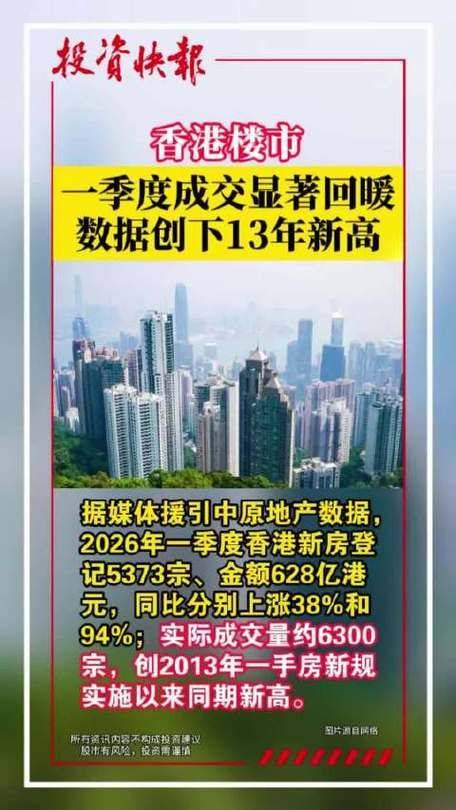
According to data from the land registry of the hksar government, the total number of contracts for the purchase and sale of buildings in hong kong during the year 2025 (including residential, parking and commercial and storeyards) reached 80702, a four-year increase. Of these, 62,832 residential buildings were registered for sale, with a total value of hk$ 51. 9830 billion, an increase of 18. 3 per cent and 14. 4 per cent, respectively。
According to chen yongjie, the hong kong building city has recovered, with the whole city warming in 2025, with the number of second-hand deals rising in recent years. In 2025, 20,000 private homes were traded in one hand, which was a new example. The china-ukrainian leadership index (ccl), which reflects second-hand building prices, also rebounded, with 144. 11 points reported in 2025, increasing by 4. 70 per cent annually, reversing the decline of the last three years, and for the first time since 2021, double-track increases in building prices and rents。
As a relative of the front-line market, wu king xin, senior regional business manager for the south-west sector of china's original property, was deeply touched by the return of the city to warmth over the past year. He indicated that during the past year there had been a surge in turnover in hong kong, with the hong kong district recording about 11,000 deals in 2025, an increase of about 30 per cent over 2024, reflecting a shift in market activity。
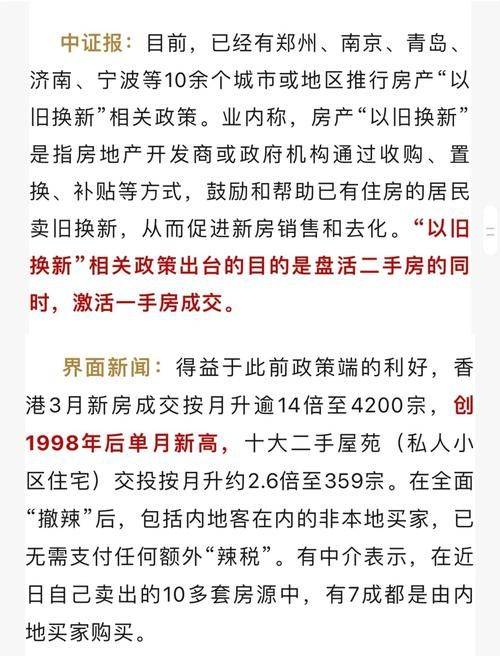
However, wu king xinxing also noted that there were significant differences in the structure of transactions between regions. In the south-west region of hong kong, for example, the deal is dominated by the first-hand building. Owing mainly to the large stock of first-hand goods, the development of agreed prices has been more restrained, as in the case of early morning on the southern coast of hong kong, where prices were raised in mid-2025, with the entry price starting at $8. 5 million for two rooms, making it the first flatest new schedule in the southern coast of hong kong. By contrast, as the market warms and the building prices fall, second-hand owners generally narrow their bargaining space, resulting in prices less attractive than new ones, thus slowing down。
According to wu, the hong kong building is in a “turning position” and buyers generally view the market well for two main reasons: the price index has stabilized, and the rate has been reduced and the rent has remained high. As a result, investors seeking value added from capital, as well as demand-driven users, are actively looking for “dashboards” in the market in order to take advantage of them。
Multiple good-interest factors drive the building back to town. Warm
The ability of the hong kong building city to achieve a substantial return to warming in 2025 was not the result of a single factor, but rather of a combination of multiple good and good factors。
According to chen yongjie, the central cause of the rise in the city's warming is three main aspects: the depreciation of the united states dollar, geopolitical fluctuations and the emergence of physical assets as an ideal shield from risk in the context of the global economy; at the same time, the reduction of interest-rate demand and the creation of a new pattern of rising rental prices; and, in addition, the clear momentum of the economic recovery and the promotion of the wealth effect。
“the price of the hong kong building, which is still more than 20% below its 2021 high, is now at its bottom, with both backward conditions and preservation functions, as compared to the fall in the united states dollar index and an increase of about 60% in gold prices in a year, and is believed to attract investors to take advantage of it.” chen yongjie said。
New patterns in the rental market have also provided important support for the recovery of the building. According to chen yongjie, the rent rate in hong kong continued to be high, with the latest cri return of 3. 56 per cent in september 2025, which was nearly 14 years high. According to china's real estate statistics, 75 per cent of the target for september 2025, at the most recent rate of 3. 25 cents of interest, was to “pay flat” the housing stock, reducing the housing burden and further stimulating the willingness of citizens to repurchase or replace the building。
Chen yongjie further stated that hong kong's most favourable interest rates had returned to their levels prior to the increase in the interest rate cycle, and that the reduction in interest rates had reduced not only the cost of providing the building but also the attractiveness of established stocks, prompting large amounts of idle funds to be diverted from bank deposits to the property market. It is noteworthy that, while the current rent is high, in september 2025 the number of “false rents” and the return above 4 cents decreased on a monthly basis, reflecting the rise in building prices and the gradual recovery of rent increases, which have led to a very rare “rental price rise” in recent years。
The head of the housing marketing department of the china district of first taiping davis, tang hua, also believed that the “equal rent” effect had re-emerged. The decline in mortgage costs, combined with continued rent hikes, has led to a significant improvement in rental ratios for housing, and rental returns for some properties are beginning to exceed holding costs. This fundamental shift, which is attracting funds seeking a steady return from areas such as deposits to the real estate market, has driven the market, particularly small and medium-sized households, to a steady recovery in prices。
In addition to global environmental and leasing market incentives, the local macroeconomic recovery in hong kong has also given impetus to the city. In 2025, the hong kong stock rebounded by over 40 per cent, with a peak of 27,000 points, bringing wealth effects that boosted confidence in the industry; bank deposits totalled $19. 14 trillion at the end of september, an increase of 10. 2 per cent compared to the end of the previous year, and large savings funds were expected to translate into real purchasing power; GDP grew by 3. 8 per cent annually in the third quarter; inflation remained at a moderate level of 1. 2 per cent; and overall merchandise exports rose by 12. 1 per cent annually. “many data indicate that the economic recovery is clear, that per capita income is increasing, and that the `salary-free' environment is superimposed, further stimulating hong kong people to take up their businesses.” chen yongjie said。
Changes in supply and demand relations have supported the recovery of the city from another dimension. Chen yongjie revealed that, over the past two years, hong kong's development agents have moved cautiously and construction has slowed down, making future supply difficult to meet. By the end of 2025, first-hand stocks had been reduced to approximately 19,000 groups and were expected to fall to 18,000 groups in the first quarter of 2026, a new low of more than two and a half years. As the gap between supply and demand continues to widen, developmentists do not need to be dumped at a price, and first-hand pricing will shift to import, prompting buyers to return to the second-hand market, which is expected to be stable in 2026 and higher in second-hand。
In addition to the above factors, the shift in market psychology has become an important driving force in the recovery of the city. According to tanghua, hong kong's market mentality has shifted from waiting to looking for opportunities. On the one hand, residential prices have been profoundly adjusted by 25-30 per cent over their 2021 height, with a strong value appeal; on the other hand, the rapid rebound in the top-class housing market has become the ultimate windbender for the recovery of market confidence, such as the taigu group deepwater bay route 6 project, which has been traded at approximately hk$2. 2 billion at a gross price of hk$147,000 per square foot. This deal reflects not only the long-term confidence in hong kong's core assets in super-high net worth capital, but also the return of top purchasing power。
"spicy" and talent policies attract buyers enter field
Support at the policy level has also provided a critical contribution to the bottom-of-the-house rebound. Chen yongjie stated that the entry threshold for non-local buyers in hong kong had been significantly reduced since 2024, when the government had actively pursued its various talent-raiding policies and liberalized its new capital investor entry scheme (cies). This, together with a number of economic stimulus measures in the interior to support the betterment of the renminbi, has led to the emergence of a “bundling and a weak hong kong dollar” situation and has further strengthened the willingness of mainlanders to establish a business in hong kong。
Tang hua also stressed that the full “scrambling” at the beginning of 2024 was the starting point of the current round of market recovery. This policy has fundamentally removed the barriers to transaction costs that have inhibited markets for many years and has effectively activated the long-pressed local and off-site purchasing power. More crucially, the hksar government's talent-induction programmes (such as the high-care pass scheme) have been successful in infusing the city with continuous, high-quality and incremental demand. These new arrivals are not only a solid underpinning of the leasing market, but also a potential force for future businesses, whose purchasing power is gradually being released, with “one-size-fits-all” and rent-breakers occurring in more than 2025 in more than one region。
In terms of data, chen yongjie points out that in the first 11 months of 2025, the number of “challenges of mandarin” entered the city was about 125,000 (one-and-a-half-hand private homes), an all-time high of $12. 56 billion, which is expected to reach 13. 8 million and 13. 8 billion over the course of the year. The share of such buyers in the market has also risen significantly, from about 16 per cent before the “spicy” to about 25 per cent today. Looking ahead to 2026, it is expected to attract more non-local buyers in an environment where the price of the building is recognized to be bottom-up and where further downside is expected。
Outlook: building prices are projected to increase by about 15 per cent throughout 2026
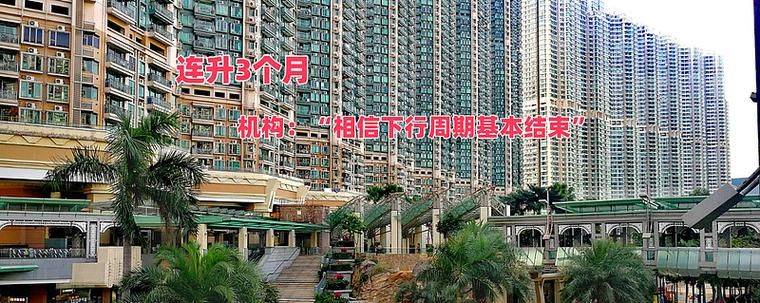
With the rise in floor construction in 2025, the movement of the hong kong building in 2026 became the focus of market attention. There is widespread optimism about the market outlook for the new year。
“the year 2025 marks a turning point for hong kong's housing market to complete construction and establish upward trends. The forces driving the market have been transformed from a simple `policy stimulus' to a `policy interest plus demand growth+ expected improvement' multi-core resonance.” according to tanghua, “looking ahead to 2026, we are clearly optimistic about hong kong's housing market performance and are convinced that the hong kong city has embarked on a new and comprehensive cycle of healthier and more sustainable basics. The recovery in the market is not only a warming of data but also a reaffirmation of the long-term value of hong kong's core assets as an international financial centre.”
Tanghua noted that in 2026, attention could be given to three structural trends — the convergence of rigid demand with investment demand, the re-emergence of the “rent loan” logic, and to new market and land-rich developers. “small and medium-sized units (boardboarding) will continue to be favoured by local first-time owners and new arrivals and are the cornerstone of market transactions. At the same time, as market confidence is restored and demand for asset allocation increases, the turnover of higher total prices is expected to increase, reflecting a gradual return in investment demand.”
On the basis of concrete data projections, chen yongjie believes that the building city will be in the early stages of a rebound in 2026 and that the figures are expected to rebound significantly, with an increase of about 15 per cent projected for the entire year. In terms of turnover, the first-hand market is expected to maintain a high of 20,000. On the second hand, benefiting from the increase in prices and the reduction in interest rates of the first-hand building, it is expected that the turnover will leapfrog to nearly 30 per cent, or 50,000; while the ccl, which reflects the second-hand building price, is expected to rise by 15 to 164 points, the gap remains about 14 per cent from the historical high of 191. 34 points in august 2021。
In addition to building prices, chen yongjie indicated that it was expected that the increase in rent would continue in 2026, resulting in a very rare increase in rental prices in recent years. However, the increase in the price of the building is expected to win rents, which are expected to fall as more people buy the building, and rents are expected to rise by 5 per cent throughout the year, close to the 2025 increase。
Newkyo's shell financial reporter
Editor
Checkmate, janin