Is it the foundation or the foundation
Answering one's friend's question first, the basis is the abbreviation of the “basis”, which by definition is a form of foundation。
If that's what you're asking me, i'm sure you might have a few more questions: whether the mixer, cfg, pip, pip, pip or piping are the foundations? What's the foundation? What's a stake? Let me explain:
1. The concept of foundations and foundations
The basis is the total name of a component that is linked to the upper subject structure and transmits the load of the upper subject structure to the foundation. The shape based on the basis of the foundation can be divided into: the basis of independence, the base of strips, the basis of rafts, the basis of boxes, the basis of pillars, etc。
Ground-based is a pressure-bearing layer of rock that is subject to the base load. Common foundations are rock, natural, manual, etc. The manual base is used manually because of the lack of natural ground base carrying capacity. Depending on the treatment, it can be divided into: solid foundations (hard foundations), refilling foundations, slurry foundations, complex foundations, etc。
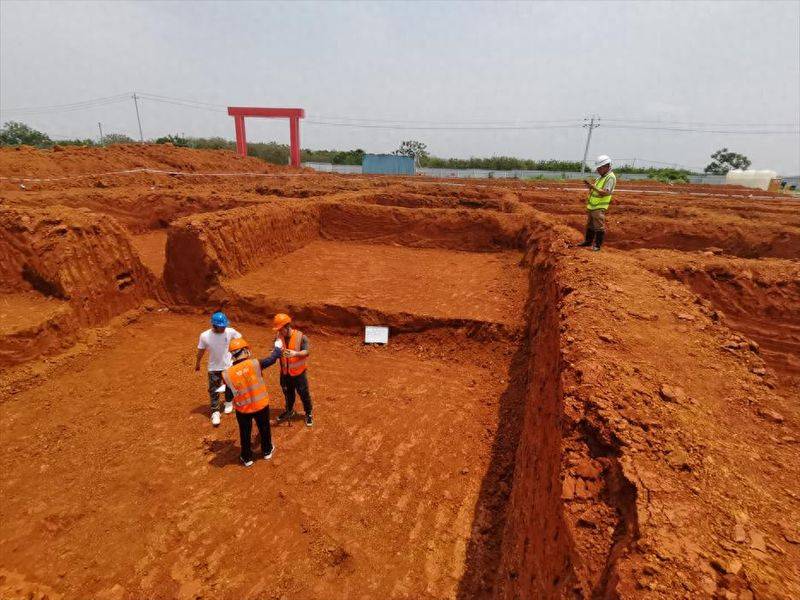
Use of independent, natural ground-based payload testing
If work is carried out in a number of poor-quality locations and the natural foundations cannot withstand the base load, some vertical reinforcements can be inserted into the soil at this time, so that the vertical reinforcements bear the base load together with the surrounding earth. This treatment of foundations is called complex foundations. Depending on the material for vertical reinforcements, complex foundations can be divided into: cfg pillars, pipe pillars, solid concrete stakes, rotor stakes, cement earth mixers, cement earth floors, strong pebbles instead of gravel earth foundations, etc。
2. Concepts of foundations and pillars
The foundation is a short version of the foundation and a deep foundation, which typically includes both the anchor and the pillar. It connects the upper body structure with the pillars (generally the steel bars extend to the columns and the main bars extend to the pillars), with the function of the upper discharge; it transmits the load of the upper structure to the deep rock layer. And the foundation is the foundation。
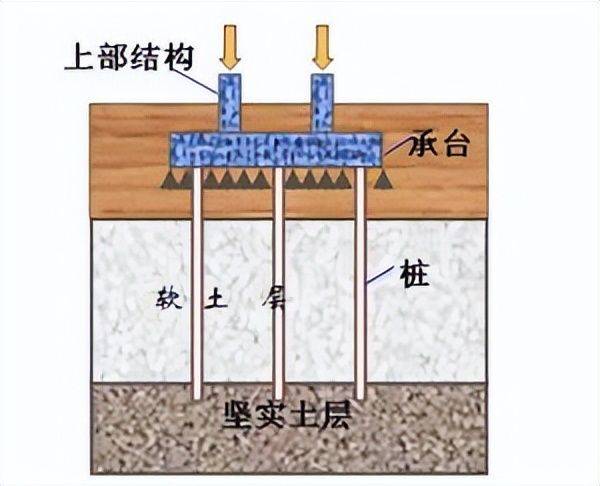
Base map
What needs to be noted here is that vertical reinforcements in complex foundations, such as cfg stakes, pips, solid concrete stakes, etc., do not belong to the foundation; they are merely vertical reinforcements of complex foundations
3. Classification of stakes
So, how do we separate so many
Depending on the material of the stakes, the stakes can be divided into: stakes, steel stakes, concrete stakes (concrete stakes, including steel concrete injections, solid concrete stakes), cfg stakes, concrete stakes (the cement earth mix and high-pressure voltage stakes are cement stakes), etc。
Depending on whether they are prefabricated or not, they can be divided into prefabricated and injection pillars。
Depending on the cross-section shape, it can also be divided into accelerators, pyres, pyres, pyres, etc。
Depending on the masonry process, it may be divided into: a perforation pillar, a static pillar, and a hammer。
Depending on the process by which they are made, the injection stakes may be divided into spin-drilled injections, long spiral injections, punching injections, etc。
When the stakes are used on the base to withstand the level or vertical load, we call them the pillars; when they are used on the slopes or on the base pits to withstand pressure at the soil level (in some cases, soil and water), we call them the pillars; and when they are used on the base pits to stop water (the water curtains), we call them the pillars。
In addition, there are compacted and non-crowded pillars (on the basis of whether or not they have an impact on the ground), friction and end bearings (on the basis of the state of stress)。
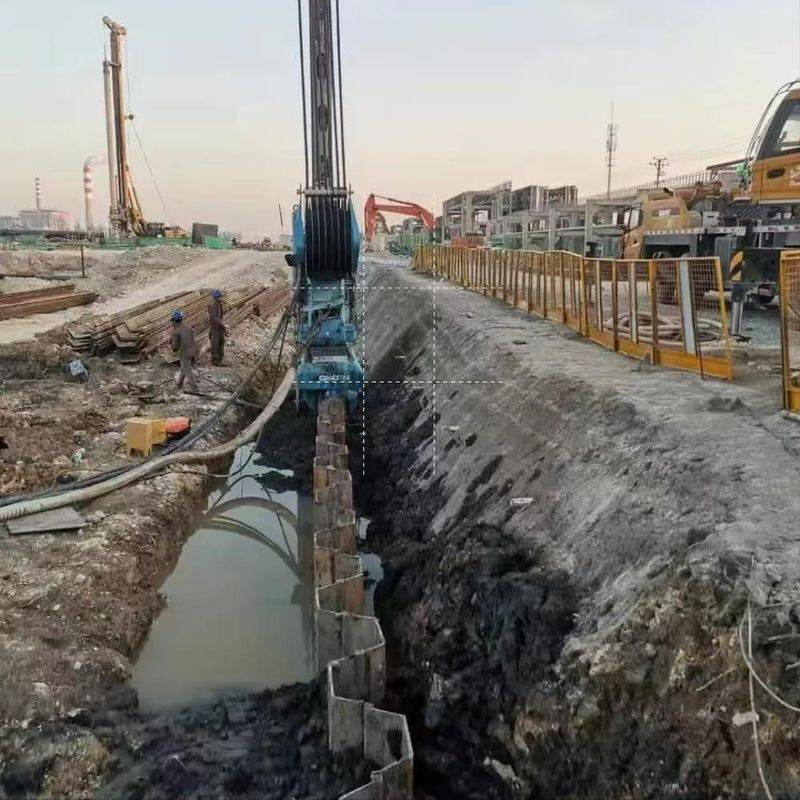
Construction of steel pillars in base pits