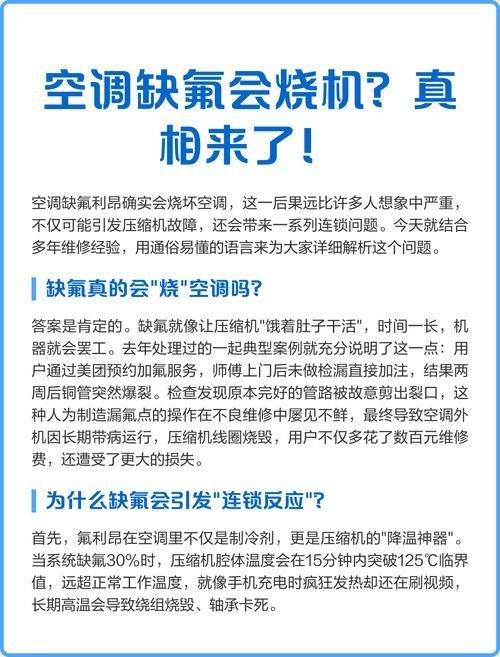
There's a saying, "ten repairs to air conditioners, nine fluorine shortages," that's true. In fact, after the sale, the workers said that most of this was a misleading pattern created by the maintenance industry. What's the secret in here? We'll talk。
First of all, the essence of fluorine deficiency in air conditioning is that the refrigerant is not a consumer at all. If the air conditioner is properly installed and has not suffered much damage, the refrigerant, freon, is cycling in that closed pipe, which, theoretically, does not need fluorine for the rest of its life. How many old "fluorinated" air conditioners can be? Most of them went wrong during the installation, or the pipe broke and freon just leaked out。
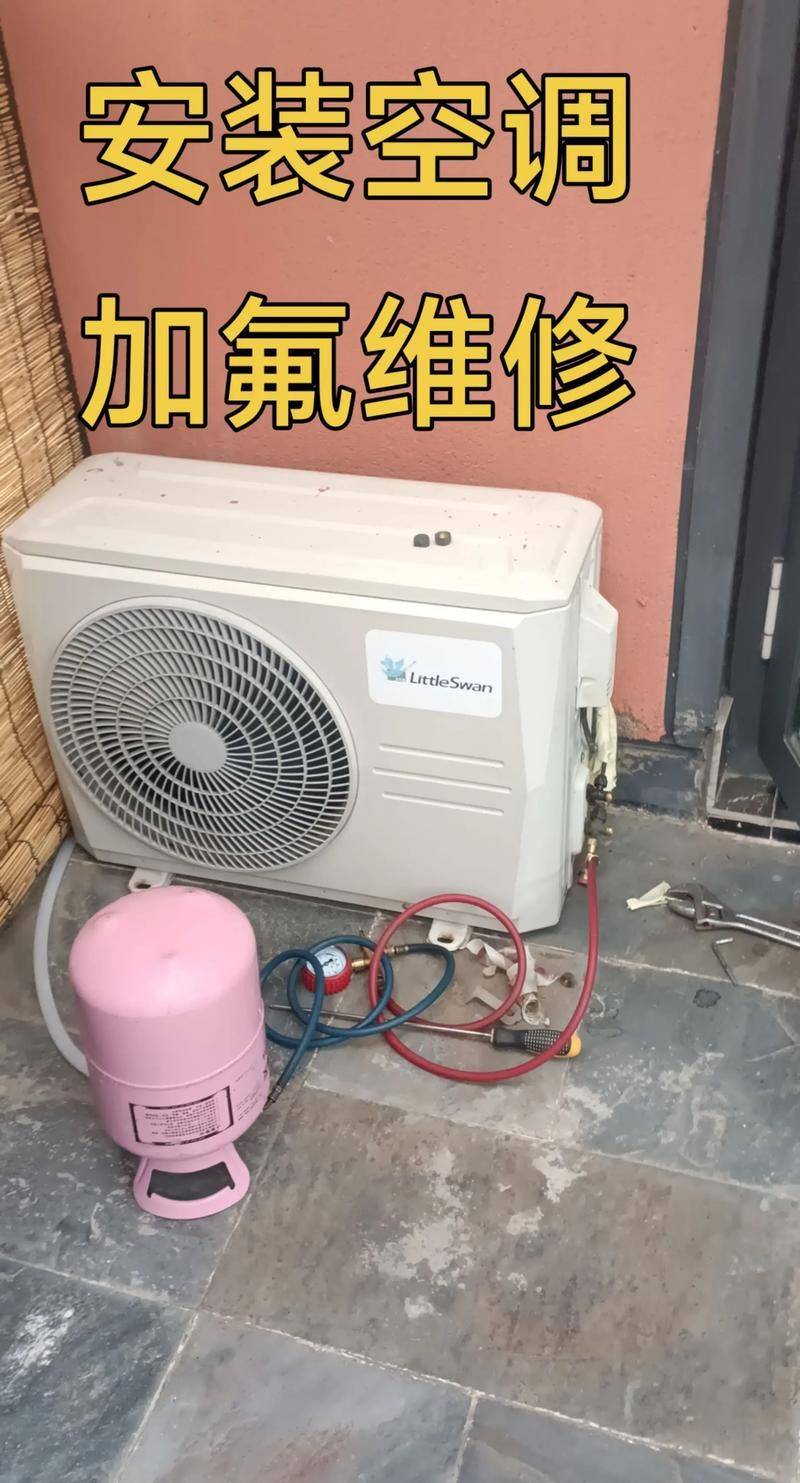
There are two types of cases where fluorine is really needed. One is irregular installation, such as welding without welding and a vacuum that does not meet standards, which would cause freon to leak. The other is the ageing of the pipes, which have worn older air conditioners for more than 10 years, and the copper pipes are corroded and the freon is naturally leaking。
Let's talk about the maintenance trap behind the fluorine shortage. Some maintenance workers use fluorine deficiency as a panacea. The air conditioners are not cool, the noise is high, and they open their mouths and they're fluorinated. But in fact, it's probably just the filtration of dust, the aging of the electric capacitor, or the fan failure. More than that, some maintenance workers deliberately “fluorinated” to create a false fluorine deficiency in order to get users to pay again and again。
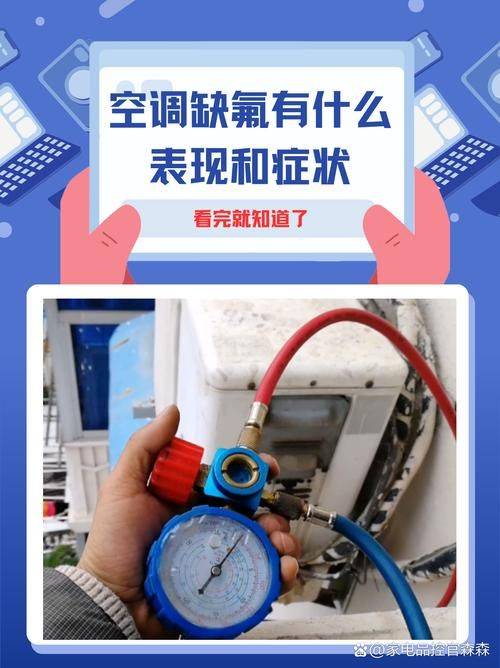
How do we decide if air conditioning is really fluorine? It would be doubtful if the air conditioner had more than two symptoms below. First, the cooling effect is poor and the vent temperature is above 15°c, which is measured when it is turned on. The second is that the offline is always spinning, whether it is an rfa or a variant air conditioner, and that the offline is non-stop. Thirdly, the evaporation unit frosted, and 20 minutes after the start, the interior evaporation unit surface was frozen. Four are abnormal exterior valves, rough valves, low-pressure valve frosts, fine valves, dry high-pressure valves, no ice at all. Five is the decrease in condensed water, and when it's cooled, there's not much condensed out of the outdoors. But be careful, if it's just a symptom, like slow cooling, it's probably a filter block, or it's too hot to check out。
I'll give you a few ways to fix the pit. In the first place, it is said that fluorine is added blindly, and that maintenance workers must produce test data, with pressure gauge readings ranging from 4. 5 to 5. 5 and combined currents and voltage. Second, check for simple malfunctions, clean the filter, see the capacitor and fan, which is much less expensive than fluorine. Then, after the regular sale has been chosen as much as possible, roadside maintenance is particularly easy to “lightly ill” and official sales are relatively regular. Finally, if the air conditioner is not fluorinated after the transfer or removal of the tube, the responsibility of the builder is to see if the fluorine is confiscated or the vacuum is not filled。
It is also important to note that evaporation or condenser frost may not be fluorine-deficit, but may have been damaged by equipment piercing, at a time when fluorine is useless, and an assessment of maintenance costs has to be made, and for a number of times, it has been suggested that new air conditioners be replaced directly。
In general, normal air conditioners are free of fluorine for the rest of their lives, and frequent “fluorine shortages” are mostly maintenance traps, or problems from installation. Our users need to learn to do a basic check to figure out what's going on。