Yuto, alias fujita, juto, yellow ring. They are legumes, vives, a kind of entangled entanglement plant. The dry skin is gray and unbreakable; the spring flower, the chrysanthemum, the chrysanthemum or the dark purple, is beautiful。
Vegetables are warm and temperate and are highly adaptable to the growing environment. The yangtze river basin, south of the producing river, and shaanxi, henan, guangxi, guizhou, yunnan. Civilian purple flowers or water crumbs, or covered with fried flour, making fragrances such as “twilight loaf” and “twilight loaf”。
Morphological characteristics: vives are sprouted for a total of 15 to 30 cm long and 8 to 10 cm long, with a laced axle of white soft hair; croaked cape, early drop; flowers are 2 to 2. 5 cm long, aromatic; flowers are fine, 2 to 3 cm long; flowers are cups are 5 to 6 mm long, 7 to 8 mm wide, covered by fine acupuncture, two teeth very blunt above and three egg-like triangles below
The tiara, 2 teeth above, 3 egg triangles below; the tiara, purple, flag petals, round, a little dimpled first end, flowers blooming and turning backwards, 2 tiaras in the base, wing petals, the base circle, the shorter winged petals of the dragon, the broad scab shape, the wiring of the sub-room, covered with fuzzy hair, the husk without hair, the upper bend, the embryo 6-8。
Vegetable saples, 10-15 centimetres long, 1. 5-2 centimetres wide, fuzzy, undefended branches, seeds 1-3 grains; seeds brown, radiant, round, 1. 5 centimetres wide, flat. Yuto's flower period was mid-april to early may, and the fruit period was may-august。
Cultivation: the vives are warm and temperate, are climate- and soil-resilient, are colder, are resistant to water and wet and poor soil, are radiant, and are more resistant to shade. It is thick and well drained, and it is most appropriate to plant it in a place where the wind is safe. It's deep, shallow, impotent. Grow faster and live long。
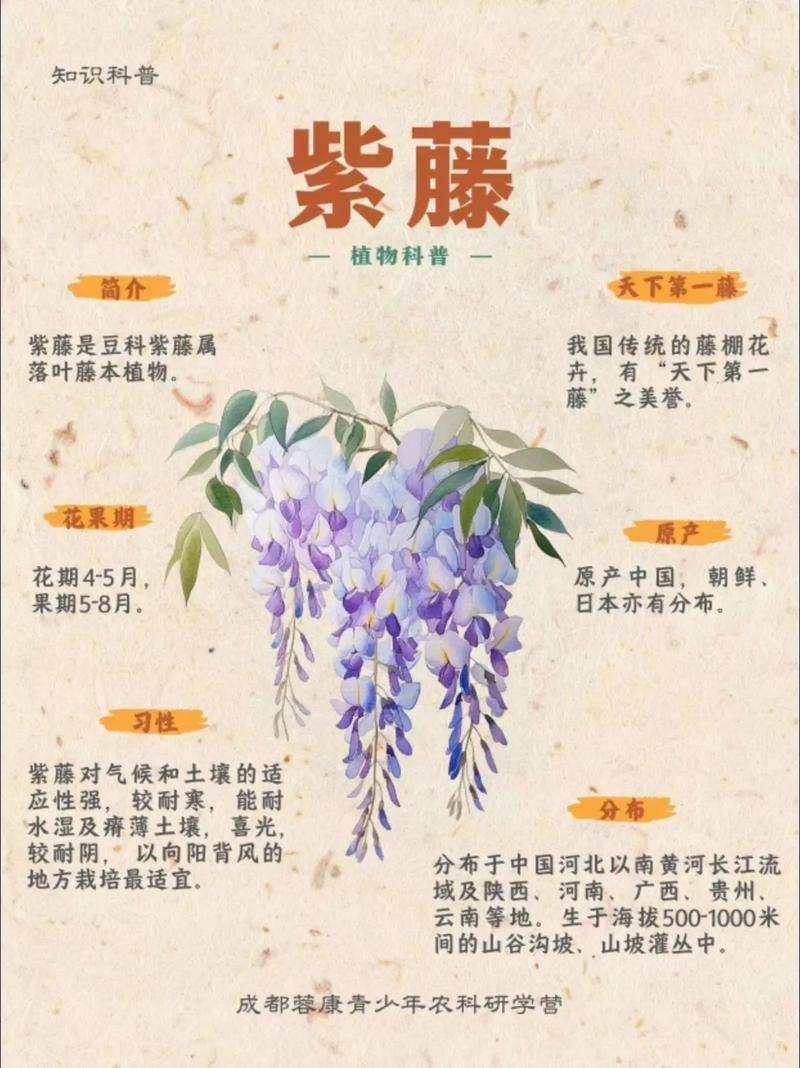
The entanglement is strong and it has a heel effect on other plants. March, april, flowers, 20-80 butterflies per axle. It is wild or cultivated, roots, seeds, glycerine, microtemperature and small poisons. The bark of the tree contains well-defined species, the flower contains volatile oil, the leaf contains gold freckle alkaline, etc。
The technology of vito cultivation
Cultivation: the vigor must be mounted before planting, and the thick branches must be attached to them so that they can climb along them. Because of the long life of the vigor and the thickness of the leaves, shelf materials must be strong and durable. When the larvae is first planted, the branches do not form buds, and the peanut buds are not later。
If planted for several years, there are still no flowers, either because the trees are too strong and the leaves are too many or because the trees are weak to accumulate nutrients. The former uses partial root cutting and foliage, while the latter produces flowers by adding fertilizer. Fertilizers should be applied with appropriate additional potassium fertilizer. In the long run, fattening is generally two to three times, and when flowers bloom, the central branches can be short-lived by five to six buds, and the weak branches can be cut off to facilitate their formation。
In march, there were flowers in april, with 20 to 80 butterflies per axle. The radiant sun, a little shade. Because the vive is the plant of the daefu, in order for it to be productive, there is usually a set of sheds for cultivation. There are also smaller varieties and varieties of vives that can be used as pellets or for the production of pelvis。
Field management
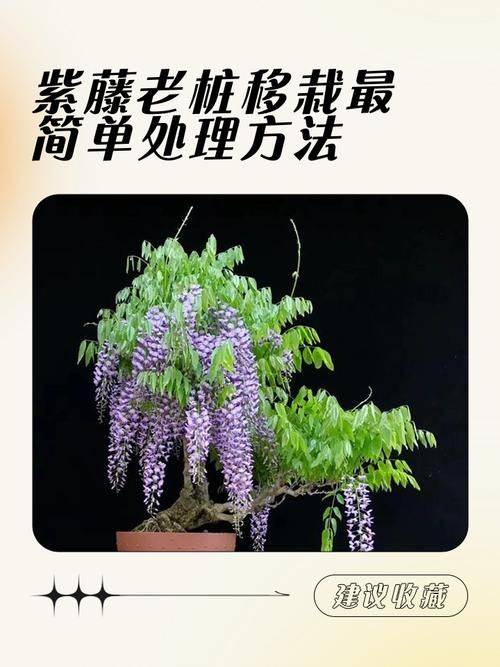
Watering: the root roots of the vives are deep, so they are strong in drought resistance, but they prefer wet soil, but they cannot be in water, or they will rot。
Fertilizers: the need is largely met by the application of 2 to 3 times of compound fertilisation in the year. Nitrogen fertilizer, calcium phosphate, etc. Can be applied before the bud. Two or three times during growth, with manure。
Soils: the main roots of the vivine are so deep that the areas under cultivation need to be thick. The vives are infertile, but the fertile soil is more favourable to growth. The vitro is also highly alkaline to soil. High aridity with deep, fertile soil and good drainage should be chosen, with excessive humidity and decay。
Reproduction: the vives can be produced by adhesion, barbing, seeding, grafting, splitting, etc. In order to preserve the beauty of the tree, the pelvis shall control the planting of fat water so that it does not grow too big and strengthen the trim and heart. When smoking about 15 centimetres per year, the heart should be removed once and the flower can be recut once。
Fertilisation: the vigor is of a strong root nature, so it is advisable to dig as many sides as possible for transplantation and bring land。
Shearing: the time of trimping is appropriate during hibernation, when the branches can be evenly distributed by thinning and artificial pull. In order to boost the abundance of flowers, it is also necessary, in accordance with their plentiful nature, to trim them rationally, because of the strength of the branch of the vine, the graft of the leaf, which was born in a single year, and the drying of the branches, so that the new branches that were born in the same year are retrenched, cutting by one third to one half, and the thin branches and the dead branches are cut out。
Muto's garden use
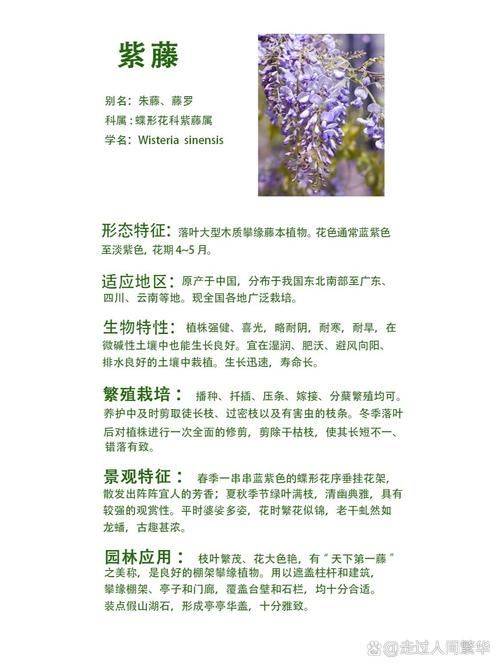
Seen value: this chinese plant has grown from time immemorial into a garden garb, with flowers on its first leaf, and its ears sprouted with fresh leaves. The vives, also known as vines and vines, are excellent vegetative plants, which are generally used for gardening, spring purified, non-interesting, unique styles and common use of basin viewing。
The vives are long-lived tree species, popularly grown, grown and grown, with many flowers, a string of bouquets hanging between the vines and vines, and long, thin berries, which have been the subject of poems by chinese people since ancient times. In the courtyard, it is used to climb around the sheds, to make a garden, or to climb around the dead wood, with the intention of life。
It can also be a pretentious precipice that can be placed on a few tall, tops of the bookstores, full of trees, with old slants and no rhymes. When the vine blooms, it will produce fruit in the form of a soybean, and it will hang in the branches. Sometimes the flowers will bloom again in late summer and early autumn. And the ears of flowers, and the sheaves, are made fun of each other under green leaves, like green leaves。
In general, pelvis should be cut in time to avoid nutritional depletion. Vegetables, which are left behind, may adjust the layout of branches during their hibernation in conjunction with trim. The long life of the vives and their management are extensive, provided that there is sufficient sunlight, proper water fattening and the year-to-year luxuries are preserved。
Environmental values: the vives are relatively resistant to harmful gases such as sulphur dioxide and hydrogen oxide, are adsorptive to air dust and have been widely applied in greening, especially in stereogreening. It not only achieves greening and beautification but also acts as anaerobic, cooling, dust reduction and noise reduction。