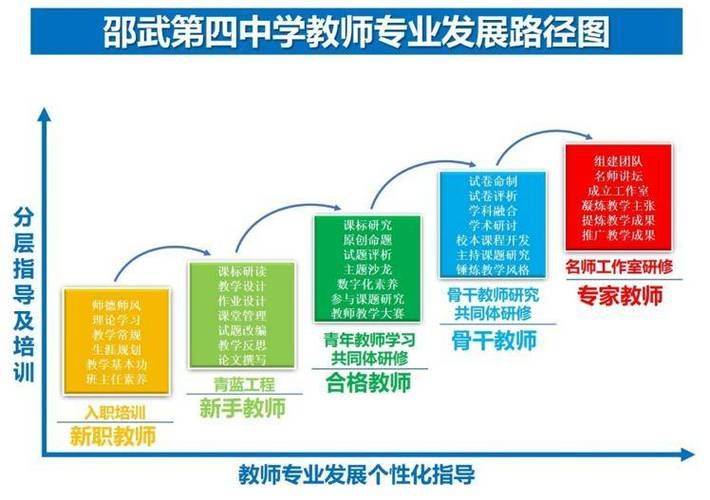
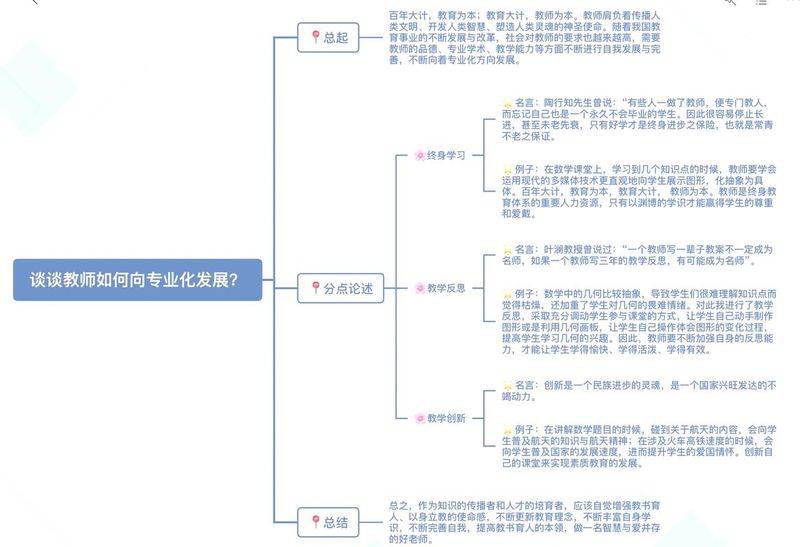
The era of professionalization of teachers, a necessary requirement for socio-economic and educational development, “as long as people with knowledge are able to be teachers”, is long gone. In the fast-tracks leading to the professionalization of teachers, the professional philosophy, expertise and competence of teachers are constantly being updated, which requires teachers to improve their knowledge structure in four areas: knowledge of the general, the qualitative, the conditional and the practical。
General knowledge: the great roots of professional growth of teachers. General knowledge refers primarily to the cultural foundations and perspectives of teachers, including relevant knowledge and theories in the social sciences, natural sciences and the humanities. This knowledge is the background to the professional development of teachers and is the bedrock of their professional growth。
Despite the increasing subdivision of current disciplines, “interdisciplinary teaching” became the basic requirement for the 2022 edition of the new curriculum and teachers should properly break down professional barriers: whether it is a language teacher or not, we should have some books, a little poetry and a little humanism; whether it is a science teacher or not, we should at least have some knowledge of the scientific processes that affect humanity; whether it is a history teacher or not, we should travel through the good intellectual achievements of human history... “to read history is wise, to read poetry, to read poetry, to make mathematics sound, to be deeply scientific, to be ethical and to be ethical, to be legitimate; to learn is a character”. The words of bacon need to be remembered by teachers of the new age。
Inherent knowledge: becoming an expert in this field of study. Inherent knowledge refers to the expertise of the teaching section of the teacher, which is the basis for the teacher's competence in teaching. Although the knowledge of the nature of primary and secondary schoolteachers in formal teacher education is well developed, is the “one bowl of water” needed by students sufficient for the majority of teachers, in terms of knowledge alone? What is its “water quality”? There is still a need for self-examination by every teacher. Moreover, as the pace of knowledge renewal accelerates and information channels diversify, teachers need the awareness and ability to learn throughout their lives if they are to become homemakers in this subject area。
Conditional knowledge: helping teachers to move from “drill head down” to “heading up the road”. Conditional knowledge consists mainly of expertise in helping teachers to become aware of their educational subjects, carry out educational teaching activities and carry out educational research. Educational science and psychology are known as “conditional knowledge of teachers to successfully teach”。
Many of these teachers are “innate” inadequate and “innate” undervalued. The teaching of conditional knowledge in the curricula of a number of teacher-training colleges in the country is not sufficiently important, and public courses in teacher-training subjects are taught in specialized faculties, only in teaching sciences, psychology and disciplines, and the knowledge structure of many teaching materials is outdated. After teaching, many of the teachers were busy with “drawing down” and not looking up at the road, and the education theory became “no talk”。
The development of educational practice to a certain level inevitably creates a demand for educational theory, although it is not known to some teachers. When “a chance” comes — reading a classic book of education, reaching out to a famous teacher with a deep theoretical roots, some teachers become aware and even teach life to turn around。
Teachers of the new age must be educated in theory, a process of self-initiation and re-enlightening. Let us remember the words of the soviet educator amonashvili: “if teachers do not feel that they are in harmony with the spirit of great educators such as quamenius, rousseau, pestelozi, ushensky, makalenko, sokhomlinsky and others, they are no good teachers.”
Practical knowledge: the most iconic knowledge of teacher specialization. Practical knowledge is what teachers actually use and demonstrate in teaching practice, and what teachers truly believe in and “practically use” in their daily work. Practical knowledge is often implicit, based on teachers ' personal experience and personal characteristics, in the daily educational context and actions of teachers. Pedagogical wisdom is the subject of practical knowledge of teachers and the wisdom of teachers to make quick decisions in the event of a classroom event. It is difficult for this wisdom to be taught by others or to obtain it from books, but rather to accumulate and develop in the field of long-term personal education。
Practical knowledge is also a unique knowledge of teachers and is the most iconic knowledge of teachers who are professional and irreplaceable. Professor chen, beijing university, stated: “absolutely, teachers have general cultural knowledge similar to that of other cultures, academic knowledge similar to that of academic specialists, educational knowledge similar to that of educational theorists, and their strength lies in their practical knowledge. The degree of recognition or non-acceptance of this advantage is important for determining the social status and function of the group of teachers.”
“teaching is ‘preliminary creation’. In the face of a living and evolving life, we are proud to have practical knowledge on the ground。
Knowledge of generality, nature and condition are three “barrel boards” of the teacher's knowledge structure, any of which is short-walled and becomes a stumbling block to professional development. Practical knowledge, however, is the “iron bars” of the “crumbs”, which can only be internalized into the professional qualities of teachers through the integration of the “crumbs”. The first three areas of knowledge are ultimately at the service of practical knowledge and ultimately influence through classroom practice。
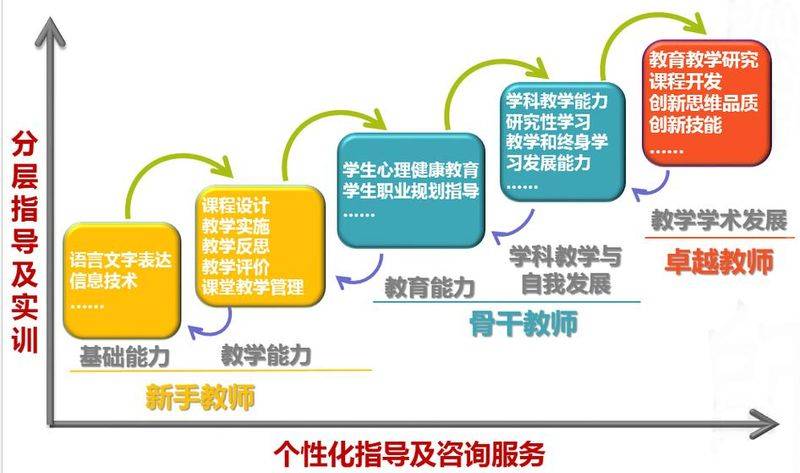
Teachers of the new age should continue to refine their intellectual structures on the path of specialization and gain dignity through professionalism. Teachership with a research mentality and integration of education and research are essential ways for teachers to experience professional well-being。
(by henan educational newspaper)
Chinese teachers, 13th edition, 2023