Drownproof. Take it easy

On 3 july, a 6-year-old boy drowned in a waterbath in fujianfuzhou。
On the night of 5 july, a 20-year-old boy drowned while swimming in the yangtze river。
On 6 july, guangxi guilin, a brother of about 20 years old, unfortunately drowned。
On 7 july, a tourist fell into the sea to pick up his mobile phone and was fortunately rescued。
On 7 july, a man of about 18 years of age, in guangxi nanning, accidentally slipped into the river while he was playing along the river and drowned。
On 12 july, a middle-aged man drowned in the little dragon river in the wetland park of the southern forests of beijing。
I don't know
Swimming and mountain water is a summer pleasure, but at the same time it is painfully high rates of drowning。
According to information provided by the ministry of education, according to the world health organization, in 2021 approximately 300,000 people worldwide died from drowning, 19 per cent of whom were children aged 5-14. According to data from china's maternal mortality monitoring dataset 2021, the country's crude drowning mortality rate for children aged 1 to 4 and 5 to 14 years was 3. 69/100,000 and 3. 06/100,000 respectively, respectively, accounting for 34. 24 per cent and 37. 62 per cent of injury deaths among children in that age group. Drowning is the number one killer in my country who kills children aged 1 to 14。
In order to reduce drowning accidents and avoid unfortunate occurrences, multi-sectoral action has been taken to fabricate water safety nets against drowning。
Sector linkages, science and technology applications, education orientation
Weaver safety net
The ministry of education, together with the ministry of public security, the central political and legal commission, the state council's working committee on women and children, the ministry of civil affairs and the ministry of water, among others, will strengthen synergies and provide guidance to the local authorities on the establishment of a system of joint meetings for the protection of public safety and security in risk areas at the provincial, city and county levels, and on the responsibility of territorial and sectoral authorities at the four levels of the province, county and county levels for the effective prevention and disposal of dangerous casualties such as drowning. The ministry of education directs schools in all regions to focus on groups of students left behind in rural areas, such as children and children with irregular family relationships, to improve the system of care services and to ensure a safe and continuous line during school leave; and to promote the implementation of a warning sign, a life-saving ring, a life-saving rope, a life-saving pole, “four ones”, in rural areas。
Science and technology are widely used in prevention and control. In shandong, zhejiang, jiangxi and yunnan, video surveillance and alarm systems have been installed in areas where children prefer to go and where accidents occur, to provide 24-hour round-the-clock surveillance coverage using the "aid+fast mechanism". In case of water-related risk behaviour, voice warning is immediately provided and the caretakers are informed. The national waters rescue qingdao brigade effectively ensures the safe conduct of rescue operations through the coordination of rescue boats with fire ships and helicopters, underwater robots with divers, drones with surface rescue robots, and supporting decision-making on the 3d panorama。
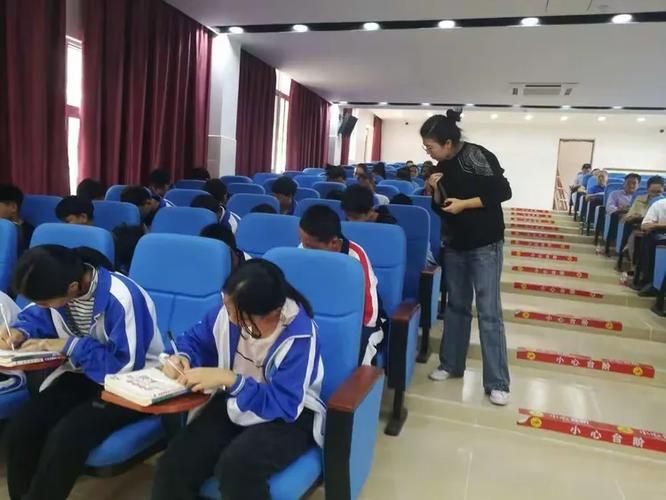
Educational guidance is equally crucial. The ministry of education guides the universal application of the “1530” security education model, which is one minute before school leave, five minutes before school leave and 30 minutes before holiday leave, in order to regularize and make permanent use of the protection against drowning education. During weekends and holidays, students and parents are regularly reminded of safety awareness through text messages, micro-letters, etc. The media also publish ads on the public interest in the prevention of drowning, produce films, short videos, cartoons and posters on the topic of the prevention of drowning, and disseminate information on the prevention of drowning and rescue in a popular manner。
These measures have been effective: in 2023, the number of drowning deaths in primary and secondary schools decreased by 26 per cent, in 2024, by 9 per cent, and in 2024, in jiangxi, yunnan, shandong and chongqing provinces, by more than 35 per cent. Of these, in 2024, the number of under-age students in shandong province who drowned was 40. 7 per cent lower than in the previous year (27), while 12 municipalities and 123 counties (cities and districts) achieved “zero drowning”。
Service window
The moss, the mud, the waves
Different waters are dangerous
What are the risks when it comes to water? What's the danger in different waters? How to prevent drowning in science? How do you use science to save people when they drown? The reporter interviewed water rescue specialists。
Many drowning incidents occur in natural waters. According to zhang jianmin, the head of the wuhan yangtze rescue volunteer team, the depth and temperature of water in many natural waters are difficult to judge。
Different natural waters have different characteristics and different risks。
Rivers — cing tais: zhang jianmin described how it is easy to grow moss on the banks of the rivers and to slide into the water when playing on the banks of the rivers without attention to the conditions below their feet. The river banks of the long moss are slippery and even swimming is not easy to climb。
Ponds, pits — weeds, sludges: the water surface of the ponds appears to be stable, but some ponds have weeds and many bottom sludges. If the waters are not well understood, it is easy to jump in and swim with water and grass or get in the mud。
The seaside — waves, offshore currents, rocks — the leader of the qingdao national waters rescue team, liu hanlin, described the sea as different, with its dangers arising from changing waves, as well as from a powerful offshore stream. When the wind is high, the power of the waves is like a heavy object that can roll people away. Some of the coastal reefs are dense, rocks are slippery, or are filled with sharp oyster shells, making it difficult for those in water to land on their own and making relief difficult。
Onshore, tools, teams
Not blindly
“do not blindly deliver”。
To the extent possible, no hand-to-hand relief, “onshore priority, tools priority, teams priority”。
“the drowning people tend to panic and naturally capture everything that can be captured, and the rescuers may be caught dead by the drowning, and may not only fail to save people, but also put themselves in danger.” zhang jianhuan warned。
Liu hanlin reminds: “a common person who is not professionally trained is, in principle, strictly prohibited from carrying out rescue operations.” when a person is found in the water, immediate calls for help should be raised, a rescue call should be made, while the nearest lifeline, ropes or any floating item should be found and thrown to the trapped person, providing him or her with active force to ensure normal breathing。
“there is a real need for rescue by hand, and it is necessary to hold his armpit or one-hand chest from behind the drowning, to use the anti-frog swim or side swim to drag him to shore.” zhang said。
No hand-to-hand relief。
Even if there were more relief workers, no rescue should be carried out in hand. If someone breaks hands, those who enter may drown, causing more casualties。
Clear your nose and nose and help to breathe
Rescue methods after landing
Upon disembarkation, the rescuer may take the following measures。
Clear mouth and nose plugs: let the drowning person head down, open his teeth, and clear his mouth and inside his nose with his finger。
And pour water into the respiratory tract: the saviour kneels half, stows over the abdomen, and lets the strewn head down and slaps back。
Artificial respiration: a quick artificial respiration, combined with an external heart pressure, for drowning with a weak or stopped heart。
Oxygen: if there are medical conditions in the field, strong medication and oxygen can be injected into the drowning population. If the conditions are inadequate, the person who drowns with a hand or a needle shall be stabbed in the middle of the cave。
Take off the coat: if the drowning person wears the coat, take it off as soon as possible, the wet coat will take away thermal energy of the body and cause low temperature injury。
Inhale between peaks, close when waves come. Gas
Drowning in the sea: "silent floating" is the key
Liu hanlin described the “silent drift” as the key to saving lives when drowning in the sea。
1. Hold your breath, relax your body and try to float on your back. The human body itself is subject to a certain amount of buoyancy, and it can be inhaled from the surface with its nose and mouth。
2. Observe the environment, breathe with rhythm, and only breathe in between peaks, when waves come。
3. If it is felt that it is being dragged out into the open sea, it is likely that it will be an offshore flow and that it will not struggle to return to shore. The correct approach would be to follow the offshore flow and move in parallel with the coastline, first away from the control of this “dangerous flow” and then to return to shore。
Liu hamlin reminds us that it is important to go to the beach for a summer vacation and choose a regular sea bath with a professional lifeguard. In the bathhouse, attention is paid to the instructions of the flag of alarm and to receiving alerts for security broadcasts. If an abnormal flow of water is felt in the water, or if there is a physical insufficiency in the water itself, call for immediate help, and do not be tempted to try hard. Unacquainted waters are strictly prohibited from entering the water blindly, and a minor must be accompanied by a guardian in order to be able to go into the water。
A minor remembers six no. Parents do know
They refused to swim wild
The first line of defence against drowning is the fundamental elimination of “field swimming”. Swimming water is used to select regular sites such as swimming pools, beach baths, etc., which are managed by people with lifeguards。
A minor must remember the “six-no” principle against drowning, and adults can also refer to studies
1 no private swimming。
2 do not swim with others without permission。
3 swim without parents or teachers。
4 swimming in waters without safe facilities and without rescue personnel。
5 not swimming in unfamiliar waters。
Not blindly。
In order to ensure the safety of minors, parents are required to be informed
1 know where to go - know where to go。
2 know your companions - know the child and who goes。
3 know what-know what kids do。
4 time of return - know when the child will return。