Source: journal of university studies (human sciences)
No. 7 of 2017
It's transposed from the cultural monument
The sad age of the intellectual world
This time is undoubtedly a great one, both in the history of china and in the history of the world. Since the reform and opening up of the country, china has undergone a great economic and social transformation, even a political one. In economic terms, china jumped from a poor economy in the early 1980s to the second largest economy in the world, transitioning from an almost closed economy to the largest trading power in the world and becoming a leader in a new wave of globalization。
Behind these changes was the transition from the originally planned economy to china's own market economy. As far as social development was concerned, china had managed to lift hundreds of millions of people out of poverty over the years, just as it had been a miracle in the history of the world economy; although there were many poor people, national production per capita was already close to $9,000。
Developments in other areas of society are equally significant, including life expectancy, education, social security, housing, etc. At the political level, the system established after 1949 has weathered challenges and defused crises; china's political system has shown a high degree of resilience and flexibility and has evolved over time。
The great practice of this great era needs to be explained, upgraded, conceptualized and theoretically, in order to create a chinese social science system based on the chinese experience. Clearly, this is the responsibility of the chinese intellectual community. This responsibility could also have contributed to the great era of china's intellectual community, but reality was cruel, and when china became the world's largest experiment with the social science community, it entered an “era of mourning”。
The sad age of knowledge is not simply due to the unprecedented disdain of power, money and the general public for knowledge, but also because knowledge is often used to decorate and become something that has nothing to do with it, because knowledge is always low and should be low. The underlying cause of today's intellectual pessimism lies in the fact that the creators of knowledge themselves have lost their identity of knowledge, that the creators of knowledge have lost their dominant position and have willingly become subordinates to other things。
There are many universities in china and many school holidays every year, but one school day is a humiliation of knowledge. Every school day, no one is proud of the number of politicians and the wealthiest people they have ever had, except to say, that none of the universities have produced a “maestro”. Indeed, today's public forums and even academic seminars organized by universities or research institutions have been designed to invite big-time rich people, and knowledge itself is a minor, non-existent matchmaking。
Without knowledge systems, which are the core of any civilization, it is difficult for any civilization to survive and develop in the world, at best as a site for future archaeologists. From the point of view of knowledge creation, it was the great creation of knowledge that created civilization. In the west, from ancient greece to the modern renaissance to the era of enlightenment, this is a glorious era of knowledge, without which it would be difficult to have the western civilization that people see today. The same is true of china, where the “hundreds of china” of the time of the battle nations went to zhu zhong dynasty and zhong dynasty and zhong dynasty, and to zyang ming dynasty, which forged the core of chinese civilization。
As far as knowledge creators are concerned, knowledge creation has always been an individual act. Although at times it also manifests itself in community knowledge, such as the “hundreds” of the spring and fall war countries, group knowledge is still based on individual knowledge systems, and it is only through consensus among some scholars that community knowledge becomes mutually reinforcing。
At the same time, in the political context of china's “learning and excellence”, knowledge appears to be created by a class of government intellectuals (i. E. “squares”), but it should be noted that the government has never been the subject of knowledge。
This, of course, is not to say that there is no responsibility on the part of governments in the process of knowledge creation, which can create a conducive and effective environment for knowledge creation or hinder its creation. Thus, reflecting on contemporary chinese intellectual pessimism from the subject of knowledge creators, is closer to the nature of things. That is to say, we have to answer the question: “what have our knowledge creators done?”。
A general observation is that, in chinese society, there has been a tradition of “challenging for the dprk, for the city and for the lonely”. Here, for politicians, the term “challenging for the city” is for businessmen, while the term “challenging for loneliness” is for intellectuals. The roots of today's intellectual woes lie in the fact that modern intellectuals have lost their “divorce for their own sake” and have joined in the “chamber for the cause” or “chamber for the city”, and that some intellectuals have become even more arrogant and have become famous。
Controversy in the dynasty. Now, unlike in the past, it was a “learning-by-doing” approach, with the goal of learning from officials and without any boundary between the two. The goal of learning now goes far beyond (at least theoretically) officials and there is a border between them. However, the mindset of “officials” remains strong, and is therefore contested by various disguised means. Of course, there is a great “interest” behind this. The phenomenon of rivalry and the association with the “gospel” is widespread. Today, the most important indicator in the evaluation of think tanks is the command and endorsement for leadership. This can be an indicator, but it is not the only, or even the most important, indicator. Knowledge has its own indicators. If knowledgeers measure the value of their knowledge with these things, it is not only highly alienated, but it is difficult to call it knowledge。

“pay knowledge” and flows
It's the city. This is a novelty for chinese intellectuals. Traditionally, intellectuals and businesses have, in theory, been far away. In terms of identity, intellectuals appear to be high enough not to talk about money easily; at the institutional level, social arrangements such as “men, farmers, workers and businesses” separate intellectuals from business. Of course, at the practical level, the two are often also together. However, the situation is now different. Intellectuals, with their interests at their disposal, and with their money at their disposal, openly go hand in hand with businesses, and industries “bring” a group of intellectuals who speak for themselves and advertise。
A notable example is the real estate industry. China’s real estate has reached such an absurd point that it is not only about real estateers and local governments, but also about a large group of intellectuals who “feed” the industry, as they argue at every step the validity of the government’s real estate market policies, and encourage them, rather than correct them。
In modern societies, intellectuals have found other means to compete for fame, in addition to relations between political power and commercial interests. For example, the competition for “names”, i. E., by branding as well-established “persons”. Research is not impossible for established celebrities but also a means of knowledge production and creation. In china today, however, people are not seriously studying celebrities, but are simply destroying them according to their own needs or those of others。
Like wang yang ming. Wang yang-ming is all of us. He's getting fired. Unfortunately, however, no one is really studying wang yang, and it is foreseeable that if the present situation continues, “moderate” will soon turn into an indecisive religion, which will disturb the hearts of not only people but also people。
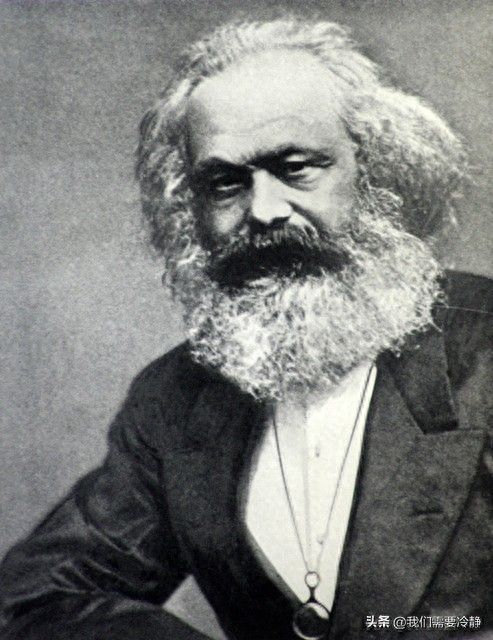
This phenomenon is evident in the so-called “national science”, where the desired national excellence has not appeared, while those “cows, ghosts, snakes, gods” have become widespread. This is true of secondary schools and western schools. Like max. Worldwide, china today has the largest group of marx research institutes and marx researchers. But to read carefully the products of these institutions and scholars, how many people know marx。
In the age of the internet, knowledge is more likely to be “for all”. This is at least in two ways. On the one hand, intellectuals have gone to the “market” through the internet, commodifying themselves and their own knowledge. Of course, it is more to be a “trafficker”, i. E. A person who has no knowledge of his or her own, but a person who sells knowledge. The internet is an effective tool for the dissemination of knowledge, but the “trafficking” and dissemination of knowledge is different, and “trafficking” is simply for the purpose of money。
Look at the increasingly popular “pay-for-knowledge” now and see what future knowledge will become. On the other hand, the internet has contributed to the “academic stage” of “knowledge” (religious superstition, witchcraft, etc.) in all corners of society, and there is a general tendency to become mainstream because the value of knowledge is measured by money and traffic。
The latter are so powerful that the former are brought down. Today's intellectuals are fighting for traffic, and there is no doubt that there is a real correlation between the vagaries and the vagaries. Unfortunately, mainstream media also tend to equate “flow” with social influence。
It's only a byproduct of knowledge
None of the real scholars of this age or beyond is famous and many have paid the price of their intellectual dignity or even their lives. Historically, there have been many examples of intellectuals being forced by power and capital. Only in recent times has freedom of expression been guaranteed. For most scholars, fame is not sought, but merely a by-product of the knowledge they create。
The knowledge that many scholars had produced had not been recognized and accepted by the society at that time and had been impoverished. Those scholars who can distance themselves from fame are the real ones. Subsistence is a good example。
Mao has commented that if he continues to be an official, his articles will not be available; it is precisely because of his expulsion from “official status”, “decentralized labour” that it will be possible to approach social life and to produce literature as good as “libertia”。
Once in the arena of fame, intellectuals lack the imagination of knowledge. How can a knowledge community with no intellectual imagination create knowledge? How can a country that does not create knowledge rise? It is precisely because of the importance of knowledge for the rise of peoples and nations that it comes from all over the world in calling for its creation and innovation. To that end, the state has invested considerable financial resources in the development of key universities, the development of new think tanks and the attraction of top-level talent. But the reality is extremely bad, because the more the state invests, the greater the fame, the greater the fame, the more corrupt the intellectual。
The director of the faculty of economics and management of the university of qinghua, chan quan, said that china had not established a modern university. It may be added that not only are recent universities not established, but they also lag far behind the traditional bookstores system. In fact, it is not the university system itself that matters, either in modern universities or in traditional universities, but in the subjects of universities and colleges, the intellectuals。
With knowledge-seeking intellectuals, these systems are naturally created and developed; in the absence of intellectuals, the best universities and colleges are just residences. Worse still, in the case of voluntary depravity of intellectuals, the better the place, the more the knowledge is humiliated。
The community of knowledge is going down, and knowledge is going down. While predictions are dangerous, one can determine that if this direction is not reversed, then it will soon be faced with a completely “colonial” era of knowledge, an era of total mental retardation. The simple truth is that people can no longer return to a time when tradition does not require that much knowledge, and that knowledge is needed, but because people do not have their own knowledge, they have to follow the “colonial” route, that is, to borrow and create knowledge from other countries。
To a large extent, china has been in this direction since the “five four campaign”, but today's acceleration is not what can be imagined for decades。