The grades are getting closer, and many of the students are caught in the wrong spot: they can only get as many points as they can, because they are hard. In fact, it is not only a competition for knowledge reserves, but also a match for test techniques. Children who are too “quite” will die with little knowledge, no flexibility, and often lose points in the examination; and those who are good at using skills, even if they have a 60-point base, will be able to perform with great skill, with a score of 80 and 90. It's really not empty talk to get 40 or 50 cents for these practical probabilities。
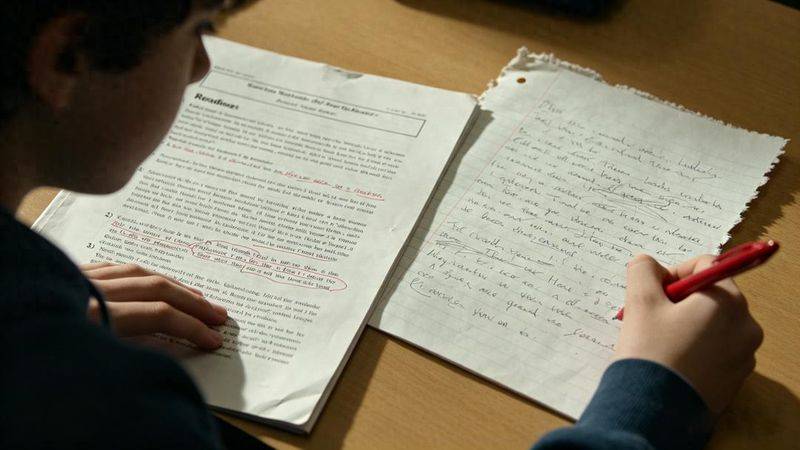
First, speak english — this is the “high-impact area” of many of our poor students. Many of the students felt that they could not even write a full sentence and simply gave up and lost a few points. In fact, it's not as hard as you think, even if your english base is worse, with two small skills, you can easily get a good score and never have to worry about writing again。
The first technique is “to use force” to learn to “to borrow” high sentences from reading materials. In the english-language reading materials, there are many phrases that are structured and express the tunnel, which are free and good for use. Many school masters are using this method: select one or two well-structured and grammatically correct sentences from reading subjects, replace the key words from the sentence, and replace them with content related to the subject of the writing, and use them directly in their writings. This would avoid the writing of sick sentences and allow the writing to appear to be of a level that would be far more efficient than a hard-line sentence。
The second technique is to “smuggle” and precisely capture the points of the examination teacher. The examination period is particularly tight, and teachers do not read the text word for word, often looking at the beginning, at the end and at the structure of the paragraph, and can basically sequence the text. Therefore, the first paragraph of the text must be clearly written, with advanced phrases and brighter words, quickly capturing the teacher's attention and making a good impression; the end must also be concise and responsive, so that even if there were a slight deficiency in the middle, the scores would not be too low。
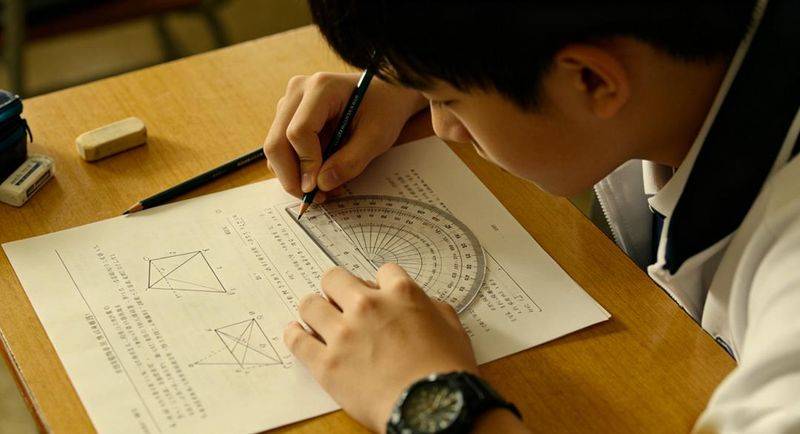
In addition to english, the math test technique can help us get a lot of points, especially when it comes to difficult cases. In math selection, there are often questions of angle and length, and sometimes ideas can't be counted, so don't die, and learn to score with a "dick method" — a direct measuring tool. Of course, a clear error option can be excluded before measurement, for example, it is all numerical, root-coded, can be excluded on the basis of the approximate range given by drying, and can be measured more accurately。

There is also a “subsequence” for mathematical choice, and you must remember: three consecutive questions, and it is impossible to have the same option, and it is not possible to have the abcd sequence. If it turns out that you have chosen the same option three times in a row, it is important that adjustments be checked in a timely manner, and if there is an over-structured ranking of the options, care should be taken to avoid being distracted。
Finally, we would like to remind you that the core of the entrance exam is “the score”, and that it is important to keep the score steady and ensure that it is not lost; that it is never empty, even if it is an option and a relevant formula. Too honest, too rigid, can only miss a lot of chances and use these test-based techniques flexibly to achieve a “curve-over” in the examination field, with a few points more than others。

The examination is a dual match of strength and skill, solid foundation, and practical skills are instrumental. It is to be hoped that the candidates of the 26th and 6th grades will be able to use these skills in a flexible manner to achieve their best performance in the examination, and that they will be able to successfully enter their high school without losing three years of effort and expectation