# introduction to terminology
J:jump, jump
C:cancel, cancel hard
Dash: 44 or 66
Ch: counterhit
Pc: punishcounter, pk
Tc: targetcombo, usually cancels normal skills
Sa: superart, super kill。
Ca: ciaart, ca must kill。
Cross-up: reverse
Reversal: let's do this right away
Forcedknockdown: down to the ground now
Hardknockdown: forced landing
Throw escape: dismantling
Stun: dizzy/hard
Armor break: battery
Crush: wall fall
Lock: lock guard
Reset:
FRame: f, frame
Loop: cyclops, cyclops。
Gas tank: drive gauge, slot d, six。
Fight: drive impact, short di, short di, short di, d, hp+hk, one gram d. This is described below as di or drop。
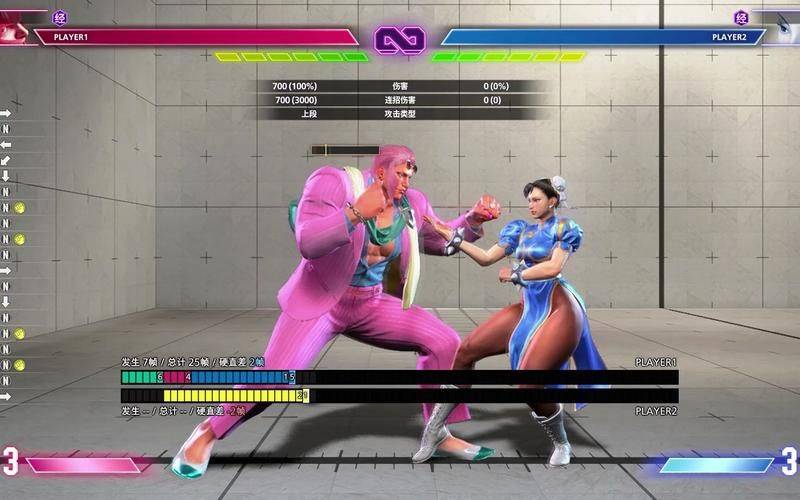
Fight: drive parry, parry, short-form/block. It is described below as a grid that extends out of the general grid and the perfect grid. Do not use dp, which is a common abbreviation for dragons。
(b) normal block: regular parry, with instructions to consume 0. 5 g or more by pressing or holding mp+mk
Perfect shield: perfect parry, command is to press or hold mp+mk before the attack arrives, and consume 0. 5。
Od muster: overdrive, od/ex must kill and consume two. The following will be described as ex-kill。
Fighting: drive rush, dr, short green rush. It is divided into nudous green and green flush cancellations。
Naked green rush: pdr, press mp+mk, i. E. Post-pugger 66, consumes one。
Green scrap cancel: cdr, 66 when the normal technique that can be cancelled is put in, 3 cells consumed。
Fight back: drive reversal, d counter, command 6+hp+hk at pug time, consumption 2 this is described in turn as d。
It's good。
General: counter hit, ch, in the middle of life at the time of the attack or the continuation of the actions of the opponent。
Indeed: punish counter, pcon, hit the other side in the face of his attack or action。
Hegemor: armor, with hegemonic skills, is uninterrupted during the attack. Gon, hegemonic, armour is a different name for something, described here as hegemon。
Oblast: armor break, triggered by a hit or several strokes of anti-heat properties exceeding its hegemonic number。
Forced down: hard knockdown, can only rise in place, and the context is hard-verted。
Immediate fall: forced knockdown, air-killing, air-borne, air-special technology (j2mp for gold), when beaten, will limit the floating space。
Depletion status: burnout, slot d is empty. It can also be called a state of weakness/deficit, which is described in this paper as a state of depletion。
Cancellation: light attacks cancel each other, 2lp>2lp/5lp, 2lk>2lp/5lp etc。
Abdominal abdominal abdominal abdominal abdomen: the effect of the fall of the knee slowly down, partly heavy attack on p-king。
Walls: ordinary ddi hits a near-end opponent, who sets up a wall and can pursue it。
Wall collapse: crush, near-end d. D., effecting abdominal collapse。
Slide: some skills can cause the opponent to slide (roll) and can be pursued。
Common technique: refers to a move by (direction +) button. Common techniques in literature, including special techniques in general。
Special: is a direction + button move, which generally has more properties than usual, such as blow-off, fall-down, medium segment, etc。
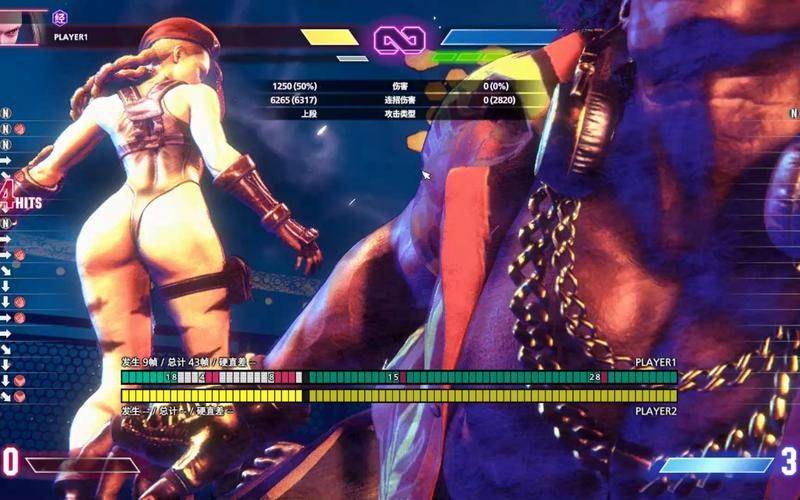
Extinction techniques: the attack technique must be entered with a plural command; the necessity technique is characterized by more properties than normal, special techniques. Extend ex kill。
Superkill: usually, the situation is more complex, more attribute and more powerful than necessity input. Usually, the entire energy cell is consumed. There is a unique name for the different fighting games, known as sa/ca in number six。
Previous attack: attack protected by any ground defence
Middle attack: crouch defensive attack
Next attack: stand-by defense ineffective attack
Note: this is a defensive description of the attack technique and does not confuse it。
Type of assault: three types: strike technique, flyway, throw。
Frames/f:fRame, the unit of time in a combat game, usually the words that appear in the pattern or frame table, meaning 1f = 1/60s. Fight games are locked to 60f。
The concept of occurrence, continuity and acceptance
The time between the preparation of the manoeuvres and the beginning of the attack judgement is known as the time of the attack skill。
The attack was judged to have lasted from the beginning to the end of the period known as the attack skills。
The time between the end of the attack and the free running of the role is called the time of recruitment。
Last 1f and continuing 1f overlaps。
沁: when you're defensive, you press the button。
Dents: ex/sa operation ex-killing not confirmed during defence or attack。
Paradox: use remote means to prevent the closeness of the opponent or limit the scope of his/her actions。
Repression: at the time of the attack, the other side was maintained in a tight defensive position by means of skill sets, and we maintained a favourable offensive state。
Activation: after landing or setting up, multiple attacks are launched。
Sets of routes: fixed methods of suppression and detoxification or performance。
Defeat: breaking the other side's defense or being hit by indefensible tactics。
Confirm: the attack was hit during suppression or interaction, followed by the operation of the subsequent leg. They are prevented from replacing other repressions or actions. Reference is made to confirmation of discrepancies, confirmation of hair waves, etc。
Earmarking: simply speaking, it is not the removal of a straight line from the previous move, but the pledge。
Cancel: in simple terms, remove the hard and straight lines of the previous move, that is, cancel。
Structure: a particular attack posture, designed to be different in character, even if the instructions are the same as those given under normal conditions. The 6-year-old 214-p。
Stole frames: means the use of a back-to-back attack to determine that an opponent has received an additional advantage, prompts the discovery of a frame company, scavengers, etc。
(b) body: the skill itself does not determine the attack, and triggers the attack automatically。
Strike pause: hitstop, when strike/hit, match time is created. The flightway hitstop only exists on the defensive。
Drawback distance: knockback/pushback, defensive retreat distance when hit. The kb will be transferred to the attacker at the edge. The kb of the flying drive only acts as a defense。
Artificial techniques: normally cannot be used alone, and an additional input will be made after a particular move。
(a) an attack is determined: the role is capable of attacking the effective range/distance of the other party when the action is made, and this range is called an attack judgement。
Decided in the attack: also called incriminating, meaning the effective scope of the attack。
Amended value: the injury balance calculation system, which refers primarily to the impact of continuous technology and the association of hit numbers and hands。
Compensation/damping: reset, reset amendment, deliberately not to use knock-down or knock-out bands at the end of a chain, choosing to restart to maximize harm。
Invincible: skills are not defined by attack, usually have no time, the upper part is invincible, the lower part is invincible, is invincible to flight routes, is invincible to attack, is invincible to skill and is completely invincible。
Form f: when a stand-crawl defence is quickly switched, the position is determined to be damaged for a short period of time, when the position is determined to be in the same position。
Middler: different from f, mediumr is a rapid attack as the jump process rises, with some of the broad-type roles that can be directed to the position。
Imperative time: when a superkill is initiated, the picture becomes dark (or close-up animation) and both parties are caught in a hard time not accepting instruction input。
Safe jump: means an offensive technique for our side to defend by jumping at the right time (lower point) and pressing up and holding on to one or four。
Composite input: enter a (part) of other relevant skills at the same time as entering a skill instruction, for the purpose of simplifying instruction input and responding to specific skills。
Faji: faji is divided into various types of defence, faji jump, faji attack, etc., the main purpose of which is to respond to a variety of different means of attack or defence with different time differences. For example, when the defence is down, pull one and pull four; when the defensive space jumps down, pull four and combine the drop; and when the defensive strike/direction is placed one and seven, etc。
Stand back: actions such as pre- and post-motion, (air)dash, jump, aerobic booms, etc., induce the other party to expose the other party to fractures (including direct adverse hardness (e. G., emptiness) and distance disadvantages (e. G., forced into the side or jumped into the other party's non-hostile air technology) or pre-winning actions。
Pre-reading: read first, read the habits of the opponent and prepare in advance the corresponding gestures or actions。
See c: re-reaction and response。
Prefix: after pre-reading the actions of the opponent, a particular move is made, the continuation or other attributes of which are used to make possible the failure (e. G., 66) of the other party's action or the recovery of the action。
V. Prereading or targeting the opponent, taking advantage of the judgement advantage or the time advantage to hit or kill the opponent earlier, taking advantage of the kill advantage, etc。
The difference: when the other side's skill is lost, we're in the middle of it, confirming that we hit the other side。