Open
When we can accurately describe how the curve is changing slowly at one point, the next natural question is:
Since the curve looks like its tangent in part, can we use it instead of a small curve
This idea of “lines instead of curves” is the most critical, bottom-down, unified geometry of calculus. It's got a simple and essential name: small。
Micro-division is not a complex symbol operation, it is not an abstract infinity. It means the most intuitive, orthodox and closeest source: in a very small part, the curve is seen as a straight line, replacing the curve with a tangent。
At the heart of the sixth level of knowledge is a complete, systematic and intuitive understanding of the geometry of the differentials, the expression of algebras, the essence of ideas and the unbreakable unity of relationships between it and the conductor. The content strictly follows the classic geometric and calculus system, speaking only of structure, logic, intuitiveness and origin, and does not involve complex computing and problem solving techniques。
I. Qualifications: fundamental thinking of the human understanding curve
Starting with ancient greek mathematicians, humans have always used the same simplest, most stable and most effective way of thinking in the face of a curve of “irregular, irregular, difficult to calculate” graphics:
Cut the curve into sufficiently small segments, each of which can be approximated as straight lines。
This is not a technique, not a stopgap approach, but a fundamental strategy for dealing with curves in mathematics。
- rounds can be seen as the very short end of the line
- the parabolic line can be seen as a combination of numerous very short tilt segments
- any smooth curve, in small enough places, is almost the same as a straight line。
This idea runs throughout the history of mathematics:
From akimid to cartesian geometry, to newton and lebnitz to calculus, all built on the core idea of ** “locally straight choreography”.**。
The calculus is the product of the strictification, algebraization and geometry of this idea。
Ii. Curves under the microscope: smaller, more straight lines
We already know in level five:
At any point, there is a single tangent。
Now let's take a new look: keep zooming in the curve near the cut。
You'll see a crucial phenomenon:
- when the magnification multiple is small, the curves are clearly curved and the tangents are very different
- growing magnifying multiples, and the curve is flattening
- when magnified to a sufficiently large size, the curves overlap almost with the tangents and the naked eye is indistinguishable。
That's the geometry at the core:
In sufficiently small places, the curve is indistinguishable from its tangent。
This sentence is not a metaphor, it is not an intuitive feeling, but the underlying geometrical nature of the fraction。
It tells us:
The study of the nature of the curve in a very small part can be fully equivalent to the study of the nature of the tangent。
Curves are hard to calculate, straight line is good。
The calibration is a tool to help us complete this transformation。
Iii. Geometrical significance of micro-division: small changes in altitude on the cutting line
In order to be clear, let's start with three basic amounts:
1. Small variations for x: recorded as dx
Geometry: a very, very short horizontal movement on a transverse axis。
2. Real y variations on curve: recorded as Δy
Geometry: how much has been really changed at vertical heights in a small section along the curve。
Y variance on cutline: recorded as dy
Geometry: how much has been changed at vertical heights in the same small segment along the cutting line。
The three were put together, and the real face of the microbes immediately appeared:
Dy, that's the fraction of the function at that point。
It's geometrical: it's a small change of height on the cut-off line。
And what we've just said is "in a straight graph" and translated into geometry:
In a very small part of the world
Approximately replaces real changes in the height of the curve with changes in the height on the tangerine。
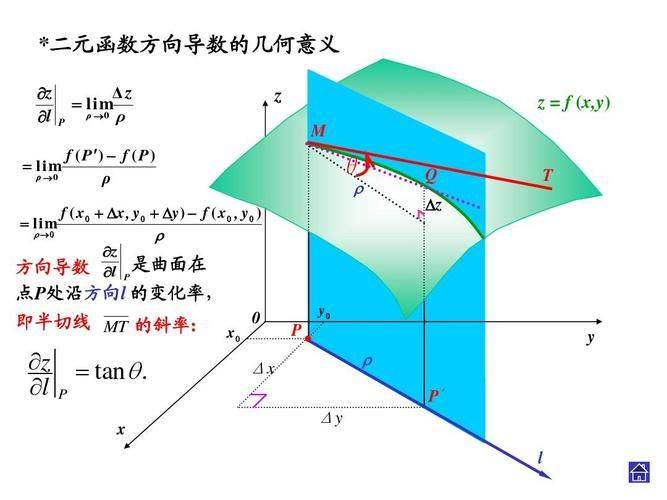
This is the most orthodox, standard, and unambiguous definition of geometry。
There's no abstraction, there's no phantom, there's only graphics and length。
Iv. Unanimous relationship between the coefficient and the calculus: complete access to a map
In five levels of perception, we know:
Thrust f'(x) = tangent slope
What's the slope
Slash = vertical change ÷ horizontal change。
In this very small part of the cut wire:
- horizontal change: dx
- vertical change: dy
- slope: dy/dx
So immediately:
F'(x) = dy / dx
And after the transformation:
Dy = f'(x) dx
That's the basic formula for the calibration。
It's not man-made, it's not a guidance technique
It is the direct result of the definition of slope + the geometry of the tangent。
We've got this relationship in our head:
- latitude: slope of the tangent
- micro-division: small changes in the height of the tangent
- the two are bound together by formula dy = f'(x)dx
A "rate" and a "quantity" differential
(a) the correlation is the margin and the fraction is the fraction
The chain is tilted, the differential is height。
The two have a common source and a two-sided picture of the geometry of the cutting line。
V. Dx and dy nature: not zero, very small lines
In orthodox calculus, dx and dy have very clear and very stable geometry:
- dx: a sufficiently small, but not zero, line length on a long axis
- dy: corresponds to a small height matching the tangent。
They're not genres, they're not phantoms
It's a geometry that can be painted, marked in length, and compared in size。
This is the original understanding of the newton, lebnitz and ora era:
It's a tiny geometric segment。
As long as you see the dx as a small horizontal length
Look at the dy as a small vertical height on the cut
Micro-division will never be abstract, confusing or difficult to understand。
Linear approximation: the most direct use of micro-divisions
Once the geometry of micro-division is established, a powerful tool naturally emerges: linear approximation。
It means very clearly:
Known x changed a little bit
Want to know how much y has changed
You don't have to count curves, you know。
Formula:
= f'(x) dx
It was translated into geometrical whites:
- the true height of the curve changes
- complex curve calculation, poignant, simple straight line calculation
That's the great advantage of the "inverse":
Turning the crooked, hard-to-calculate problem into a straight, good-paying problem。
This is not an additional knowledge point
It's a direct application of microgeometry。
Calculus of calculus: the essence is an extension of a linear nature
All calculus of calculus is not an empty rule
They all come from the conductivity + differential definition dy = f'(x)dx。
For example:
-d(u + v) = du + dv
Geometry: the two tangents can be superimposed。
- (uv) = u dv + v du
Geometry: the tangents of small rectangular area change approximate。
-d(kx) = kdx
Geometry: the straight line is itself, altimeterly。
Each of these differential formulas has a geometric image of the corresponding tangents, superstitions, combinations。
You see formulas, you see graphics
When you see a graphic, you can understand the formula。
That's the power of structure mathematics: rules come from visual, visual support rules。
Viii. Micro-division: `linearization' of curves
We can give one of the most general definitions:
The calibration is to "write" the curve in very small places
Instead of a curve with a tangent
Replace geometry tools for non-linear changes with linear changes。
It completed a critical cognitive upgrading:
- previously: the curve is a curve and the straight line is a straight line, which is completely different
- now: the curve is a straight line at the local level, and the whole world is just a few dozen straight lines。
Global bend, local straightness
It's complicated, it's simple。
And that's the whole new perspective that micro-division gives us。
Ix. Categories and enjoyments: comprehensive
In order not to confuse you for life, we sum up in the clearest and most concise structure:
Introduction f'(x)
Geometry: tangent slope
- meaning: change slowly
- form: margin, ratio
2. Micro-division
Geometry: small change in the height of the tangent
Meaning: how much has changed
- form: length, segment
3. Relationship
Dy = f'(x) dx
Just remember:
Slash, pass, height, calibration
You'll never mess up。
X. Points in the whole math system
Level 6 awareness brings us to the center of calculus:
- level 1: number of ↔ length
- level 2: equivalent ↔ graphics
- level three: coordinates, collines, position
- level four: function ↔ curve
- level five: conductor, ↔, tangerine tilt
- level six: calibration, platinum, small height of the tangent
A complete, continuous and unbreakable logical chain has been formed:
From static numbers and shapes to dynamic curves
Then to local variations, then to local pull。
It's not the end
It is a key bridge between the conductor (local variation) and the score (collective accumulation)。
Micro-responsible: cut the curve and turn it into a small line。
The points are responsible: add up the fraction line and restore the whole。
All the time
Composes the perfect symmetric structure of calculus。
Summary of the core structure of levels of knowledge
The sixth degree of cognition revolves around the geometrical nature of the fraction, with all elements condensed into a very simple structure:
1. The fundamental thinking in dealing with the curve: local inverse。
2. Curves in sufficiently small places to coincide almost with the tangent。
Dx: very small horizontal segment; dy: very small altitude change on the tangent。
Dy is the fraction of the function at that point and is a pure geometry。
Harmonizing formulas for differentials and lead numbers: dy = f'(x)dx。
6. The calibration is the tilt of the tangent and the differential is the change in the height of the tangent。
7. The central role of micro-divisions: to bring the curve straight in part and to simplify the calculation。
8. Micro-division is the key link between the chain and the score。
With the sixth degree of knowledge, you really have the microspirit of calculus:
A complex curve can be broken into simple straight segments
Harder non-linear issues can become linear in part。
Xii. Level vi cognitives. Conclusion
Through the sixth level of cognitive learning, we have accomplished one of the most critical aspects of calculus:
The curves are bent again, and they are straight in part
If the world is more complex, it's simple to open up。
It's the mathematical expression of the idea。
It allows us to face the issues of bend, change and non-linearity without fear or confusion, but with a set of stable, intuitive and rigorous tools on which to rely。
By this point, we've reached the whole main line of "number-operate-equip-coordinate-function-conductive-micro"。
The microworld is completely clear
The next step is to move to the macro level, towards a world of accumulation, aggregate, aggregate, size and volume。
And the next part, we're going to go into seven levels of cognition: points -- the area that's accumulated
From “to cut” to “to pull together”, from “local” to “collective”, to complete the other half day of calculus construction。
I'll see you at the seventh level。