


For countries in east asia such as china and japan, el niño is prone to warm winters. The southern part of china is prone to heavy rains and floods, while the northern part is prone to high temperatures and droughts. Extreme weather is more dangerous than simple temperature changes。
Causes
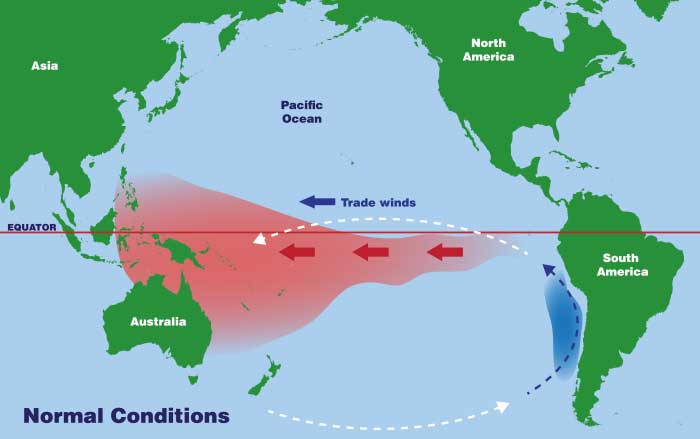
First of all, we need to understand a wind called ‘trade wind’, also known as trade winds, that push warm water from east to west in their direction to the west, such as asia and oceania, leading to warm water piles in the west. On the other hand, the oceans around south and central america, as warm water is pushed away, cold water in the depths is pulled up, and the process in the oceans is called upflow, or upwelling。
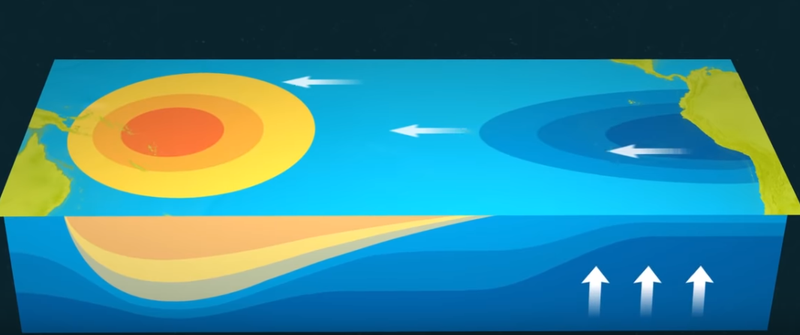
Image from google
At the time of el niño, warming in the west bank of south america replaced cold currents, culminating in an el niño el niño phenomenon, with lower upwelling currents on the eastern coast of the pacific near the equator and an increase in equatorial reverses. In the wake of el niño, indonesia, the philippines and northern australia in the west bank in the ocean experienced dry rains and even droughts, while precipitation in the western part of south america on the east coast of the ocean increased in peru and in the northern part of chile and even floods。
Frequency of occurrence
The el niño phenomenon usually occurs approximately every five years and lasts from 12 to 18 months. However, there are no scientific studies yet. Complex weather systems are likely to occur every three years, with no fixed periodic patterns, coverage, severity, etc。
Impact of el niño on china
For china, el niño can lead to warm winters, heavy rains and flooding in the south, high temperatures and droughts in the north and cold summers in the north-east. Extreme weather is more dangerous than simple temperature changes. The el niño phenomenon will reduce typhoons in china, and the number of tropical storms (typhoons) in the western pacific ocean and landings along our coast is lower than in normal years。
As the el niño phenomenon could lead to a weaker summer wind in china, the monsoon rains were to the south. As a result, the northern region is prone to droughts and high temperatures during the summer. In the winter following the el niño phenomenon, our northern region is prone to warm winters。
What would happen without el niño
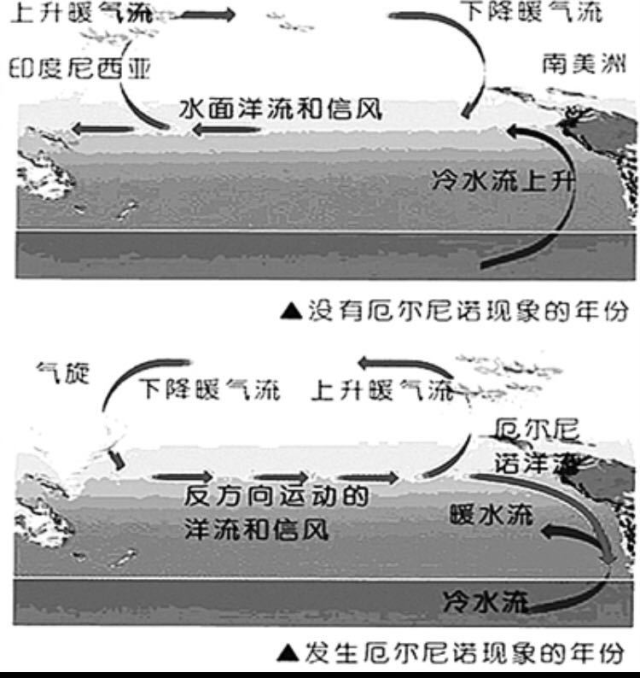
Under normal non-el niño conditions, trade winds blow to the western part of the entire tropical pacific, far from south america. These winds accumulate warm surface water in the western pacific ocean, so that the sea off indonesia is approximately 0. 3 to 0. 6 m higher than in the pacific ocean off ecuador. In the west, sea surface temperatures also increased by about 8°c. As a result of the deeper cold water influx, cooler sea temperatures dominate the north-west coast of south america. This nutritious cold water supports marine ecosystems and major fisheries。



