About the causes of the subprime crisis in the united states and the revelations about our country
Contents
1 overview of the united states subprime crisis
2 causes of the united states subprime crisis
2. 1 large-scale introduction of high-risk united states sub-prime mortgages can satisfy borrowers ' desire to own property
2. 2 qualitative and overly liberal subprime mortgages are for borrowers with poor credit, lower income, higher debt and default rates
2. 3 excessive reliance on risk transfer by financial institutions operating sub-prime mortgages to avoid risk
The revelation of the united states debt crisis
3. 1 increased pre-lending review of the sub-lending crisis was mainly due to the failure of lending institutions to adhere to rigorous pre-lending reviews
3. 2 the emergence of a sub-prime crisis to raise the level of financial regulation, reflecting oversight
3. 3 prevention of overuse of risk transfer risk transfer, although the risk of market participants is theoretically disaggregated
Text
Summary: the subprime crisis erupted and spread because of problems with the united states financial system. As the leader of the world's finance, america's risk-averse and financial innovation have been taught by the nations of the world, and this time it's lost city, suggesting that behind america's booming financial markets, there are many issues that merit our analysis and that have a great deal of inspiration for the integrity and regulation of our financial markets
Keyword: financial innovation in securitization of subprime mortgages
1 overview of the united states subprime crisis
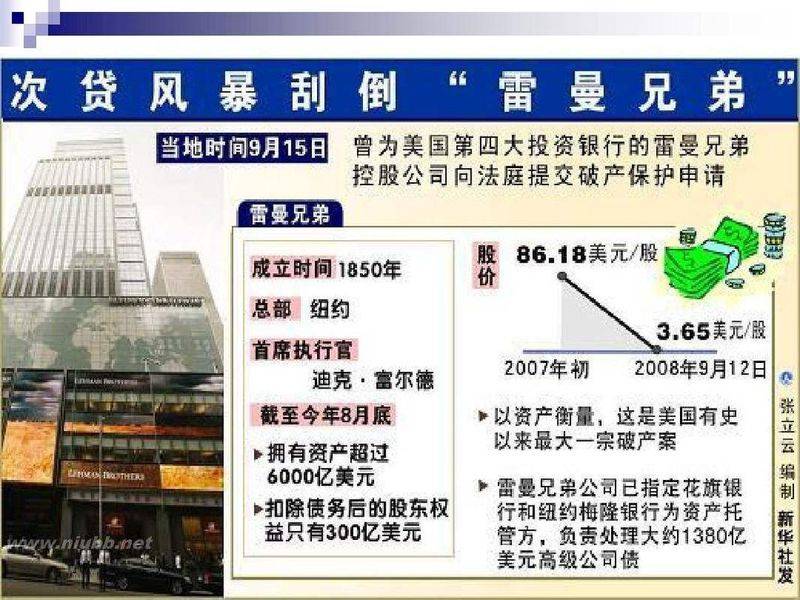
At the beginning of the century, the economy of the united states was declining as a result of the collapse of the bubble in the united states network. In order to stimulate economic development, the federal reserve dropped interest rates from 6. 5 per cent to 1 per cent on 17 consecutive occasions between 2001 and 2004. Low interest rates have stimulated the development of the united states real estate market and, in turn, the united states mortgage market. As the market for quality loans is saturated, subprime mortgages have begun to expand。
The so-called “subprime mortgages” are in relation to general mortgages and are directed at borrowers with low credit ratings and less repayment capacity, who generally find it difficult to obtain loans from major mortgage institutions. As a result, they will receive higher than average repayment rates than the main mortgage rates, but lower down payments。
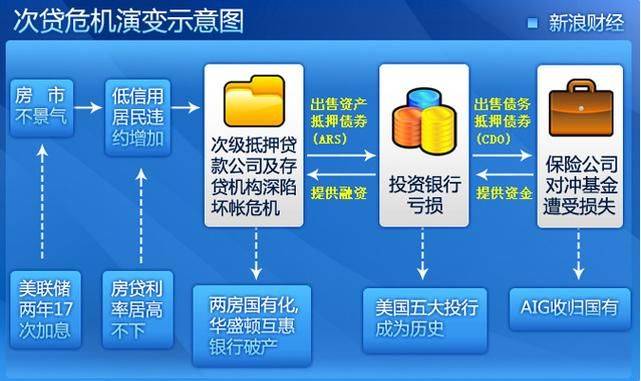
Although the risk of subprime mortgages is high, they are highly attractive to financial institutions that extend them. First, subprime mortgages have a high yield. Second, although the default rate for sub-prime mortgages is high, against the background of the constant increase in the value of real estate prices, financial institutions that extend such loans can recover the principal of the loan by confiscating the lender's real estate and auctioning it out. Thirdly, financial institutions can package these sub-prime mortgages and issue bonds to securitize them in order to avoid risks and transfer some of them to capital markets. Thus, in the twenty-first century, the subprime lending market grew rapidly. The total size of subprime loans in the united states increased from 5. 6 per cent in 2001 to 20 per cent in 2006
Subprime mortgages have high interest rates, and most subprime loans are mortgages with adjustable interest rates, i. E. Loans are repaid at fixed interest rates in the first years (usually two years), after which loans are repaid at a certain base rate plus risk premiums. This means that lenders are under considerable pressure to repay their loans later. But investors remain very interested. First, through subprime mortgages, many low-income people or low-credited investors have become productive. Second, even if the interest cannot be repaid in the future, investors may use their real estate as collateral to continue to lend or sell as collateral to repay the principal of the loan. Against the background of rising real estate value, investors may also earn a margin from it in this way. Thirdly, some speculators have been able to access the real estate market by seeing easy sub-prime lending conditions and auditing procedures。
Subprime mortgages have become competing development projects for financial institutions in just a few years, as they have benefited both suppliers and demanders. Moreover, since institutional investors also see high returns on sub-prime mortgages and, despite risks, may recover their principals by confiscating real estate, they are also happy to purchase securities that stimulate mortgage packaging. According to the material, about 60 per cent of housing mortgages have been securitized, with sub-mortgage securities accounting for approximately 14 per cent of the mortgage securitization market
With the rise of the real estate bubble, the federal reserve was pressured by domestic inflation for two years, from june 2004 to 2006, with 17 consecutive increases in federal interest rates, from 1 to 5. 23 per cent. The rise in benchmark interest rates broke out of the housing bubble in the united states, culminating in the second quarter of 2007 with the largest decline in overall housing prices in the united states in 20 years. The rise in the benchmark interest rate has led to a corresponding rise in the interest rate on mortgages for housing, which has led some home buyers who want to borrow to stop and reduced the demand for real estate. At the same time, the new sub-prime mortgage contracts from 2004 to 2005 entered the removable interest rate phase, with a sudden increase in borrower pressure and a significant increase in default rates。
The rise in default rates for sub-prime mortgages has led to a significant increase in default costs for financial institutions issuing such loans, leading to the collapse of a large number of sub-prime suppliers or applications for insolvency protection. The subsequent institutional investments of the sub-prime bond purchasers were also severely lost as a result of the significant erosion of these assets. Once institutional investors have suffered losses, their legitimate response is to sell a portion of their non-current assets to improve the liquidity of their portfolio to cope with future risks and recover pressures. However, when most institutional investors in the asset market sell off non-current assets, they cause a significant decline in the returns on fixed assets, product markets and stock markets, as well as a tightening of liquidity in the market, resulting in a continued decline in real estate prices. This creates a bad cycle. As many large international financial institutions have also entered the field before, these global financial hooks are not immune to loss, while subprime lending has shrunk significantly. So the united states subprime crisis spread from the united states to the world。
2 causes of the united states subprime crisis
In sum, the united states sub-prime crisis was triggered mainly by the following causes。
2. 1 the large-scale promotion of high-risk financial products, the united states sub-prime mortgage, can satisfy borrowers ' desire to own property, the desire of financial institutions and institutional investors to gain high returns, increase market shares, etc., and the desire of speculators to speculate. Particularly in a highly competitive financial sector such as the united states, many small-scale lending institutions resort to low-interest strategies to compete with large financial institutions to distort market pricing mechanisms and promote high-risk financial products. This high-interest and high-risk behaviour has led to a high level of indebtedness on the part of financial institutions, leaving a legacy of subsequent crises。

2. 2 the granting of soft sub-prime mortgages and the review process are directed towards borrowers with poor credit, lower income, higher debt and default rates. So we can see that subprime mortgages are intended for people who would have to be scrutinized in the lending process. However, at the temptation of interests, financial institutions, large and small, in order to seize the market as much as possible in order to saturate the high-quality loan market, make every effort to conduct pre-lending investigations and fight to lower the threshold for applying for credit. In previous lending operations, financial institutions that issue loans investigate the value of the borrower's income and real estate. However, in the context of sub-prime mortgages, financial institutions that extend loans are largely not responsible for any pre-prime review, but are represented by mortgage intermediaries, housing valuation companies and rating agencies. This eases the conditions of issuance and audit in the invisible. In this way, it is not surprising that a crisis has emerged since then。
2. 3 while financial institutions operating sub-prime mortgages rely heavily on risk transfer, which is securitized through asset securitization in order to avoid risk, it simply shifts risk to capital markets. Financial institutions that extend loans, while reducing risks, do not disappear. Rather, risk is loaded into capital markets in a more complex form. It is precisely because the united states has been using securitization to circumvent risks, with few problems, that most market participants believe that their funds are operating in a relatively closed cycle, that once risks are circumvented and transferred, they believe that they have been transferred, that they are not deeply aware that the operation of the funds is part of the entire sub-bond system, and that once a link in the sub-bond system is in question or broken, it will make it inevitable for all parts of the system to bear the impact of the risk and eventually lead to its collapse。
The revelation of the united states debt crisis
The emergence of the subprime crisis illustrates the importance of financial regulation, as well as the undesirability of pursuing high-interest, high-risk financial innovation。
3. 1 the reason for the enhanced pre-lending review of the sub-lending crisis is mainly due to the failure of the lending financial institutions to adhere to rigorous pre-lending reviews. Our commercial banks are therefore required to carefully review the repayment capacity of borrowers and the value of real estate before granting loans. A strict distinction is made between borrowers of different credit ratings and borrowers are examined in various ways. And it is up to commercial banks to do this themselves and not blindly entrust other institutions to prevent moral hazard. Only by doing so, and gradually preventing it, will they truly improve their resilience to risk。
3. 2 increased level of financial regulation, reflecting the emergence of a subprime crisis
The management response to potential risks is not rapid. Our supervisory authorities should therefore supervise the financial institutions that issue loans and, in the marketing of the various financial products, fully inform the borrower about the financial products and provide the borrower with adequate information about how the products are repaid and the potential risks. It also informs borrowers of their obligations and rights. As the real estate industry is prone to bubbles, regulators should also establish an early warning and monitoring system for real estate finance to increase the risk-proof capacity of borrowers and investment institutions。
3. 3 prevention of overuse of risk transfer although the risk to market participants is theoretically decompositioned, different risk and benefit to different risk-preferenced participants appear to have shifted the risk from each market participant. However, from the perspective of financial markets as a whole, the so-called transfer is simply a shift from one segment to another, while the risk in the market as a whole is not reduced. Excessive use of risk transfer merely transfers risk to more people in a more complex manner, and risks remain and ultimately create systemic risks. This is a good example of the development and use of our financial risk transfer instruments。