Biomass fuel granular machines
Chapter i overview of biomass fuel particle machines
1. Definition of biomass fuel granular machines
Biomass fuel granule machines are a device for compressing agricultural forest waste (such as sawdust, rice shells, crop straws, etc.) into biomass fuel particles. It discharges water and air from the raw material by physical compression, forming high density, high heat value biomass fuel particles。
2. Activation of biomass-fuel granular machines
Biomass fuel granular machines work mainly using high temperatures and pressure to compress biomass raw materials into particles. The process is as follows:
Raw material preparation: pre-treatment of agricultural and forestry waste, such as shredding, drying, etc., to meet the feed requirements of particle machines。
Compression process: when the raw material enters the particle machine, it is compressed through a mold hole to form particles at high temperature and pressure。
Refrigeration process: particles are cooled in cooling devices to facilitate packaging and storage。
Classification of biomass fuel particle machines
Biomass fuel granular machines, depending on the compression method, are divided into the following categories:
Simulation granule machines: the application of tablet moulds applies to the production of larger biomass fuel particles。
Ring-molecular particle machines: the use of ring-modes is applicable to the production of smaller biomass fuel particles。
For granule machines: the application of pairing molds applies to higher moisture levels of raw materials。
Advantages of biomass fuel particle machines
Biomass fuel particle machines have the following advantages:
Energy conservation and environmental protection: agroforestry waste is used to produce biomass fuel particles, reduce energy consumption and reduce environmental pollution。
Efficient use: compress agricultural and forestry waste into particles, increase the heat of fuel, facilitate storage and transport。
Wide application: biomass fuel particles can be used in areas such as household heating, industrial production, and have broad market prospects。
5. Trends in biomass fuel granular machines
As environmental awareness increases and energy demand increases, the development of biomass-fuel granular machines is as follows:
Technological innovation: continuously optimizing the design of particle machines to improve productivity and reduce energy consumption。
Scaled production: increased capacity of biomass fuel granule machines to meet market demand for biomass fuel particles。
Industrial chain improvement: increased synergy with the production, sale, application, etc. Of biomass particles to form a complete industrial chain。
Chapter ii structure and composition of biomass fuel particle machines
1. Particle machine hosts
The particle host is the core of the biomass fuel particle machine and consists mainly of feed systems, compression systems, mould systems and drive systems。
Feeding systems: is responsible for the delivery of pre-processed raw materials into the compression system, which typically includes components such as plume, conveyor belt, etc。
Compression systems: compression of raw materials into particles through high temperature and pressure, including components such as compressors, compressors, moulds, etc。
Modular systems: modulars are the key components in particle formation and are selected according to different production needs。
Driving systems: provide power for the operation of particle machines, usually including electrics, speed-retarders, etc。
2. Supply systems
The feed system is responsible for the continuous and balanced delivery of raw materials to the particle mainframe, consisting mainly of a plume, a conveyor belt and a regulator。
Pipes: for storage of raw materials, they should be designed to facilitate the inflow of raw materials and the extraction of the conveyor belt。
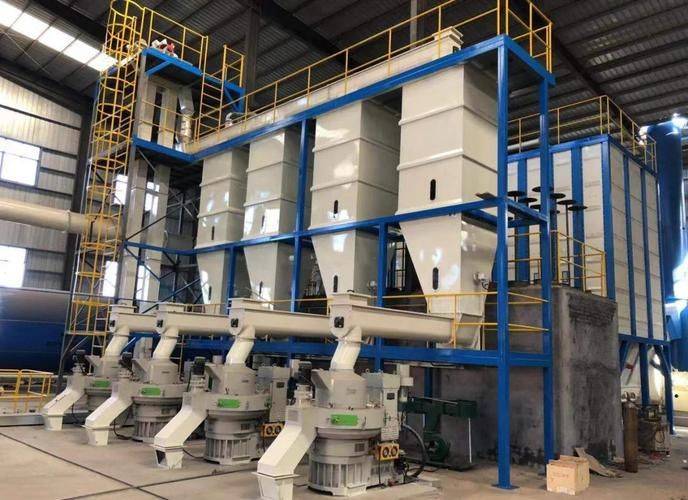
Transport belts: the transfer of raw materials from the plume to the compression system, the speed of which can be adjusted to the production demand。
(b) reconciliation devices: to regulate the flow of raw materials to ensure that they are evenly supplied。
Drying systems
The role of the drying system is to reduce the moisture in the raw material to meet the working requirements of the particle machine. Drying systems typically include dryers and coolers。
Dryer: the water content of the raw material is reduced by evaporation by heat wind or other means。
Refrigeration devices: cooling dry particles to temperatures suitable for packaging and storage。
4. Electrical control systems
Electrical control systems are responsible for the automated operation of particle machines, including start-up, stop-ups, failure alerts, etc。
Control panel: used to operate and monitor the working state of the particle machine。
Sensors: operating parameters such as temperature, pressure, etc., are detected in particle machines to ensure normal operation。
Protective devices: auto-activation of equipment and security of equipment and personnel in case of failure。
5. Supporting equipment
Supporting equipment includes particle collection systems, particle packaging systems, etc., for the collection and packaging of biomass fuel particles produced。
Particle collection system: the particle is collected in a specified container through a conveyor belt。
Particle packaging systems: self-packaging of particles in bags to facilitate storage and transport。
The structural design of biomass-fuel granule machines determines their performance and efficiency, and reasonable structural design can increase productivity, reduce energy consumption and extend the useful life of equipment。
Chapter iii. Main components and functions of biomass fuel particle machines
1. Feeding systems
The feed system is the beginning of the biomass fuel particle machine and its main function is to ensure that the raw materials are evenly and continuously delivered to the compressor system。
Drums: charms are used to store raw materials and are designed to take into account the fluidity of the raw materials and the capacity of the plume。
Transport belts: the conveyance belts are responsible for the transport of the raw material from the cascading to the compression system, which is usually controlled by a adjustable speed machine。
Feeding spiral: the feeding spiral drives forward the raw material by rotation while adjusting the intake of the raw material。
2. Compression systems
Compression systems are the core of biomass fuel particle machines, which compress raw materials into particles at high temperature and pressure。
Compression: the compression is a key component of the compression system, which puts pressure on the raw material to form particles through the mould hole。
Modelling: the mould determines the shape and size of the particles and replaces the moulds with different specifications according to different production needs。
Compression chamber: compression room is the space where pressure and moulds work, where raw materials are compressed into particles。
3. Passage system
The transmission system is responsible for transmitting the power of the electric power to the pressurized and conveyor belts to ensure the stable operation of the particle machine。
Electrical: the electric power is the power source of the particle machine and provides the driving power。
Speed-reducing devices: the speed-reducing devices are used to reduce the speed of the electric power to adapt to the working speed of the pressurization and conveyor belts。
(c) a moving belt or gear box: a moving belt or gear box connecting the electric and speed-reducing units, transmitting power。
Drying systems
The role of the drying system is to reduce the moisture of the raw material and ensure the quality of the particles。
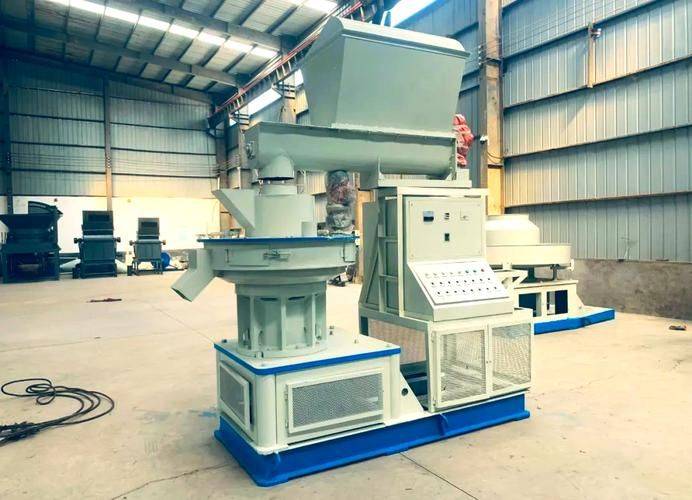
Dryer: the dryer evaporates the water from the raw materials by heat wind or other means。
Refrigerator: the cooling device cools the dried particles and prevents their transformation by heat。
5. Electrical control systems
The electrical control system is responsible for the automated operation and monitoring of particle machines。
Control panel: the control panel contains various operating buttons and display screens for operation and monitoring of particle machines。
Sensors: sensors detect operational parameters of particle machines, such as temperature, pressure, etc., to ensure operation safety。
Protective devices: the protective devices automatically cut the power on detection of anomalies and prevent accident expansion。
6. Collection and packaging systems
Collection and packaging systems are used to collect and package the particles produced for storage and transport。
Particle silos: particle silos are used to temporarily store the particles produced。
Packaging machines: the packaging machines automatically package particles in bags to facilitate sale and transport。
Each component of the biomass-fuel granular machine carries important functions that ensure the smooth running of the entire production process. An understanding of the role of each component would facilitate better operation and maintenance of the equipment。
Chapter iv installation and commissioning of biomass-fuel granular machines
Preparation for installation
The following preparatory work is required prior to the installation of biomass fuel particle machines:
Inspection equipment: ensure that the particle machine and its accessories are intact and that all parts are complete。
Site readiness: select a suitable installation site to ensure sufficient space for installation and operation。
(b) equipment base: create an appropriate base based on the specification and weight of the particle machine to ensure the stable operation of the equipment。
2. Installation of equipment
The following steps were taken for the installation of biomass-fuel granular machines:
Installation of the mainframe: the particle machine is placed on a pre-prepared basis and is fixed。
Connect to feed system: connect feed system components such as clinking, conveyance belts to the mainframe。
Installation of drying systems: if the particle machine is equipped with a drying system, it is installed near the host and connected to the pipe。
Installation of electrical control systems: electrical components such as control panels, sensors, protective devices are installed in designated locations and connected to circuits。
Installation of a collection and packaging system: placing of granules and packaging machines in place and connecting to the related delivery equipment。
3. Debugging of equipment
Upon completion of the installation, the following debugging steps are required to ensure the proper functioning of the equipment:
Space-borne operation: the particle machine is activated without the inclusion of raw materials in the equipment to check the functioning of the components。
Load operation: add raw materials to the equipment, perform load operation, and observe the compression and operational stability of the particle machine。
Parameter adjustment: arguments such as feed velocity, compressed pressure, etc., are adjusted to achieve optimal production results based on actual performance。
Fault screening: if an anomaly is detected during debugging, it will require timely shutdown and troubleshooting。
4. Security and maintenance
In the course of installation and commissioning, security and maintenance are important elements that cannot be overlooked:
Safety operations: ensure that operators are aware of the safety protocols of the particle machine and avoid accidents。
Regular maintenance: establishment of a regular maintenance plan, cleaning, lubrication and inspection of particle machines to ensure that equipment is in good condition。
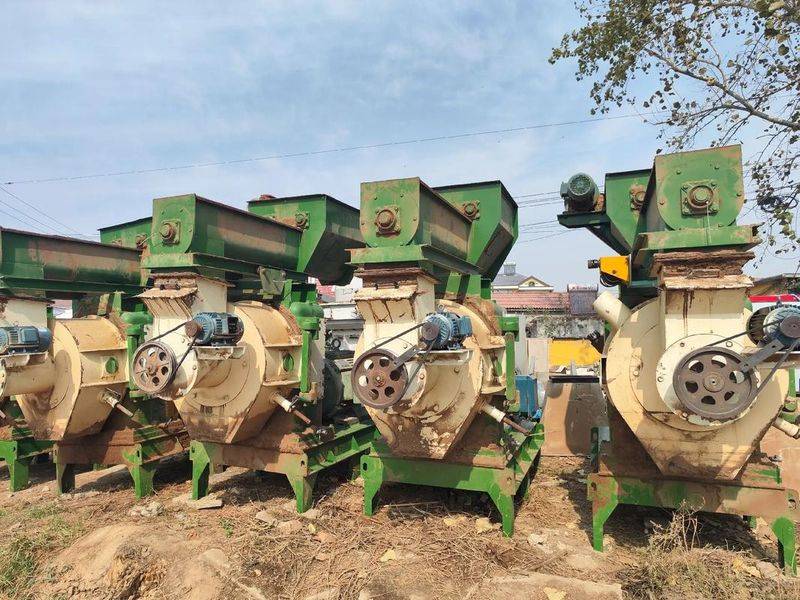
Spare parts readiness: prepare the necessary spare parts to enable rapid replacement in case of failure of equipment。
The installation and debugging of biomass-fuel granular machines is a detailed and important process, and the correct installation and debugging ensures the long-term stable operation of the equipment, increasing production efficiency and particle quality。
Chapter 5 operations of biomass fuel granule machines
1. Ready to fire
The following preparatory work needs to be completed before the launch:
Inspection of power sources: ensure that power voltage is stable and meets the requirements for the use of particle machines。
Check the components: check the parts of the particle machine for their integrity and for the integrity of the connection。
Check the lubrication system: ensure that the lubrication system works and that the motor parts are lubricated。
Check safety devices: check the effectiveness of safety devices to ensure operational safety。
2. Commencement equipment
The following steps were taken to activate the particle machine:
Turn on the power switch: activate the main power source of the particle machine and ensure that the control panel light is activated。
Commencing the conveyor belt: first, activate the conveyor belt and ensure that it works properly。
Commencing compression systems: commencing compression systems to observe the smooth operation of compressors and moulds。
Commencing drying systems: if equipped with drying systems, initiating dryers, adjusting temperature and wind。
3. Feeding operations
The operational steps of the feed include:
Regulating feed speed: adjusting feed speed to the level of production demand and drying of materials。
Monitoring of raw material flows: observation of the flow of raw materials in plume and transport belts to ensure continuity of supply。
Control of raw material moisture: if the raw material is overwatered, the parameters of the dry system need to be adjusted to reduce the moisture。
4. Production monitoring
During the production process, the following are monitored:
Particle mass: to observe the shape, size and density of the particles and ensure that they meet the criteria。
(c) operation of equipment: the listening device operates the sound, checking for abnormal vibrations or noise。
Parameters adjusted: the parameters are adjusted in a timely manner according to the mass of the particles and the state of operation of the equipment。
5. Stoppage operations
The operational steps for the decommissioning are as follows:
Stop feeding: first, stop feeding of the raw material and let the raw material in the particle machine be compressed。
Discontinuation of compression system: deactivation of compression system and observation of complete cessation of equipment。
Stop the drying system: if the drying system is installed, stop the drying machine。
Turning off the power: finally closing down the main power of the particle machine to ensure that the equipment is completely disabled。
6. Cleaning and maintenance
Upon completion of production, the following cleaning and maintenance work is required:
Cleaning equipment: cleaning of dust inside and outside the particle machine