


The reference to plate tectonics, which is the most influential global tectonic theory of our time, must not be new. Where does such an important doctrine come from and how does it continue to develop
The science of plate tectonics was developed in the late 1960s on the basis of continental drift and seafloor expansion, which together are known as the “triples” of global theory of tectonic development。
The continental drift hypothesis
The continental drift hypothesis was first officially introduced by the german ancient meteorologist weigner. In 1911, when studying the world map, weigner found that the coastlines of the two continents of the atlantic ocean on earth (mainly between north america and europe and africa) were similar and compatible. He then continued to collect evidence and presented the continental drift doctrine in 1912。
In 1915, the book " origins of the land and the sea " , published by weigner, described not only the ancient continents on both sides of the atlantic ocean, which were formerly united, but then separated by the drift of the continent, and the view of the oceans between the separate continents, but also the evidence of ancient organisms, rocks, structures, glaciers, etc., which demonstrated the fragmentation and drift of the ancient continent along the atlantic ocean。
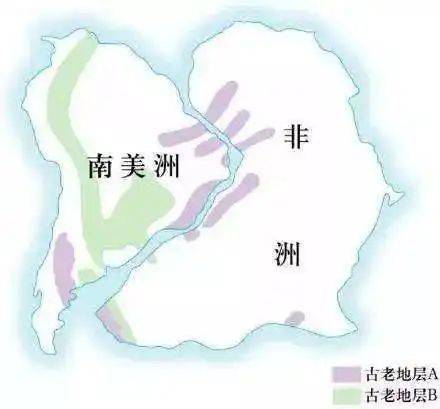
The dominant philosophy of the continental drift doctrine is correct, but limited to the scientific level at the time, the continental drift mechanism in weigner is clearly flawed。
During the 1920s, iugs earth scientists had a lively discussion and vote on the continental drift hypothesis, with the overwhelming majority of scholars voting against it. However, the idea of large-scale horizontal transport on the continent, as proposed by weigner, provided an important basis for the subsequent creation of the doctrine。
Undersea expansion theory
Following the end of the second world war in the 1940s, the united states and the united kingdom, among others, carried out extensive research on seabed geology and obtained extensive information on marine science. For example, the morphology of the mid-ocean ridge, the abnormal distribution of the subsea heat flow, the anomaly of the benthic magnetic strip, the distribution of the benthic seismic belt and the seismic sources, the arc of the island and the deep trenches that accompany it, the age of the seabed and its symmetry, the flotilla on the top of the mantle, etc. Have been detected or further clarified。
Map of seafloor expansion
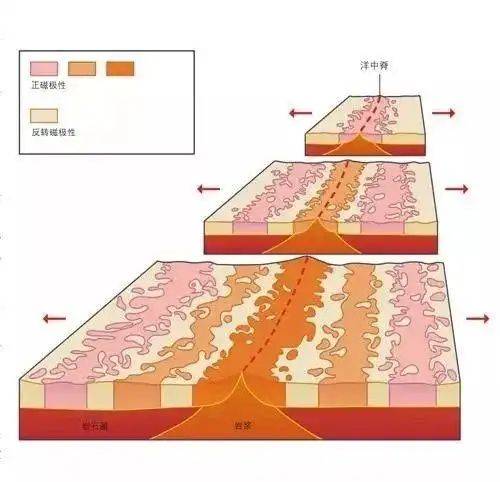
Submarine tape is abnormal
By the early 1960s, four important new academic findings had emerged from the study of the global marine geophysical survey and seismic network (mainly to monitor underground nuclear tests in various countries), which found that:
(1) oceanic ridge spreading bands
(2) the beniov belt
(3) conversion faults in the vicinity of mid-ocean ridges
(4) considerable new sea floor sediments, etc. Are prevalent。
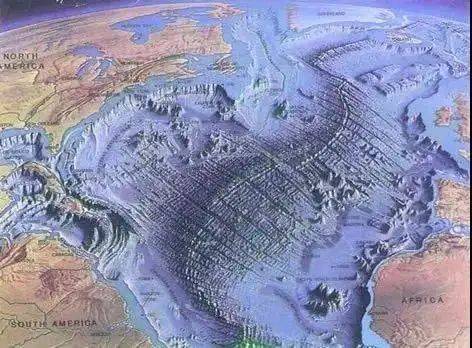
Mid-atlantic ridge and conversion fault
On the basis of extensive empirical information, hess and detz first proposed a scenario of seafloor expansion, laying the foundation for a plate tectonic doctrine. The seabed expansion doctrine was further validated by the following facts。
In 1963, vain and matthews found magnetic anomalies on both sides of the mid-ocean ridges in strips, positive and negative phases, parallel to the mid-ridges, symmetrically extended in the order consistent with the geomagnetic reverse year。
In 1965, wilson introduced the concept of transectivation, which demonstrated the possibility of horizontal shifts in rock-clad plates, and clarified the balance of erosion between the new crust of mid-ocean ridges and the loss of the crust of the trenches, i. E. The expansion rate and the reduction rate。
Board tectonics
With the continuous updating of seabed geological information and the accumulation of evidence of seafloor expansion, in 1967, morgan from princeton university, united states of america, mckenzie and pike from cambridge university, united kingdom, lepius from lamont observatories, france, and others, based on the theory of continental drift and seafloor expansion, jointly presented plate tectonics based on a wealth of marine geology, geophysics, seabed topography, etc。
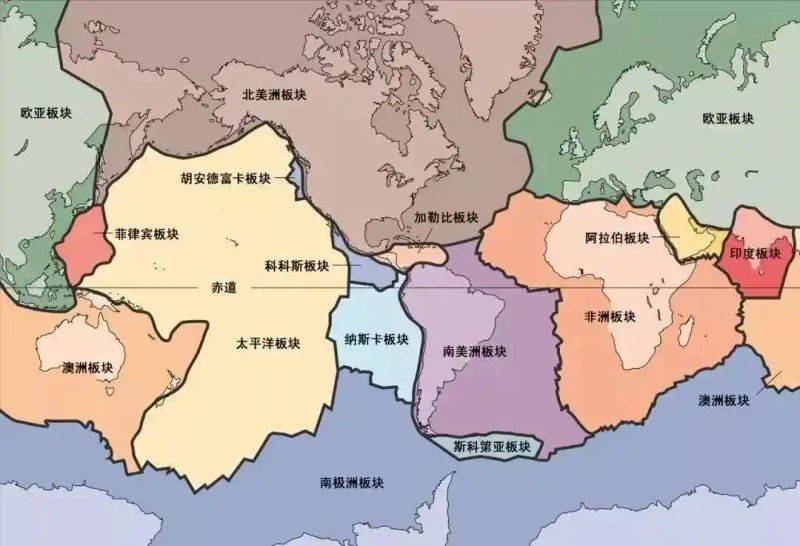
Global plate distribution
Le pi hung divides the rock rings of the modern earth into six large plates, namely, the pacific, the asia-europe, the americas, the indian ocean, africa and antarctica. Of these, all but the pacific plates are immersed on the ocean floor, while the other five plates have both continents and oceans. As research advanced, some scholars further divided smaller segments of these large plates, all of which moved above the floating upper mantle flounder。
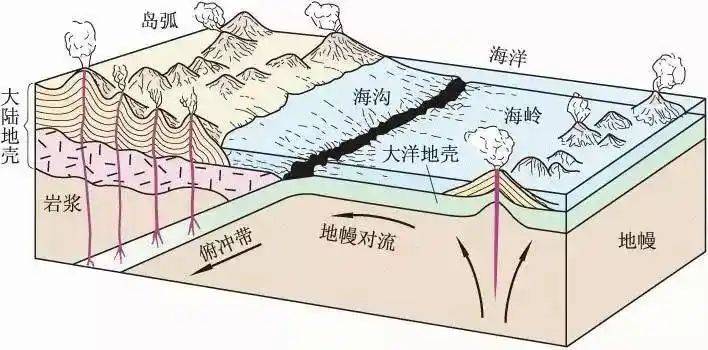
Map of plate movement and plate boundary
In 1968, b. L. Isaacs, j. Oliver and l. R. Sykes of the united states further elaborated on the link between seismic and plate activity and referred to this emerging theory as “the new global architecture”. Since 1969, when mckenzie and morgan officially named the above-mentioned novels “platforms”, they have become widely known。
While the science of plate tectonics has been accepted by a wide range of scholars, there are still a number of problems, but it is currently the most acceptable and rational basic theory of earth science to interpret crustal movements and evolution. It is foreseen that, as earth science continues to evolve, plate tectonics will continue to be revised and developed。
References and pictures: the development of geotectonics; china mining newspaper “the life of the past” in plate tectonics; micro-cycology geological earth institute



