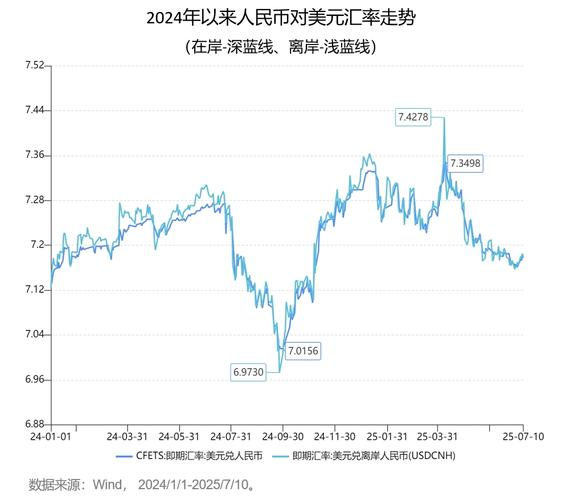
As of today, the renminbi's current exchange rate against the united states dollar has been “falling” for seven consecutive trading days, the first in three years. It also raises concerns about the “hard landing” of the chinese economy。
Linked to a period of “hunting” of “china’s concept unit” in the united states stock market, the continuing downsliding of the chinese stock market, as well as real estate market adjustments, a slowdown in economic growth, and falling prices, “observing” china’s economic future seems to have become weathery。
However, a rational analysis of the changes in the fundamentals of china’s economy reveals that much of the information released by the “empties” is based, like the “multiple” signals that they have released。
Exchange rate “higher and lower” is more flexible
According to market rules, the exchange rate of the renminbi against the united states dollar can fluctuate only within 0. 5 per cent of the median price per day. Since december, the middle price issued by the people's bank of china has remained “strong”, while the market trend appears to be “square” with the central bank。
The united states dollar, which is the anchor of national currencies, has been rising steadily in the recent past, forming the broad context of the decline in the exchange rate of the renminbi. Indeed, the last time the exchange rate of the renminbi fell, it also occurred after the 2008 financial crisis, when the united states dollar moved out of a strong upward spiral。
As the european debt crisis continues to ferment, analysts have pointed out that investors’ expectations for the future world economy have become pessimistic, with non-united states assets and currencies being sold, while the united states dollar has played a role as a “risk currency”, leading to the weakening of other currencies against the dollar。
Data show that the trend of devaluations in other emerging market countries has been very marked since this year, with south africa's rant depreciating by more than 30 per cent, india's rupees by 17 per cent, brazil's rayar depreciating by more than 14 per cent since may, and russia's ruble depreciation against the dollar since july and august。
By contrast, the renminbi has appreciated by about 7 per cent against the united states dollar since the central bank of china recommenced its remittances last june, with a “unilateral appreciation” trend。
Most market analysts analysed the recent decline in the renminbi at the capital flow level. (a) first, the fact that the rate of exchange of the hk$ offshore market in hong kong has been lower than the domestic market has given the arbitrage agencies sufficient grounds to engage in cross-border arbitrage in order to earn the price difference of the “low-cost sale”; second, “hot money” is likely to flee, with the central bank’s foreign exchange balance falling by $8. 934 billion in october over september, representing the first negative growth in central bank foreign exchange in eight years, which is understood to be related to expectations of a devaluation of the renminbi and international capital outflows。
However, it would be too abrupt to conclude that the renminbi depreciated on the basis of a few trading days alone. Indeed, as the deputy representative for international trade negotiations of the ministry of commerce, zhao quan, said in response to journalists’ questions, the renminbi “falls” around the median price, which means that the rmb exchange rate is “not controlled by the government,” but that marketers should learn to adapt to wave-like changes in the rmb that are “possible to rise again or to depreciate again.”。
According to the ministry of forecasts of the national information centre, “it is not necessary to overread the renminbi exchange rate”. In her view, the reasons for this rapid decline in the renminbi are complex, and the mere fact that the drop in the exchange rate has been attributed to foreign capital flight or to “empty” china may fall into the wrong zone of “self-intimidation”. On the contrary, the “higher and lower” exchange rate is a strong indication that the renminbi is becoming more resilient and moving in the direction of reflecting the objective realities of the economy。
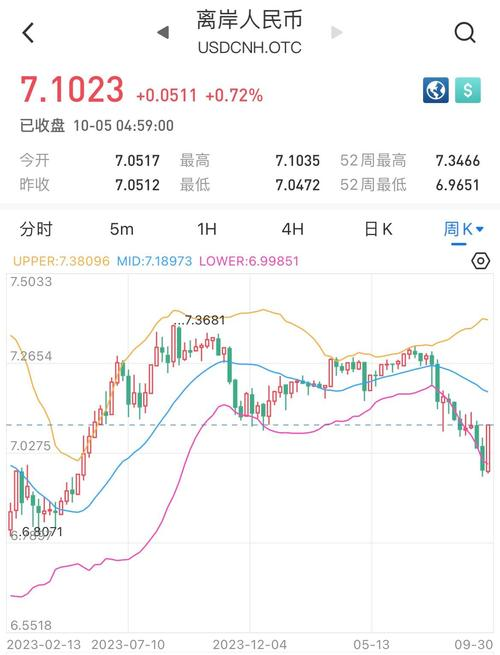
In fact, the so-called “depreciation of the renminbi’s exchange rate” is but one of the manifestations of china’s economic climate, which has grown stronger since the second half of this year。
This summer, the china concept unit, which is listed in the united states, was repeatedly raided by space agencies, and a large number of chinese companies’ stock prices fell sharply. Until recently, the “shudding battle” between mass media ltd. And the united states company “whiskey water” has not ended。
Subsequently, international financial institutions publicly “singed down” china's economy, especially in the housing and banking sectors, and the international monetary fund (imf) issued its first report in november, warning china's financial system risks, and investment banks such as goldman sachs significantly reduced china's business banks
4. 17 0. 24 per cent
H, china construction bank
4. 77 0. 21% share
Unit h. The mainland chinese stock market and port stock seem to be in a state of decline。
At the same time, as china's economic growth rebounded under macro-regulation policies, the sound of “hard landings” in international markets was re-emerged. A number of well-known transnational investors and institutions have taken the subject of “the collapse of the chinese economy” as a controversial one, creating more tension in the market。
Some experts argue that emerging-market countries, such as china, where overseas investors “observed” and, to a certain extent, “empty” are “unintentional,” probably to make it more difficult for the chinese government to resolve the dilemma of “sustain growth” and “structuring.”。
An anonymous security analyst told journalists that creating chaos and speculation was the essence of the “speak bubble” of the chinese economy in the current round. “disturbing the audio-visual system, creating panic, using the `unseen heart', matching the `unseen hand', singing with a lot of failure, emptiness, repeated operations, pulling waves, thereby maximizing the benefits of the turbulence in international and domestic financial markets”. He said that that had been the usual speculative technique in international financial markets。
Run fast
So how is the chinese economy doing in the past year? According to analysis by authoritative statistical authorities, the economic “soft landing” in china became more and more evident after the third quarter, with annual GDP growth at roughly 9 per cent, investment growth of about 25 per cent, total social retail sales growth of about 17 per cent, imports and exports growth of about 15 per cent, and a “slower” trend towards “stable” is largely established。
Indeed, the news spokesman of the national statistical office had said long ago that for the chinese economy, “run faster” is less than “run more smoothly” and that the rate of economic growth has fallen properly, and remains manageable, and is itself the desired goal of the chinese economy’s proactive adjustment。
Most analysts agree that, in the long run, the domestic dynamics of china's economy are very strong, as the rate of urbanization is far below that of developed countries, the demographic structure is at a time of high consumption, and the development space and momentum of the western central and eastern regions is such that china's potential for “domestic demand” is generally enormous。
Zongquan also stated publicly that, even though the international economic situation in 2012 was not promising and could affect china's export and import growth, “it is true that the contribution of foreign trade to china's economy is not as high as expected compared to the rest of the world. Germany is 60 per cent, japan 33 per cent and china 20 per cent.”
Wang jian, vice-president of the chinese macroeconomic society, described the chinese economy as “short-term pessimism, long-term optimism”, “short-term excess, long-term deficit”。
“in terms of urbanization, none of the world's countries had only one third of the real urban population at $45,000 per capita, and china's urban population now stood at 450 million after eliminating 250 million migrant workers. If china's urbanization rate rises to 85 per cent, a level commensurate with china's per capita income, it will add 800 million, almost twice the current urban population.”
He stated that “it is possible to imagine that china's net surplus, measured as a share of net exports, is less than 9 per cent when measured in terms of the 450 million urban population, and that if the urban population is three times as large as it is today, china will not only be surplus but will be seriously inadequate.”
Wang jian also disagreed with some of the “singing-out” commentators, comparing china with the united states, arguing that a sharp fall in chinese house prices would lead to a “crash” of china's economy. He did not think that the comparison was appropriate. According to statistics, china's real estate loan balance at the end of 2010 was only $7. 4 trillion, representing only 15 per cent of the total loan balance at the end of the year, while subprime mortgages in the united states alone were close to 10 per cent of total united states financial institutions ' loans, and total real estate loans exceeded half of all loans。
In addition, personal mortgage loans amounted to 4. 8 trillion yuan at the end of last year, or 65 per cent of total real estate loans. In china, where mortgages are the best bank asset, data show that the default rate for all loans in china is 6 to 7 per cent, while the default rate for mortgages is only 2. 5 per cent. Even if the default rate doubled, it would only add tens of billions of dollars to non-performing bank loans。
Most importantly, the share of real estate in the total output of the chinese economy is much lower than that of the united states. Real estate accounted for 12. 5 per cent of the total output of the united states economy in 2008, compared to 5 per cent in china. “this suggests that the real estate industry in china, even with its larger problems, would not cause a major global shock like the united states.”
Yu yong ding, a former member of the monetary policy committee of the people's bank of china, also wrote recently that the fall in housing prices in china could not turn into a collapse, because “after speculative demand was squeezed out of the market, real demand for housing remained strong. As long as the house price falls to affordable levels, the buyer will enter the market and the house price will be at the bottom.”
In his view, real estate regulation was precisely the mistake of changing china, a developing country with a per capita income of less than $5,000, to concentrate its resources on steel and cement, which, in the long run, was “more profitable than wrong”。
Clearly, the short-term fall in china’s economy is not a terrible one, and it is of the utmost importance to see whether such an adjustment can be made, accompanied by a change in the internal structure, so that it can move forward “in a different direction”。
According to wang jian, the key point in china's economy is that “institutionalized, consumption rates are declining as a result of the widening distribution gap, and in development terms urbanization lags significantly behind industrialization, resulting in a severe urban underpopulation and an excessive income gap between urban and rural residents”
He said that the chinese economy should focus on “from foreign to domestic demand” and that there was a need to address “from investment to consumption demand” and that the most urgent task was “to reduce income disparities and accelerate urbanization among the population”。
"the eyes of the sky" should be protected from the air
The proactive adjustment of china’s economy may have given international speculators a reason to “leave” the game, but the impact on china’s real economy is clearly not apprehensive. Since china’s economy became open and connected to the world, the “crash theory” pressure and the “foam theory” rod have never affected the general trend of china’s economy’s upward growth according to the established pattern。
In zhang's view, the recent sharp decline in the renminbi exchange rate is indeed linked to cross-border capital outflows. On the one hand, hot money, which had been deposited in the real estate market, began to retreat in the face of the chinese government's firm real estate regulation and its initiative to squeeze out the housing bubble. In the long term, non-essential housing needs, such as luxury demand, investment demand, etc., are bound to be limited, and the country's recent statements about the policy stance to consolidate regulatory results also mean that it will not waver in its determination to rise irrationally in the real estate market, which will significantly reduce the space for cross-border capital to compete in china's real estate market。
On the other hand, china, which had been subsidizing the dividends of globalization at low prices, was embarking on a “factor value revaluation” adjustment path. With its low labour costs, low land costs and a better industry support system, china has become a global “value low”. However, a series of systemic reforms, such as wage income distribution and resource prices, have also meant the beginning of the re-evaluation of china's factor prices。
In her view, the reduction in the rmb appreciation space brought about by capital arbitrage was likely to lead to a marked improvement in the accumulated global economic imbalances and uneven distribution of benefits。
Of course, this “rational analysis” of the economy cannot prevent the international financial institutions from gambling in the financial markets, taking advantage of “unreasonable” speculation and “intentional panic”。
“the irrationality of the chinese stock market has been largely influenced by this widely spread `observation' theory, which has little to do with the fundamental performance of the real economy.” a securities analyst told the newspaper's correspondent。
It is not a fear that financial commentators will be attacked if they believe that they are weak. China's economy “doing nothing” includes two categories of people: first, it is strategically empty, it is slow to develop in the medium to long term, and it prevents the rapid rise of chinese borrowing and the us debt crisis; the second is to be tactically empty of china, such as some financial giants. Some international investment banks have taken advantage of china’s domestic debate over “push growth” to secretly encourage core customers to assume that china’s austerity policy will lead to economic slowdown, while at the same time emptied china’s positions in the interior and overseas markets。
In fact, the objective economic underpinnings of china’s economy determine both the “pre-adjustment” of macroeconomic policy and the “division” of space. It is not difficult to activate the powerful dynamism of china’s economy immediately when needed。
In fact, the “air cannons” about which china’s economy will “hardly land” started a while ago this year. Nuriel rubini, a professor at the new york university business school, predicted that the chinese economy would suffer from a long period of stagnation caused by excessive investment, similar to the east asian crisis of the 1990s. Rubini allegedly warned the united states of the collapse of the real estate bubble twice in 2005 and 2009。
However, the voices against him are equally divided. In addition to rogers, a well-known master of international investment, fan shao wei, director of the chicago center for institutional economic research, has publicly written that some western economists have always made “the prediction joke about the annual collapse of china’s economy” because they do not understand the secrets of china’s economic growth, fail to catch the key questions, and are used to itching boots。
He said, “it is not a problem to be empty of the chinese economy, it is a problem to be free of it. Western speculators who have emptied china’s economy are likely to be struggling to solve their problems after they have emptied china’s economy. There is no truth, there is nothing but profit, so they are only trying to create the truth.”