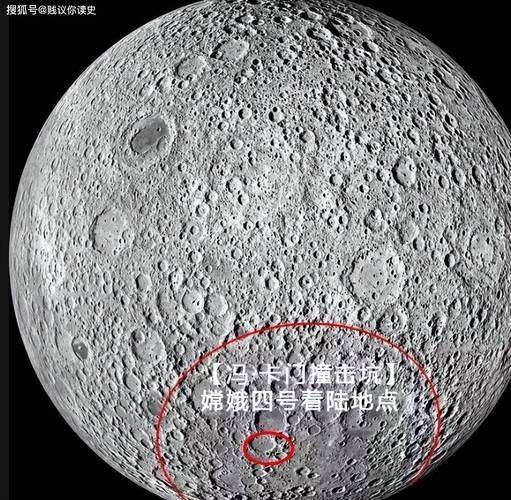
On 8 december, at 0223 hours, the zhu ' a iv probe began its journey to the moon on board the long march iii b carrier rocket. She has a deep mission: for the first time, a soft landing on the back of the moon by a human detector。
Please note the key word here — the back of the moon。
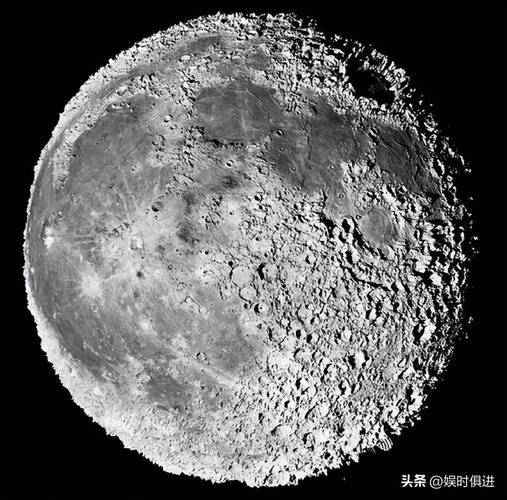
Have you ever looked up to the moon so many times that we can see only the side of the moon where the rabbit and the ceremonial tree are? Yes, for centuries the moon has been faced with only one face and the other with its back。
The question is, who turned the moon into a double-sided iraqi
Synchronization is a superficial reason
It is also easy to explain the phenomenon in one sentence: the time when the moon rotates around the earth and the time when the moon rotates around is about 28 days。
Imagine, draw a big circle around the tree, evenly mark 360 scales on the big circle. Always walk around this big tree with 360 steps. Every step on a large circle, the body is tilted one degree. At the end of the walk, the body also completes a 360-degree rotation and returns to its original position。
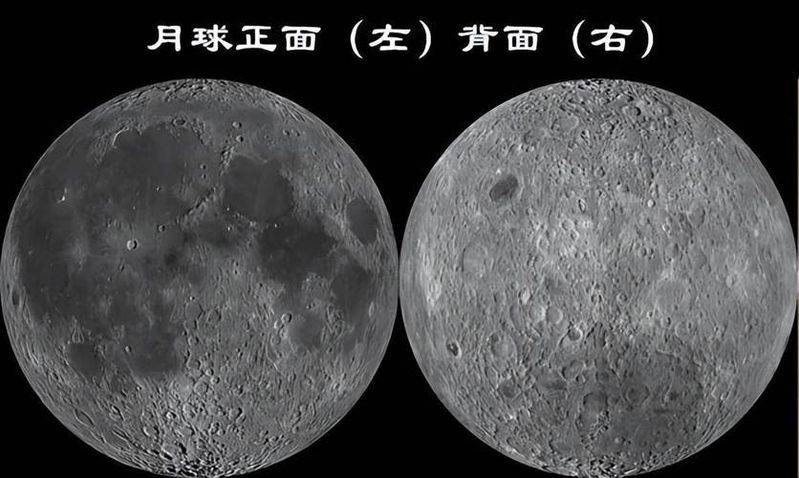
In other words, when you're doing the same thing, you're always facing big trees. The same is true of the fact that the moon has always faced the earth. In astronomy, it's called synchronous rotation。
However, this is only a superficial reason。
“the moon was formed early and rotated much faster than it is now. Only a few hours, not about 28 days now.” professor zhou weiyong of the academy of astronomy and space sciences at nanjing university told the daily reporter of science and technology that the moon had also been “multi-faced” to the earth. It was for hundreds of millions of years that the moon continued to slow its rotation to almost the same rate as the public cycle that led it to face the earth。
So the real reason is, who put the moon on the brake
The tide force is responsible
To explain the slow transition of the moon, tidal power is the easiest factor to imagine。
The earth and the moon revolve around each other and have all the gravitational forces that they can exert on each other. The tides on earth are associated with the gravity of the moon on earth。
Those who live by the sea will find seawater rising and falling twice a day. One is when the moon is on the back of the earth and the other on the top of its head。
Zhou yiyong explained that this was because the earth was receiving greater gravity from the moon side and weaker gravity from the back to the moon side. Gravity is heading towards the moon. The centrifugal power of the earth is the same at any point as it turns around the moon. The direction of the centrifugal forces is the opposite of that of the gravitational force imposed on earth by the moon。
As a result, the earth's back to the moon was slightly less gravity than centrifugal, and the moon was slightly more gravitational than centrifugal, and eventually both felt the power to leave the earth's heart. So the sea on both sides of the planet rises。
“the moon is also subject to the tidal forces of the earth as it turns around.” zhou yi yong said that the power of the earth's tide was to make the moon flatten and flat on its face and back。
Despite the absence of seawater on the moon, tidal power can still be felt in the moon's crust, mantle and core, and there is a constant flow of solids inside the moon. This solid current leads to continuous friction between the mantle of the moon, turning it into thermal energy within the shell. This can deplete part of the dynamics of the moon in billions of years。
It's a direct brake
However, frictions caused by tidal forces may be limited。
Researchers at the national observatory of central science found that the fluid between the moon core and the mantle is a super low viscosity layer, which means that the friction between the moon's core and the mantle caused by tidal forces is very small, so that the moon does not consume too much kinetic energy。
“the key is that the friction caused by the tidal effect occurs inside the moon, a process that can only deplete the total mechanical power of the earth, the moon system, and not simply set the moon on the brakes.” zhou zhou qiang said。
Both astronomers believe that the most direct brake mechanism is the force-cracker between earth and the moon. The force rectangular is the tendency of the force to rotate the object around the axis or subpoint。
Zhou yiyong explained that the moon continued to turn around while it was being flattened. Imagine inside the moon a long axis that is in line with the direction of the earth's heart and the moon. The long axis means the heart of the earth in a moment, but because the moon has to turn around, the next moment the long axis has to pass away and no longer points to the heart of the earth。
At this point, the tidal forces from the earth will generate force on both sides of this long axis of the moon. This is the opposite of the long axis in the past, which is the opposite direction of the moon. This directly alters the dynamics of the rotation of the moon, leading to a gradual slowdown in its rotation。
For months and days, the cycle of the moon's rotation and the cycle of public transit have become very different, eventually with the “backside” that we cannot see on earth。