As an important area of textiles for industrial use, textiles for automobiles have important implications for safety and comfort, light quantification of automobiles and motor manipulation. An average of 42 m2 of textiles per vehicle is estimated to be consumed, mainly for seating, roofing, carpets, soundproofing, insulation, empty and oil filtering materials, seat belts and airbags, drapes and fibre composites for body parts. Currently, while the demand for textiles has been reduced in the automobile industry, as a result of the downturn in the automobile market, the backbone of the industry continues to invest continuously in product innovation and research and development, as well as to analyse national policies and trends in the automobile industry, and actively pursue opportunities for sustainable business development。
Currently, passive seat belts, which are widely used, consist of components such as weaves, auto-rollers, pre-stretched security structures, pull limiters, etc. The importance of seatbelts for the safety of motor vehicles is self-evident, and the correct use of seatbelts reduces injuries by 60 to 70 per cent and mortality by about 75 per cent. To reduce vehicle crashes and the migration of people during emergency brakes, weaver belts need to be of high intensity, well-extended (to reduce the force generated by additional speed on the human body), millability (which often stretches), climate resistance and flame retardation, etc., which are used continuously throughout the vehicle's life cycle without significant deterioration. Depending on whether the front or back row is located, there are different requirements for bandwidth extension. Low-extension long fibres are applied to fabrics used by front-rowers and co-pilots with a high binding capacity; high-extension long fibres are applied to fabrics used by back-rowers, providing buffers and appropriate absorption energy. In addition, the fabric should match surface smoothness, antibacterial resistance and colour matching with the carriage, with requirements for light tolerance, wet resistance and sweat resistance。
Effects of fibre raw materials on the fabric
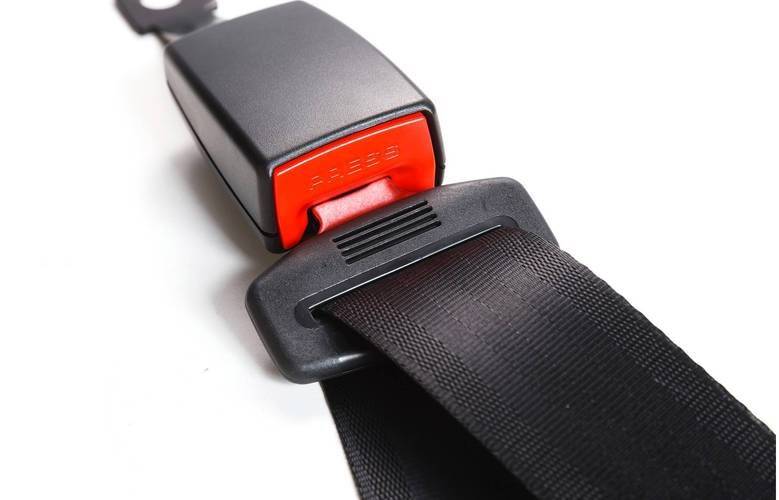
The high and low performance and stability of fibre raw material indicators seriously affect the safety performance and quality of the belt. In general, raw fibres with high tensile strength, moderate stretch and non-conformity are selected, such as high-braining and high-strength silk. It is low in light tolerance and is used more early and is not a significant proportion. At present, the fabric is mainly based on the leeching industry, which is characterized by high modulations, low extension, good heat performance, good size stability and appropriate cost. The poor strength of the detergent industry requires an increase in the number of mussels, leading to higher production costs; instability increases the difficulty of production control and leads to instability in the quality of the fabric. The extension of the fabric is determined by the stretching and dry thermal contraction rates of the raw materials, which, in the event of deviations and instability, can affect subsequent dyeing processes and bandwidth performance. In addition, oil-bearing rates, oil pollution and dust from the scrubber industry can lead to faults that affect the appearance of the belt. In the united states of america, performance fibers developed securus, a new polyester co-polymer fibre, which is made of woven cords that have both the kinetic binding properties of detergents and the flexibility and buffer of polyhexone (pcl). The energy absorption of the fabric made of securus fibre could be increased by 30 per cent and the impact of the crew could be reduced by 30 per cent compared to the determinate band。
Impact of yarn parameters on the fabric
The seat belts are about 2. 6 to 3. 6 m long, approximately 46 mm wide and approximately 1. 1 to 1. 2 mm thick. It is estimated that the total length of each vehicle is approximately 14 m, weighing approximately 0. 8 kg of fabric. Recycleability is facilitated by the ease with which the bands are dismantled and the composition is uniform. Safety belts in europe are mainly black, mainly grey in the united states and japan, but matching interior colours needs to be considered for specific applications. Usually, the band passes to 320 lines of 1100 dtex or 260 lines of 1670 dtex, using a slashed or silked structure. The yarns are often parallel to the fabric plane in order to increase the strength of the bands and make their surfaces smooth and soft. Once the fabric is rearranged, the fabric tightens and increases in gravity, increasing its energy absorption。
Weaves need to be soft and bent in length direction, which gives the human body a sense of comfort; and weaves need to be hard in width direction so that the band can easily slide between buttons and retrace smoothly. Nissan has developed a human slashed fabric that reduces the laxity and glitching power of crews when they wear it, and provides better comfort and ease. In addition, weaves require that the edges be grindy but not rigid, otherwise they affect the comfort of the wear. The u. S. Seat belt manufacturer alliedsignal developed a specially designed belt caress, which uses a softer 500d veil at the edge of the fabric。
The falsity of the bands is related to the single-wire density of the masonry industrial silk, the density of the yarn line, and the wiring of the yarn. The thicker veil helps to make it more resilient. High-resilient woven belts are suitable for high-resilient industrial silk. Weaves without silk can also be coated to make them more resilient. It has been noted that, in comparison to silk, the bandwidth is softer, smoother and more mutated because of the high density of the nitwidth, the increased stretching and tearing intensity of the nitwidth. In the united states and japan, weave strips are used mostly without silk, while in europe they are. Since the end of the twentieth century, the unscathed high-density veil has become increasingly popular. For example, japanese manufacturers often use 1100 dtex yarns and 550 dtex latitudinals to make fabrics. In addition, veils and deformations can also be used for woven bands, which are more resistant to grinding but have a low strength and can be used as lacquers。
Current developments and trends in seatbelts
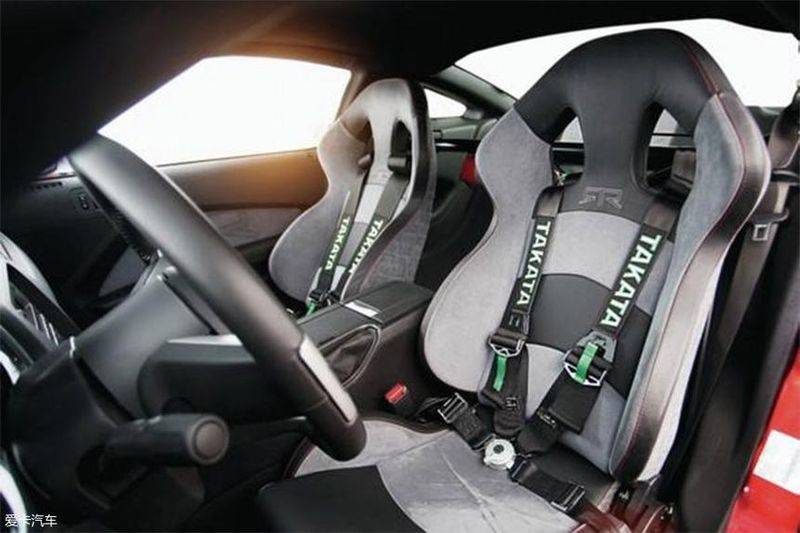
At present, seatbelt raw materials have been largely domesticized, the cleaning industry can meet domestic market needs, and there has been a better development of seatbelt technology. However, domestic firms still need to step up their research and development efforts in the overall technology of safety belts. Foreign enterprises have achieved much in terms of a constant, low-noise and low-wielding rollers, integrated seat-belt design, and fixed devices, with leading safety belts accompanied by key technologies that dominate the seat belt market. Data on the distribution of patent applicants for car seat belts abroad in recent years show that european and american countries possess a large number of core technologies, put in place significant patent barriers and create industrial monopolies。
In recent years, the market has also seen the emergence of research and development ideas such as safety belt systems based on pressure sensor principles, airbag seatbelts, and weaves with the negative pornotone effect. The largest vehicle safety supplier in the world, autoliv (ottolev), developed a seat belt with airbags, which combined the seat belts and airbags with one function and were equipped with a mercedes-benz (messendez-benz) class s car. The company has also developed a smart seat belt, which will be tightened by the pre-heat when the laser radar detects obstacles. Daily production has developed a smart safety belt that can be adapted to the gravity of the collision. In addition, seatbelts can be used in conjunction with airbags, where they are actively tightened when they are carried out so as to keep the crew in the best position of restraint. Using sensors and active safety features, seat belts are becoming increasingly “smart”。