Poisoning ginger is frequently eaten, and light can cause gastrointestinal disorders, abdominal pain and dizziness, and heavy can lead to chronic organ tissue failure in the body. Recently, shandong has come to the market, and many people are asking how to identify shandong ginger, a picture of which is shared with you through a culinary network。
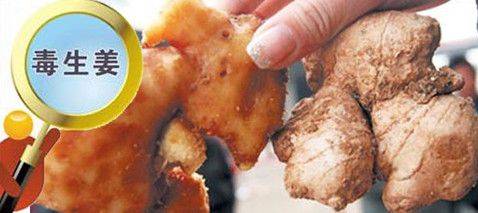
Shandong's face is poison
Yesterday, the japanese newspaper reported that not only was there a flagrant violation of the highly toxic pesticide, shinontan, but there were also high doses of it among the ginger growers in the city of shandong. What's the "gonodane"? According to the expert, its main ingredient is a highly toxic pesticide called aldicarb, which causes the death of a 50-kg-weight person and therefore cannot be used directly in vegetable fruit. Aldicarb is also characterized by its ability to be absorbed throughout the plant. Local farmers are also aware of the dangers of the `shinontan', and the ginger used with this highly toxic pesticide is not eaten by them。
Why do you have to make it? Local farmers responded that, because of the infestation of pests and the non-use of the “gono-dam”, ginger production would be reduced by more than half. For higher yields, for more money, so use it. Looks like it's the farmer's fault. But is the question so simple? Aren't farmers afraid of the eyes of regulation? Aren't they afraid of a lawsuit and severe punishment for it? One of the details revealed in the report tells people that, as the largest expanse of ginger garlic in the north of china, the regulation of the use of pesticides in ginger garlic cultivation has been applying “standards” — strict export controls and loose internal sales. In places where ginger is produced for export, there is seamless control over the operation and use of its pesticides. As for internal sales, only random checks are carried out, not several times a year, so there is little concern about such checks, whether they are for traders or farmers in the domestic sales business. At this point, it is not hard to understand why the production of “gang” has been in yenmenang for many years。
A comparison of local ginger and shandong
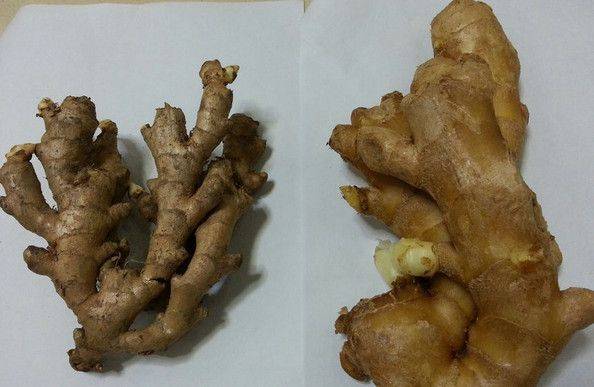
The local ginger (left) is a “skinny ginger” with a small body of mud on the market; the shandong kang (right) is large and generally cleaner。
What's a shinodan
According to the ministry of agriculture, it can only be used on cotton, tobacco, seasons, peanuts and potatoes. In particular, the instructions for the use of kamikaze are: for use in the case of serious nematode disease in hebei, shandong and henan spring; for groundnuts only in the spring. Both crops are long-lived and experimentally proven to be safe。
Even so, there are strict limits on the quantity, frequency and method of use. However, farmers here spend between 8 and 20 kg per acre of shinonata, which is three to six times the prescribed quantity of medicines. In addition, even on an approved crop, a maximum of one in its growth cycle is permitted, but the ginger farmers here use twice。

The instructions also indicate a safe interval of 150 days for use in sweet potatoes. Safety interval refers to the time required to reduce pesticide residues from the last application to the maximum allowable residue in the crop. And the farmers here not only overstretched in april and overstretched by autumn in august, but also overstretched once, which is about 60 days from october, far less than the 150-day safety interval of the reference sweet potatoes。
It is known that the local ginger-snacks and the inner-snacks are exported. As the testing of pesticide residues is very rigorous from foreign sources, no highly toxic pesticide is used in ginger at export bases。
The city of ancho, which is under the same jurisdiction, has about 150,000 acres of ginger cultivation, most of which is for export. Unlike the canyon mountains, the city of anchoux is very well managed for highly toxic pesticides, with pesticide supervisors and information workers in every town and street, community and village, and seamless supervision of the operation and use of pesticides。
Unlike the strict regulation of the export of ginger, there is a system of spot checks on pesticide residues for the internal distribution of ginger produced in other parts of the village, which cannot be checked several times a year, and which is less worrying for either the ginger seller or the farmer who is involved in the internal distribution of ginger。
Ginger is used as an aid to cooking and does not sell vegetables as much as they do in everyday life, so many ginger farmers keep freshly scratched ginger in their cellars during the season, and then sell it as much as the market needs and prices. In order to give a better face to the stocked ginger, some illegal traders chose to smoke ginger with sulphur. Ginger made with sulfur appears to be green and looks like fresh ginger that has just been picked, making it easy for consumers in the market to be deceived by the tender appearance of “venomous ginger”. In turn, sulfur contains large quantities of heavy metals, which, after long-term use, can harm human health. So what kind of identification do citizens have when they choose to buy ginger。
How to identify shantung
First, pick up a ginger and smell it first. If it's smoked with sulfur, there's a light sulfur smell or something else。
It is understood that the yellow colour of the skin after fumigation is yellow, and the skin is easily removed with a little hand. And then a small piece with a hand, which is white when fumigated with sulfur, is not very colory。
The second is to take a taste of a small piece, and if it's smoked with sulphur, it's spicy, which means that the ginger tastes light or something else。
The good ginger is usually dry, then smoother (on the surface) and brighter, or it's very good with a small amount of mud on its surface, smoked mainly with water, so it's basically non-existent and clean。
The usual ginger is kept at home for a longer period of time, while the “sulphur ginger” is exposed to the air and will have a deformity in a few days. If the consumer is worried about eating “venomous ginger”, it can soak several times with water before eating, reduce the harmful substance on the face of the ginger or eat it after the ginger has been skinned。
The danger of the ginger poison
1. Ginger is relatively toxic after fumigation with sulfur, and if it is regularly eaten, the light causes gastrointestinal disorders, abdominal pain, dizziness, etc., and the heavy causes chronic failure of organ tissues associated with the human body。
2. According to medical experts, sulfur is a metal sulphide, and if it penetrates into food and is eaten, mild symptoms such as dizziness, eye flounder, mental dispersion and general inactivity occur。
3. If eaten on a long-term basis, severe effects on the liver and kidney function of the person. Even more worrying is the lack of clarity on the route of sulphur used by these traders to smoke ginger, which may contain impurities and heavy metals, thus posing a more serious threat to human health。
If the intoxication is chronic, symptoms will only appear after a certain degree of accumulation of the toxin in the body. Second, sulfur fumigated foods are subject to a series of chemical reactions that can easily cause some intoxication to the human stomach, and if such foods are regularly consumed they are undoubtedly consuming chronic poisons。
The taboo of eating ginger
No skin. Some people eat ginger like peeling, which does not work the whole of the ginger. When fresh ginger is washed, you can slice。
2. The treatment of ginger is recognized. From the point of view of cure, ginger sugar is only used for patients with cold or cold stomachs and heat following rain, and cannot be used for hot or cold patients, nor for heat treatment. The use of ginger juice cures vomiting caused by cold and is not suitable for other types of vomiting。
3. Ginger is not suitable for everyone. It is not appropriate to eat ginger for a long period of time for anyone who is in a state of inclement fire or who is in a state of incendiary fever, or who suffers from haemorrhoids, pneumonia, pulmonary abscess, tuberculosis, stomach ulcer, cholesterol, kidney inflammation, diabetes or hemorrhoids。
4. Eating ginger is not much good. In the summer, hot weather, people are prone to dry, thirsty, ingested, sweaty, gingery, cinnamon, hot food, which, according to the “hot people cold” principle, should not be eaten much. Just a few gingers for cooking or soup。
Don't eat rotten ginger. Corrupt ginger produces a highly toxic substance that can degenerate liver cells, induce liver cancer, oesophagus cancer, etc. It's unscientific to say "sniffed ginger."。
This is a brief introduction to shandong chon. When you buy ginger, you should pay particular attention to the fact that if you look like shandong ginger and try not to buy it, it's usually made out of shinon tan choi。