A book that understands the basic structure of a diesel generator's cylinder pump

A book that understands the basic structure of a diesel generator's cylinder pump? Today, the sub-editor of the sub-engineer said that oil-jet pumps (also known as high-pressure pumps) were one of the most important components of the diesel fuel supply system and that their role was to send a quantity of diesel fuel to the jet at a specified time, at a certain high pressure, in accordance with the working requirements of the diesel engine. The basic requirements for oil pumps are mainly the following。
1 oil supply begins at the specified time of supply and for a certain period of time。
2. Supply the corresponding quantity of oil according to the size of the diesel load. The amount of fuel to be supplied increases when the load is high; the amount of fuel to be supplied should be reduced accordingly for load hours。
3 depending on the form of the diesel combustion chamber and the manner in which the mixed gas is formed, the jet pump must supply the oil dispenser with some pressure diesel to obtain a good spray quality。
The start and end of the oil supply requires a quick and clean start to prevent drops or abnormal injections from occurring after the oil supply has ceased, affecting the useful life of the jet。
For oil pumps for multi-cylinder diesel engines, it is also required that each tank be supplied in the order in which the selected engine is fired, and that the parameters for each tank be as uniform as possible, such as the timing, quantity and pressure of the tank. Oil-jet pumps are structured in a variety of forms and can be broadly grouped into four categories according to the principle of operation: cylinder-jet pumps, distributed jet pumps, pumps-nozzles and pt pumps. At present, the most widely applied diesel generator sets are the cylinder-jet pumps. The pump structure is compact, easy to repair, reliable, and more accurate in adjusting the supply。
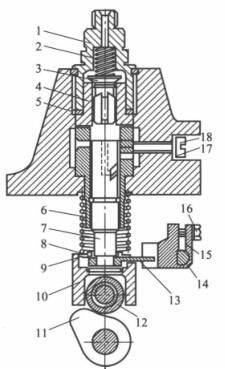
The basic structure of the piston oil pump, which is used to absorb and pressure oils by means of a retroactivity of the piston drum. The plume is referred to together with the plume of the plume (or subcolumn) and each plume is fed only to one gas tank. Depending on its construction, the plume-jet pumps are divided into single-form and whole-form pumps. All parts of the single-body jet pump are contained in the pump body, which usually has the oil pump cam on an axle and the gas cam on the machine. The pump is used mainly for single or two-cylinder diesel machines. The whole oil spray pump is the total pump consisting of a single pump driven by an oil pump cam in which several groups of pumping elements (sub-pumps) are fed together into one person. Pumps typically consist of pumps, pumping agencies, oil volume control agencies and transmission agencies。
The pumping unit, which is the main source of the pump, is also referred to as the sub-pump in the multi-cylinder pump, with a tectonic map of the sub-pump. The pumping units consist mainly of pyres (pyres and pyres) and pyres (pores and valves). The piston is a smooth cylindrical column with an oscillating slot in the upper part, with a diameter hole drilled in it and connected to the axis of the centre. The lower part of the pole is fixed with a regulating arm, through which it can be rotated. Two small holes were drilled at different heights of the plume, with oil vents for the fuel supply and speed adjustment system, and refuelling holes below. Both holes are connected to the low pressure oil cavities in the pump body. There are oil valves 3 at the top of the pole, which are pressed by springs. The lower end of the pole is in contact with the mats mounted in the wheel. Plug spring 8 pushes the plume down through the spring and keeps the wheel 12 in contact with the cam on the cam axis. The oil pump cam axis is driven by a warp axis. For a four-stroke diesel engine, a two-week curve and a one-week oil pump cam。