


The aerodynamic valve works by using compressed air as a power source to drive the core of the valve by controlling the flow, pressure and flow of compressed air, thus achieving the functions of truncation, flow regulation and flow control of the internal fluid of the pipe. The following are two specific working principles of the two common types of direct and angular travel in the aerodynamic valve:
Aerodynamic straight process valve
Implementing agency principles: consisting mainly of cylinders, pistons, springs, pushers, etc. When the compressed air enters the upper cavity of the cylinder, the piston, under pressure, overcomes the spring and moves downwards and closes the valve by pushing the thruster. On the other hand, when compressed air enters the lower chamber of the cylinder, the piston moves upwards, pushes the core of the valve upwards and opens the valve. The spring function is to provide a reverse force to bring the piston and the core back to their initial position when the gas source is lost or the valve is required to reposition。
Control principles: control the flow and pressure of compressed air through aerodynamic control elements such as electromagnetic valves, aerodynamic control valves, etc. For example, when the electromagnetic valve receives a control signal, it will switch the airway, introduce compressed air into the corresponding cylinder cavity chamber, and effect the opening or closing of the valve. The aerodynamic control valves can accurately regulate the flow and pressure of compressed air according to the size of the input signal, thus controlling the movement of the piston and achieving a precise adjustment of the opening of the valve。
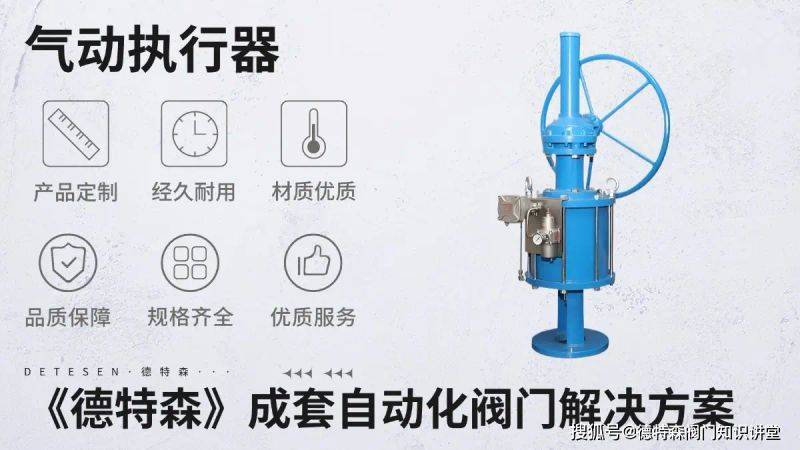
Aerodynamic straight process valve
Aerodynamic valves
Implementing agency working principles: aerodynamics are commonly used, often with gear bars and forklifts. For example, when the air is compressed into the cylinder, the piston on the piston collides with the gear on the output axis, which rotates when the piston moves, thereby creating an agular shift of the piston axis, connecting the core of the valve to the core of the valve, driving the core rotation, and achieving the opening and closing of the valve. The forklift is used to drive the piston through compressed air, to move the piston through the forklift and to rotate the output axis。
Control principles: similar to the direct process valve, control the flow and pressure of compressed air by aerodynamic control elements. In contrast, the control of the angular valve is primarily to rotate the output axis of the implementer to an angle by controlling compressed air, thus accurately controlling the opening of the valve to meet different flow control requirements。
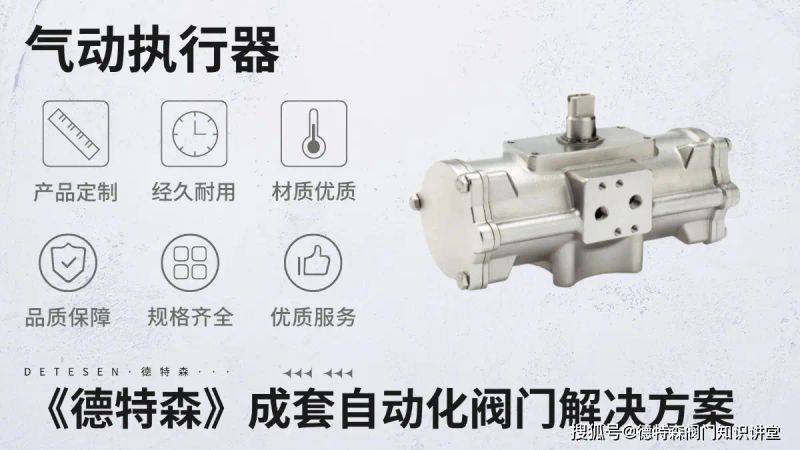
Aerodynamic valves



