Today, replacing a three electro-temperature refrigerator with an electro-temperature tester found that the temperature of the three cavities was abnormal and concluded that the electromagnetic valve was damaged and the replacement failure was eliminated。
The refrigerator uses an integrated dual-stable pulse electromagnetic valve。
Here is an introduction to the workings of the refrigerator's electromagnetic valves, which, it is hoped, will help in the maintenance of the electro-temperature refrigerators。
The electromagnetic valves in the refrigerator have a single- and two-stable ratio, with two three-way vents, two vents。
A. And two monostatic electromagnetic valves:
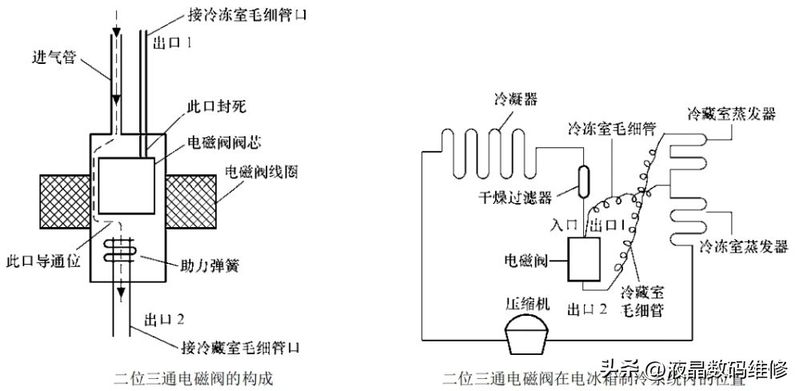
As shown above, when the electromagnetic valve wires are out of power, the valve core of the electromagnetic valves is pushed to the top by an aided spring, locks the exit 1, links the vent to the exit 2, works simultaneously with the freezer room, when the cooling room temperature reaches the established temperature, the electromagnetic valve wires enter 220 v to communicate, and the electromagnetic valve core moves downwards over the spring resistance and closes the exit 2 at a time when the vent is in line with the export, only works in the freezer room, and the freezer room no longer works。
Single-state electromagnetic valves provide 220 v for the exchange of electricity, which, in order to be compatible with one export, requires a permanent transmission of 220 v, and after 220 v has been cut, the electromagnetic valves become connected with the other two。
Thus, this single-stabilized two-digit electromagnetic valve requires long periods of electrical power, heat and consumption, often for two refrigerators at the lower end。
B. And b
The three attached electro-temperature-controlled refrigerators in hair used a single double-digit three-track two-track two-track electromagnetic valve, which in fact formed a three-way four-channel electromagnetic valve。
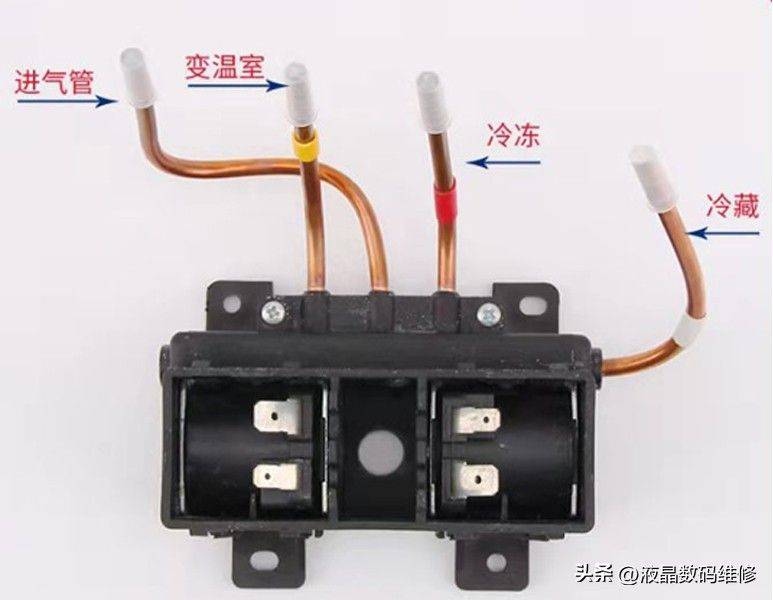
At the time of conversion, the two-stabilized electromagnetic valves are pulsating direct currents, which are only transacted instantaneously, which disappears after conversion, and are no longer active, and the electromagnetic valves will remain in their post-conversion state. How is it maintained? Look at the diagram below and you'll see。
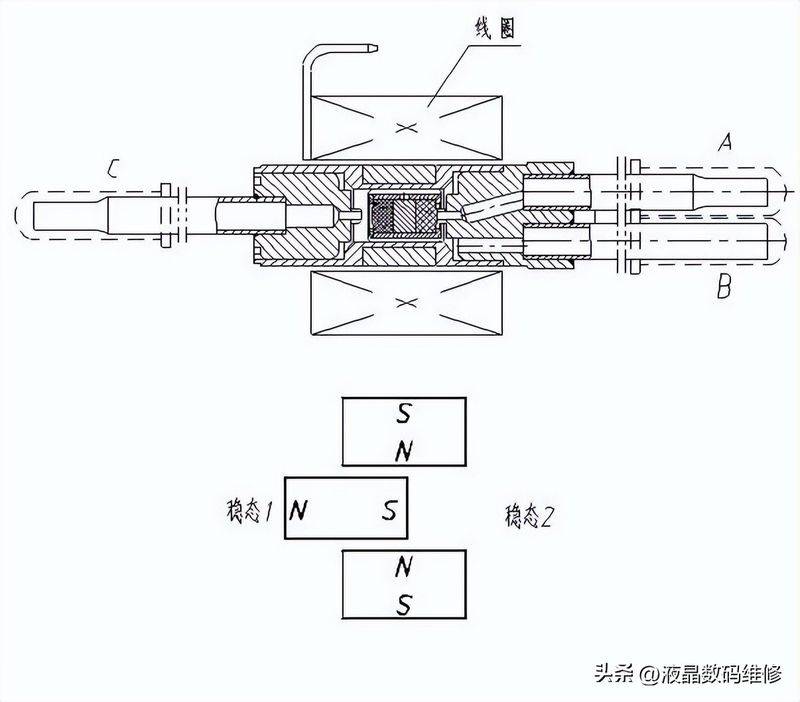
The center core is a strong magnet, and the strong magnet is located in a long field made up of strong magnets. It can be seen that the core is either in stable state 1 or steady state 2, stable state 1 is sucked in by strong magnetic force, steady state 2 is held by a strong magnetic bullet, and it is not in the right middle, similar to our usual double-control switch。
Direct currents need to flow into the online loop when the state of conversion is required, and a strong magnetic field formed by the ring can move the core of the valve from steady state 1 to steady state 2, with the reverse direct currents going in the opposite direction at the time of return to steady state 1。
The state conversion does not require direct current maintenance, at which point the direct current is cut off, as it does not require long periods of electricity, which is energy-efficient and the coil does not heat。
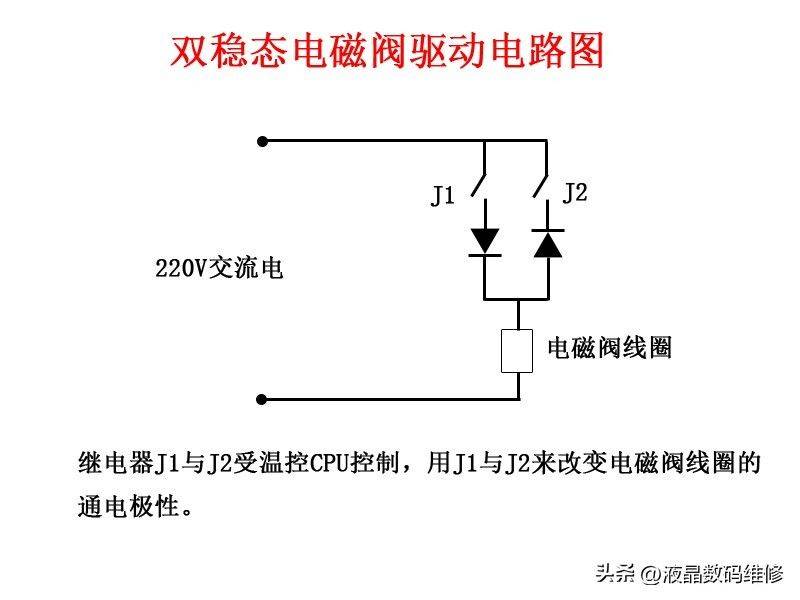
The change in direct-flow electropolarity was achieved by relays and whole-flow circuits on the control panel, as summarized below: