Management science is an evolutionary history of moving from empirical management to scientific management, from efficiency to people-centred priorities and from a single organization to ecological synergy, centred on constantly responding to organizational efficiency, human needs and environmental uncertainty in the context of the times. The following is a time-line and core paradigm for systematizing its development process。
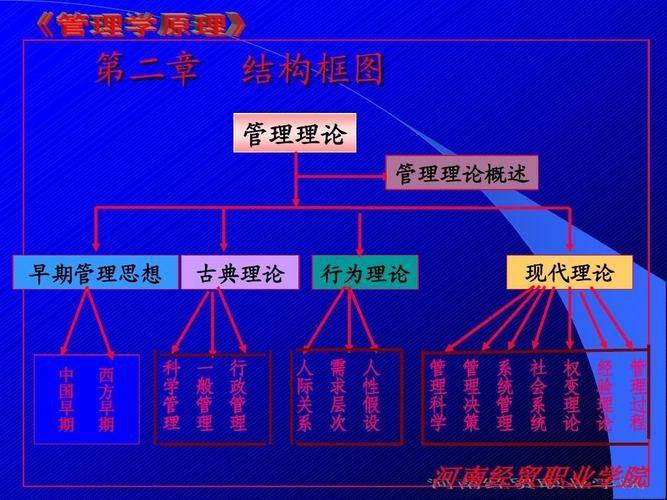
Early management thinking (mid-18th century — late-19th century): experience and buds
Age background: the industrial revolution, the emergence of factory systems and the inability of traditional experience management to adapt to the demand for scale production。
Core characteristics: fragmented and non-systematic management thinking to address specific production issues。
Key figures and ideas:
Ii. Theories of classical management (end of the 19th century - 1930s): the birth of science management
Times background: america’s high industrialization, acute labour conflicts, inefficient production, and much-needed systematic and scientific management。
Core assumptions: economists (humans seeking maximum material benefits); rationality paramount; maximizing efficiency。
Three core genres:
Scientific management theory (tyler system). General management theory (organizational management). Bureaucratic organization theory (scientific hierarchy) iii. Behavioural science theory (the 30th-60s century): from “economics” to “socials”
Times background: the great depression, the emergence of the workers' movement, and the “humanization” of classical management theory highlighted。
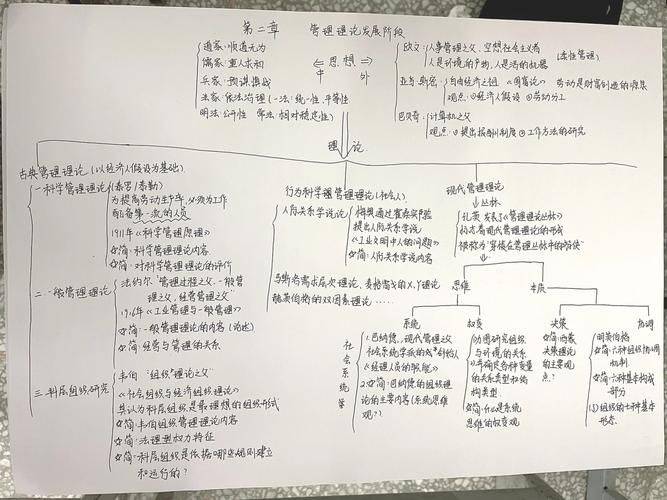
Core assumptions: the social person (the person not only pursues materiality but also needs a sense of belonging, respect and socialization); attention to human behaviour and motivation。
Milestones and core theory:
Hossan experiment (1924-1932) - the starting point of behavioral science. Core behavioral science theory iv, modern management theory jungles (the 1960s and 1980s): bicentennial resonance and systemic integration
The age context: the technological revolution, the acceleration of globalization, the surge in uncertainty in the business environment, and the inability of a single theory to deal with complex issues。
Core features: school lynch, called the “management theory jungle”; emphasis on system thinking and power adaptation。
Mainstream:
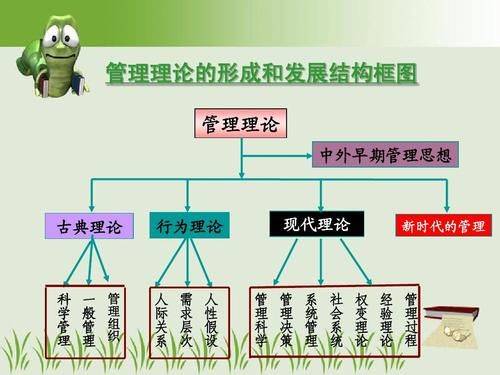
Management process school (konz): succession to fajor, focus on the practice and optimization of management functions. Systems management school: treats the organization as an open system, emphasizing the optimal interaction of internal and external elements and the overall excellence. Theory of decision-making (simon): management is decision-making, proposing “limited rationality” and “satisfactory decision-making”. Management sciences school: optimizing decision-making and processes (e. G. Linear planning, inventory models) using mathematical models, operational preparation, computer technology. Theoretics of power change: at the core is “no best, only the most appropriate” and management needs to be adapted to the environment, mandate and human dynamics. Empiricalism (druc): emphasis on drawing from management practices and proposing “mbo”. Contemporary management theory (from the 1980s to the present): innovation and ecological synergy
Age background: it revolution, knowledge economy, globalization competition, sustainable development as a theme。
Core trends: from “internal management within the organization” to “ecological synergy”; from “efficiency priorities” to “innovation, people-centred, sustainable”。
Representative theory and practice:
1. Strategic management revolution 2. Organizational and cultural innovation 3. People's instincts and merit management 4. The evolution of the humanistic assumptions at the heart of digitalization and future management management development: economics, social fulfilment, complex humans, ecologicals. Management shift of focus: efficiency behaviour system strategy innovation and ecology. Upgrading environmental adaptation: from coping with stable environments to adapting to dynamic, complex, uncertain globalization and digital environments。