In order to follow up on the important statements and directives of the general secretary of xi jinping on the responsibility for safe production, the civil aviation authority organized, from march to august 2025, an inquest on the subject of strict implementation of the responsibility for safe production, with a view to enhancing the integrity and effective implementation of the responsibility for safe production in civil aviation. A special section of the paper is devoted to the publication of excellent articles from this essay for readers。
Safety is the lifeline of the civil aviation industry. However, in the area of civil aviation construction, the lack of awareness among some managers of their security responsibilities, the lack of investment in security resources for some of the units involved and the non-availability of some of the ongoing construction safety training tests are a source of constant questioning of the resilience and reliability of the security chain of responsibility. The question of how to translate the institutional blueprint for safe production responsibilities into a solid barrier at the project site is one that must be addressed by all civil aviation construction units。
I. Importance of implementing the responsibility for safe production
The safety of civil aviation is at stake in the image of the country, in the life of the people and in the lifeblood of economic development, and the implementation of the responsibility for safe production is of triple strategic importance: the first is the legal liability constraints. The safe production act establishes the rigid principle of “accountability for safe production of all personnel”, the civil aviation act establishes the cornerstone of industrial safety, the civil aviation safety regulations elaborate operational norms, and the management of responsibility for the implementation of civil aviation safety act makes the system of liability more a “four duty” governance framework. Second is the inherent requirements of industry characteristics. The civil aviation industry is characterized by three broad characteristics: holistic, complex and interconnected, and any chain of failure can trigger a chain reaction with irreversible consequences. Third is the cornerstone of high-quality development. The implementation of the responsibility for safe production is an important safeguard for the protection of the “air silk road” and, above all, the core competitiveness of civil aviation。
Opportunities and challenges in meeting the responsibility for safe production
As the core engine for the construction of the beijing air hub, the capital airports group ltd. (hereinafter referred to as “the general command”) also faces the opportunities and complex challenges of the times in fulfilling its responsibility for safe production. First, the security requirements of the party and the state are constantly rising. The 20-year report of the party and the twenty-third plenary session devoted a special chapter to the modernization of the national security system and capacity, giving security a new strategic and political dimension. Second, the trend towards complex engineering patterns is highlighted. The proportion of unstoppable and unstoppable retrofitting projects has increased in nature by “scrutinizing” in the dynamic environment of aircraft booming and the flow of passengers, coordinating management such as thin ice, and increasing pressure on air defence safety and operational security. Thirdly, the multi-dimensional balance of relationships requires a higher artistic level. The synergies between security and quality, investment and progress control, on the one hand, and each other, on the other, must be streamlined, and synergies between construction units and those involved in construction, supervision, testing and so on, on the other hand, must be efficiently integrated, so as to create synergies rather than internal consumption。
Iii. The methods of work for the implementation of the responsibility for safe work
Faced with its mission and daunting challenges, the general command, building on the characteristics of the field of construction, draws lessons from the project's security management experience and develops a “six, three, four-wheel-drive” strategy, which provides a systematic solution for accountability. The main subject of the “six responsibilities”, the “triple” ruler, the “four rounds” of aerodynamic energy, the “six-three-four” method of work eliminates the aberration of responsibilities through systematic thinking, prevents the commissioning of decay through closed loop management, transforms abstract systems into tactile operational coordinates, and ensures that responsibilities flow from the decision-making hub to the construction end, without decaying transmission。
(i) “six responsibilities” detailing security responsibilities
The general command has fine-tuned the “four responsibilities” into “six responsibilities” in the construction landscape, so that the network of co-responsibles can be streamlined. The first is the leadership responsibility of the head of the construction unit, which is a “set-out star” and whose decision-making level is to place security at the heart of the strategy and to consolidate resource security and direction; the second is the on-site management responsibility of the engineering department of the construction unit, which is a “outpost” and which is directly involved in risk management and risk management; the third is the supervisory responsibility of the quality security department of the construction unit, which is a “scrutinist”, which carries out penetrating inspections and precision tests; the fourth is the responsibility of the main body of the construction unit, which is a “pressure stone”, which is responsible for securing security inputs and eliminating violations of regulations; the fifth is the supervisory responsibility of the supervisory unit, which is a “professional outpost” and which performs process control responsibilities independently and impartially; and the sixth is the detection responsibility of the detection unit, which is a “light mirror” and provides scientific verification of quality security with data precision。
It's like a six-way bite. As in the implementation of an unstoppable retrofit project, the general command leads the integration of airspace coordination, the engineering department maintains a run-off node, the quality and safety department implements a rigorous programme, the construction unit implements security protection, supervises the entire perimeter, monitors the implementation process of the detection unit, crosses the barrier with responsibility and reaches the core safely。
(ii) “tripleization” clearly enables security accountability
In order to root the “six responsibilities”, the “triple” is the ruler. (c) the use of “list-up and clear-cut” to specify the security responsibilities of departments and posts as a star map; the development of uniform norms for security management operations with “standardized responsibilities” to ensure that operations are rounded up like sophisticated gears; and the development of scientifically quantified evaluation metrics with “performance appraisals” to enable the performance of “command sticks”。
1. Clear list of responsibilities: the general command prepares the list of responsibilities for safe production and the list of norms of conduct for performing work, which are quantified in terms of location and persons and eliminate ambiguity。
2. Standardized responsibilities: develop standardized processes to cover design reviews, start-up verification, routine inspections, specialized inspections and ensure that actions are conducted in a structured manner。
Performance appraisals: annual security performance appraisal checklists are issued to include risk correction rates, violations, etc., in kpi, the results of which are linked to incentives and disincentives for promotions, and form a “accountability-test-up-up” closed loop。
(iii) “four-wheel-drive” to inject momentum into the security responsibility efficiency leap
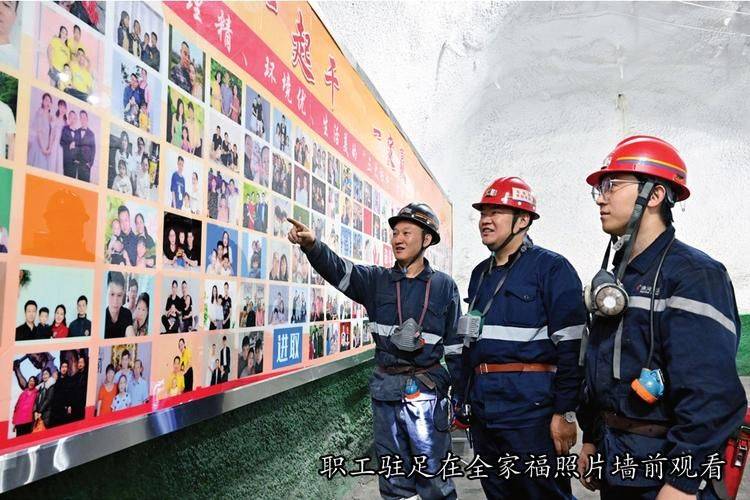
`four-wheel drive' is the effective operation of the system and strict implementation of responsibilities, risk identification control and risk mapping governance, priority projects and key links, integration of party construction and a digital intellectual transformation, including the following:
1. Safety system operation and accountability drive
In 2024, the capital airports group ltd. (hereinafter referred to as “the corporation”) issued a framework for the development of a security governance system and the modernization of governance capacity (c-sms), which the general command, as a leader in the construction of the group, is fully committed to promoting its in-depth application and landing at its headquarters and to establishing a cross-cutting security management model. To enhance the consistency of the security objectives and the functioning of the system, by delineating the safety management objectives precisely among the departments in accordance with the division of responsibilities between the departments, by signing departmental statements of responsibility for safe production, and by promoting close collaboration among the departments and participating units in order to improve the efficiency of the operation of the security production system in the general command, including through annual meetings of the security council, monthly security regular meetings and monthly security quality briefings。
The departments of the general command and the personnel at all levels strictly comply with the procedures and legal responsibilities for the construction of the infrastructure and implement the management scheme for the implementation of the responsibility for civil aviation security and the responsible management scheme for the safe production of the full personnel of the construction project of the general command. At the end of 2024, the general command conducted a departmental security checklist performance appraisal. At the beginning of 2025, a security performance appraisal checklist was issued to act as a guide for performance appraisal and to advance accountability and institutional implementation. The departments are working to strengthen the security management of the participating units, to put an end to the “laxity and weakness” of security management and to adopt a zero-tolerance approach to all types of violations, with due regard for responsibility, responsibility and responsibility。
2. Risk identification control and risk screening governance drive
The results of the multi-dimensional, immersion safety risk joint assessment conducted at the design stage, i. E., the organizational design, operational unit and safety specialist, are consolidated in the form of mandatory design safety guidance, and the “safety valve” is tightened from the source. Upon entering the construction phase, risk management is in no way static. Implementation of the dynamic risk scanning and classification of “daily inspections, weekly studies, monthly assessments” in conjunction with construction progress, seasonal climate change, special operating security requirements, etc., based on a platform of security intelligence, and strict enforcement of the “one-point-one-one-one-one-one-one-one-one-one-one-one-one-one-one-one-one-one-one-one-one” approach to identified high-risk operations to ensure that controls are in place。
A multi-dimensional mapping network is being developed for “focused time periods for intensive inspection, in-depth examination of areas of expertise, and intelligent means to assist inspection”. Focused time-frames are active, and the construction and supervision units conduct “four or two” special joint screenings before the start of the project, before the start of major safeguard missions, before major holidays and before extreme weather. Special screenings are organized for runways specific to the construction of civil aviation, for intrusion, for exterior goods, etc. Full application of the security smart platform and mobile terminal app to secure the close loop management of the whole process line of the potential discovery-up-assign-replace-validation-selling. In order to address the typical recurring risks, it is necessary to look back at the gaps in training, bottom-up, implementation, monitoring and so forth, by strengthening training, improving protective measures, amending regulations and so on。
3. Focused projects and key links drive
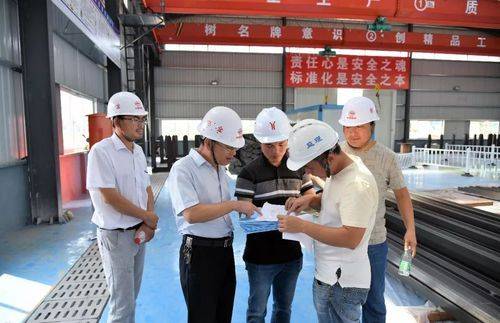
Major projects such as the upgrading of the t3 terminal at the capital airport, the partial underground construction of the satellite hall at the beijing dae-hing airport and the upgrading of the baggage system at the t2 terminal at the capital airport and the replacement of high-end lights in the flight area have been accompanied by the construction of more than 10 unstopped projects to ensure the safety of the unstoppable construction project. In 2024, the general command established an inter-departmental working unit to secure the security floor. In 2025, improvements will continue to be made, with tangible and hard moves: first, to focus on the ongoing construction programme, to ensure strict implementation of security measures and to ensure that personnel in key security positions are on duty; and second, to focus on contingency plans, to strengthen the capacity for on-site emergency response, to ensure rapid and effective control and disposal of any incident, and to ensure “six safety” for air defence, operation, fire, personnel management, environment and excruciating circumstances。
Strengthening of the control of key points such as fire operations in densely populated airfields. In accordance with the relevant notice requirements of the civil aviation authority, the consortium, a special notice for strengthening fireworks in construction projects was issued, focusing on critical aspects of fire-fighting operations and requiring the ministry of engineering management, participating units, to strengthen security controls. Organization of special inspections for fire safety management in construction projects in progress, focusing on the approval of fire safety programmes, training exchange, production of fire permits, on-site fire protection measures, process supervision, inspection records, etc., and timely completion of security hazard close-up。
4. Party-building integration and intellectual transformation driven
Maintaining the overall leadership of the party in security. • strict implementation of the “first issue” system, in which the general secretary of xi jinping, in the course of his studies in the party committees and central groups, learns about the importance of safety in production and the importance of instructions for civil aviation security, and translates it into political and operational self-awareness. (c) to include the important issue of safe production in the important agenda of the psc and to conduct regular research, supervision and effectiveness. • signing of a certificate of commitment and responsibility for the safety of the workforce, which is responsible for the leadership of the “critical minority” and for the safety of the staff. Promotion of a culture of safety through deep integration of party construction and operations: opening of a school of “quality engineering” to reflect on responsibility in case of accidents; joint development of the theme “strengthening safety lines to protect integrity and red lines” to promote business communication and awareness-raising; production of the safety alert manual, “safety in fire operations”, to enable safety knowledge to reach and reach。
The general command security wisdom platform has been developed and approved, and currently covers construction projects in the general command. This year will also see the further enhancement of the effectiveness of the application of the security wisdom platform to the general command project, the introduction of digital technology for security risk management, accident hazard screening management, major hazard source monitoring, etc., and the gradual transition to online security management; the active exploration of the integration of large model technologies, such as deepseek, with existing security platforms; the promotion of system connectivity, data interoperability and resource sharing with the command oa office system, group security systems; the integration of digital intelligence security management into the full chain, business management process; and the exploration of new ways of artificial intelligence means to improve the quality of security quality management。
At a time when the security responsibility system is becoming more sophisticated, the “six-three-four” method of work continues to unleash its effectiveness in engineering practice, with a deeper and more lasting force — a culture of security and self-confidence — flourishing as a spring tide within the organization. The fulfilment of security responsibilities is the unshakeable foundation of civil aviation, and the culture of safety and self-confidence is the spiritual lighthouse that leads us through the storm and miles. In the great journey to build a chapter of civil aviation in the transport power countries, it is only by building the foundations of responsibility at all times and by shaping the spirit of culture that we can forge a secure wall that is indestructible and provide firm guarantees for the new development of civil aviation in china. (by chang joon, yao xie feng, in beijing, capital airport group ltd.)