I. Evaporation rationale
The unit operation of evaporation, which causes higher solubility concentrations in the solution to be referred to as evaporation, is referred to as evaporation, and the equipment used is called evaporation. Evaporation operations are widely used in the chemical, petrochemical, pharmaceutical, sugar, paper, deep cold, desalination and atomic energy industries。
Ii. Evaporation media
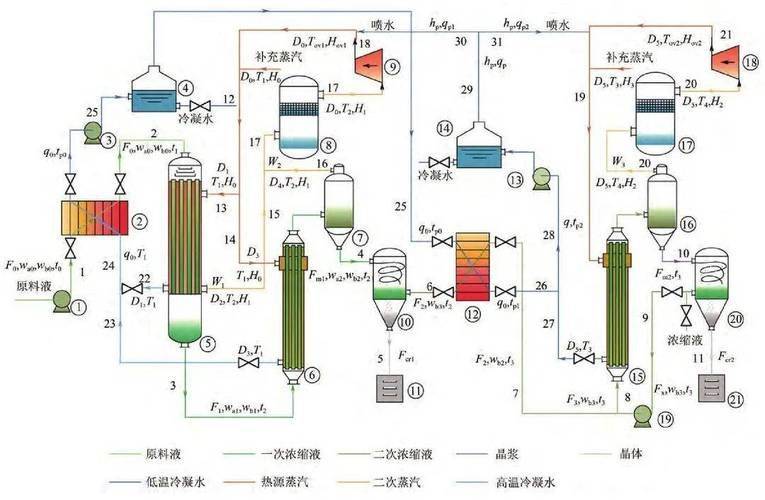
The evaporated solution may be either a water solution or a solution for other solvents, while the chemical industry is dominated by evaporated water solution, so this chapter is limited to discussing evaporation of the aquatic solution. Thermal sources in evaporation operations often use fresh saturated water vapour, also known as biovapour. Vapours from the solution are referred to as secondary vapours, so as to distinguish them from live vapours. The secondary vapours are generally moved continuously by condensing in the operation, otherwise the steam and boiling solution are balanced and the evaporation process is not possible. If secondary steam is condensed directly without using its cooling heat as a single evaporation. If secondary vapour is induced to the next evaporation unit as heat-heating vapour to use its cool condensation, this joint evaporation operation is called a multi-efficiency evaporation unit。
Iii. Evaporation unit operating environment
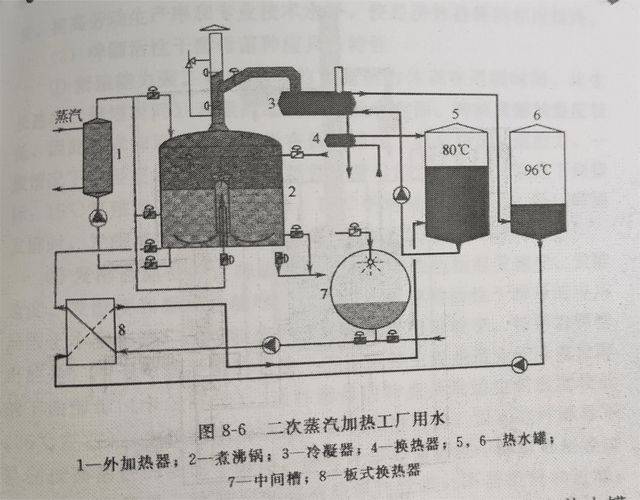
The evaporation operation can be performed under pressure, constant pressure or pressure reduction, and industrial evaporation operations are often performed under pressure reduction, known as vacuum evaporation units. Vacuum operations are characterized by a decrease in the boiling point of the solution under pressure, which facilitates the handling of heat-sensitive materials and uses low-pressure vapour or waste vapour as a heat source. 2 the boiling point of the solution is reduced by the pressure pressure, so that the overall heat transfer temperature difference can be increased when the solution is under pressure reduced; at the same time, however, the viscosity of the solution increases and reduces the total heat transfer coefficient. A vacuum evaporation unit system requires a pressure-reducing device that increases the investment and operating costs of the system。
Iv. Seawater desalinizers
In general, enriched liquids are products, and secondary vapour condensate is excluded; however, in desalination operations, secondary vapour condensate is a required product, i. E., freshwater, and concentrate residues are discarded. The essence of the evaporation process is the heat transfer process between vapour condensation on one side of the heat wall and solution boiling on the other side, and the vapour rate of the solvent is controlled by the heat transfer rate, so the evaporation is a heat transfer process, but is distinct from the general heat transfer process, since the evaporation process has the following characteristics:
1) thermal properties. Thermal condensation on one side of the heat-heated wall and boiling on the other side of the solution is a constant temperature transfer process that varies from one side of the wall。
2) the solubility properties of some of the solutions in evaporation are crystallized, distillable and biofoams, decomposition or polymerization at high temperatures; the viscosity of the solution increases gradually during evaporation and increases corrosivity。
3) the change in the boiling point of the solution contains a solution containing a non-volatile solution with a vapour pressure that is less similar to that of a liquid at temperature (i. E. Pure water). Low, in other words, at the same pressure, the boiling point of the solution is higher than the boiling point of the pure water, so when the vapour is heating, the temperature of the vapour transfer is smaller than the temperature of the evaporation water. The higher the concentration of solution, the greater the phenomenon。
4) foam bands are often accompanied by a large amount of fluid in the secondary steam, and the condensation must be removed before it is not only lost material but also contaminated condensing equipment。
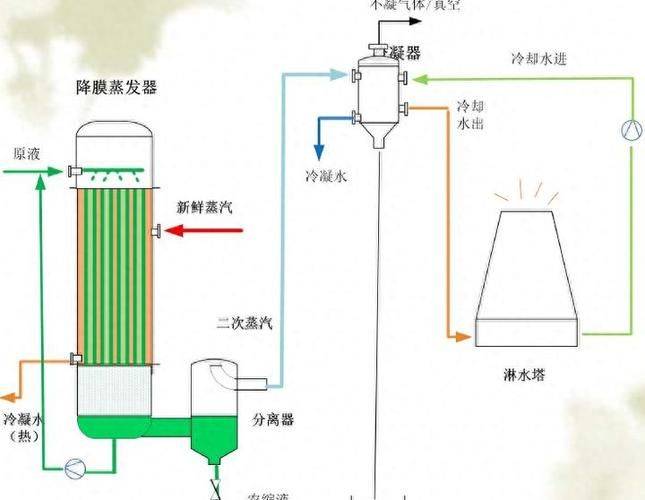
5) the use of energy is one of the key considerations in evaporation。
For these reasons, the evaporation unit must be structured differently from the general heat exchanger。
Related products: desalination evaporaters, evaporaters, membranes, mandatory cycle evaporaters, evaporation crystals, wastewater evaporaters, concentrate juice evaporaters, concentrate jam evaporaters