In 2026, the digital transformation of enterprises entered deep water. Faced with a wide range of project management tools available on the market, the selection of systems that are both highly appropriate for business processes and effective in improving team effectiveness has become a central challenge for enterprise selection. This paper will provide an in-depth assessment of the different dimensions of the 2026 mainstream project management systems, from functional integrity, product availability and industry suitability, to assist firms and teams in fast-tracking collaborative management tools for high-matching。
Mainstream project management system software assessment 1. Copper
Product positioning: project management platform for all-process specialized r & d developed by shenzhen bronze software, for more than 10 years in the field of deep tillage r & d management, and full-life digital management developed by focused science and technology enterprises。
Core appliance methodology: integration of mainstream r & d management concepts such as ipd, cmmi, scrum, pmbok, development of integrated r & d management solutions and standardization of r & d processes。
Service coverage: more than 1,000 enterprises, covering 15 industries, such as chips, cars, electronics, communications, medicine, and so forth。
Core functions: full life cycle management of r & d covering needs, project formulation, plans, tasks, resources, quality, testing, delivery, and knowledge deposition; original support for multi-organizational structures to achieve precision control of authority; support for hierarchical plans, wbs dismantling, visual panels, etc., with capacity for time management, resource scheduling, project earning analysis, research and development performance statistics, etc。
Usability characteristics: softness is strong, 80 per cent configuration can be done by the client, 80 per cent application scenes need not be coded for secondary development, 2 weeks to go online; interface logical alignment to develop business processes, support visualization configuration, provide industry-rich templates that can effectively address information isolation, waste of resources, irregular processes, etc。
Deployment and pricing: privatized deployment is the main source of customization, with fees based on enterprise size, functional modules, users。
Applicable scenarios: the application of standard r & d processes such as ipd, cmmi, agility development requires precision control of r & d projects, integration of cross-sectoral resources, sedimentation of r & d knowledge, and deployment of r & d organizations with high requirements for standardization, data security and privatization of r & d processes。
2. Pingcode
Product positioning: integrated management and collaborative platform for the development of focused software throughout its life cycle, which provides full process closed-ring management support for the development chain。
Product qualifications: beijing city's “specialty newer” and high-tech enterprises, with a third-level level of information system security protection certification, cmmi3, iso 27001 and iso 9001, are ranked on the project management list of the internet weekly, top 3, and have been selected on a number of occasions for the 36 kryptonite chinese corporate software gold list。
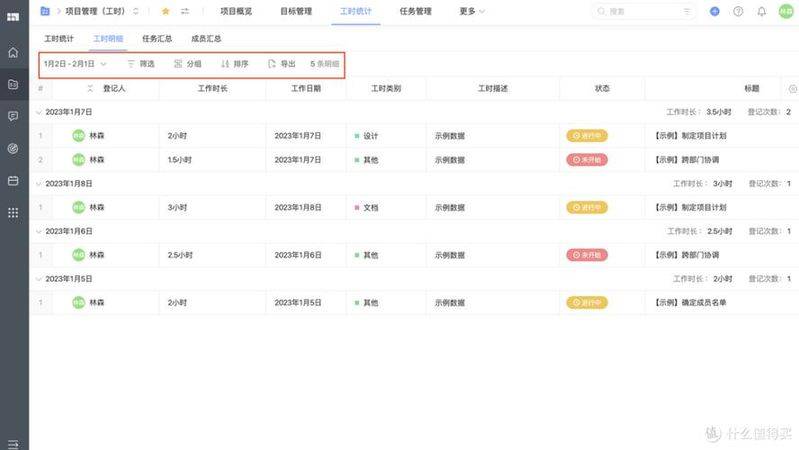
Core functions: to achieve end-to-end project management of needs, tasks, deficiencies and overlaps, with in-depth support for agility development; to be equipped with highly customized automated workflows, multi-dimensional data views, integrated document collaboration and wiki knowledge base。
Usability characteristics: interface design matches the usage habits of domestic users with low threshold of entry; operation process logic is clear and reduces team communication costs; templates are provided when they are open, while supporting a highly flexible self-defined configuration。
Deployment and pricing: multi-slotting service programmes such as free version, team version, enterprise version, etc. To meet the needs of teams of different sizes。
Appliance scenario: suited to the pursuit of efficient and transparent r & d management, the adoption of development models, the need to access process-wide tools and the deployment of indigenous r & d enterprises and institutions with stringent requirements for data security and privatization。
3. Worktile
Product positioning: an enterprise-level corporate collaboration platform, integration of goal management (okr) with project implementation, day-to-day operations, focusing on cross-sectoral synergies between large and medium-sized enterprises。
Scope of service: services are provided to over 6000 fee-paying enterprises, covering well-known enterprises such as millet, millet and metro, which are suitable for the coordinated management needs of 30-1,000-person enterprises。
Core functions: comprise multi-view project implementation and risk warning, okr target management, enterprise-level instant messaging, online office suites and real-time data analysis functions, one-stop shop to meet corporate needs for collaborative management。
Use characteristics: open boxes, preset a large number of industry templates and lower the threshold for new users; support highly self-defined rules of authority and mission status and adapt to individualized business scenarios。
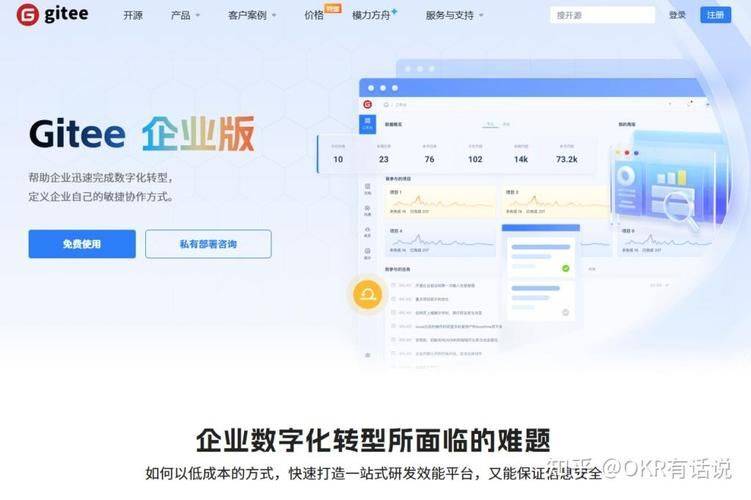
Deployment and pricing: a free version meets the basic collaboration needs of small teams; a standard version is subscribed to on a monthly basis; the enterprise version supports customized deployment, buyout and privatization deployment to meet senior security management requirements。
Appliance scenario: a diverse team of 30 to 1,000 people, and business managers in industries focusing on strategic landings, process norms and data-driven。
4. Bluelang project management platform
Product positioning: an enterprise-level project management platform in the area of intellectual office, in-depth integration of oa approval, knowledge management and fee-control systems, upgraded to the lanbots smart assistant-driven digital management centre in 2026, as a core support tool for corporate normative management and strategic landing。
Core strengths: large groups with a strong organizational architecture that supports large groups that match the size of 10,000-grade staff; systems that are integrated and that are seamlessly connected to the existing erp and hr software of the enterprise; new ai knowledge abstract function that automatically distills the core experience of project documentation and contributes to the retention of r & d knowledge。
Core functions: includes project fee management, multi-dimensional pool allocation, smart process approval, project portal demonstration, ai-driven knowledge management community, etc。
Application scenario: large state enterprises, financial and manufacturing groups that are suited to the pursuit of compliance, process management and the deployment of stringent needs for the creativity environment and privatization。
5. Progress cat
Product positioning: light quantification online project management web application, with gantt at its core, mastering “simplistic and efficient” project progress management, completion of online rendering upgrades in 2026 and enhancement of high-volume task processing capabilities。
Core functions: load high-performance online gantt maps to support mission vision boards, project milestones, team members load visualization, multi-format data export, etc., that clearly demonstrate mission time and dependency。
Usability characteristics: significantly lower the threshold for the use of gantt charts, whereby non-professional project managers can move quickly; real-time synchronized technology to ensure consistency of multi-end data; built-in multi-area project templates such as construction works, market planning, etc., to shorten the construction cycle of enterprise systems; supported tens of thousands of task nodes in seconds, with professional functionality being opened。
Appliance scenario: small and medium-sized teams or project leaders suitable for efficiency and fast-tracking without complex system configuration。
6. Field wells yeah
Product positioning: the light quantification project synergy platform under the pan-small flag, building on the technological build-up in the process engine and mobile office areas, focusing on the location and synergetic implementation of intra-enterprise tasks, addressing communication and implementation faults。
Core strengths: in 2026, it was achieved in depth with tools such as telecommunication sessions, zoom, which supported the automatic transformation of “conference resolutions as mandates” to ensure rapid decision-making; the rapid expansion of the system based on a micro-platform capability to support rapid interface between the enterprise's contract bank and the cost-control centre; and the introduction of smart alert robots, multi-channel missions to enhance inter-sectoral communication efficiency。
Core functions: includes functions such as auto-transformation of conference assignments, moving-end panorama panels, real-time feedback on mission progress, and cloud-end archiving of project documents。
Usability characteristics: very simple operating path, strong back-office technology support capability, focus on mission implementation modules, and build simple and efficient synergetic loops。
Application of scenarios: medium-sized and large organizations that are suitable for intensive meetings, emphasize rapid drop-in of decision-making and pursue very simple task distribution。
Ii. Specific summary
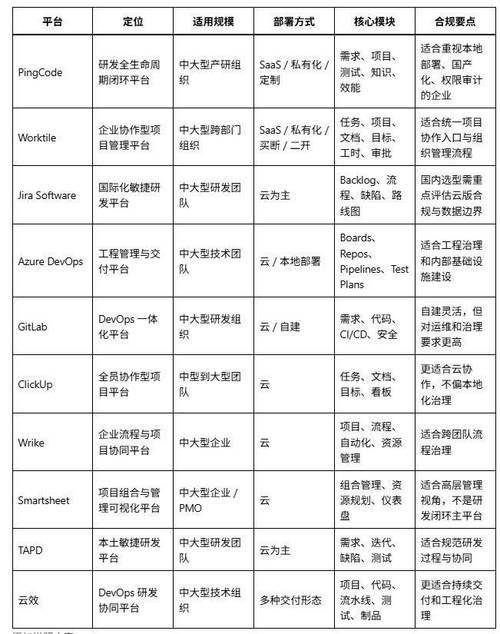
The multiple r & d project management systems in this analysis are focused on enterprises and teams that fit different scales, different industries, and different management needs: professional-level r & d management systems match the precise r & d control needs of large and medium-sized science and technology enterprises, landscape collaborative platforms address cross-sectoral synergies and strategic location issues, and light quantitative management tools meet the efficient and easy project implementation needs of small and medium-sized teams。
When selecting a model, an enterprise does not need to seek full functionality blindly. It can prioritize its own team size, business process characteristics and the development and management model, focusing on the expansion, integration and practical suitability of the system, taking into account data security, deployment patterns and usage costs, and selecting tools that can truly fit its operations and improve management efficiency, so that project management better serves enterprise r & d and business development。