" intuitives and reasons - critical studies of experimental language philosophy " (hereinafter " intuitives and reasons " ) is the work of the first experimental linguistic philosophy study in the national academic community. The author, may kawa, introduced the emerging subject of experimental linguistic philosophy and proposed a four-fold evidence method of experimental philosophy. There are two keywords in the title of the book, “intuitive” represents an area of reasoning and “justification” represents a new aspect. While commenting on the basics of the book, this review also asks the authors about the meaning and the issues of their four evidentiary methods。
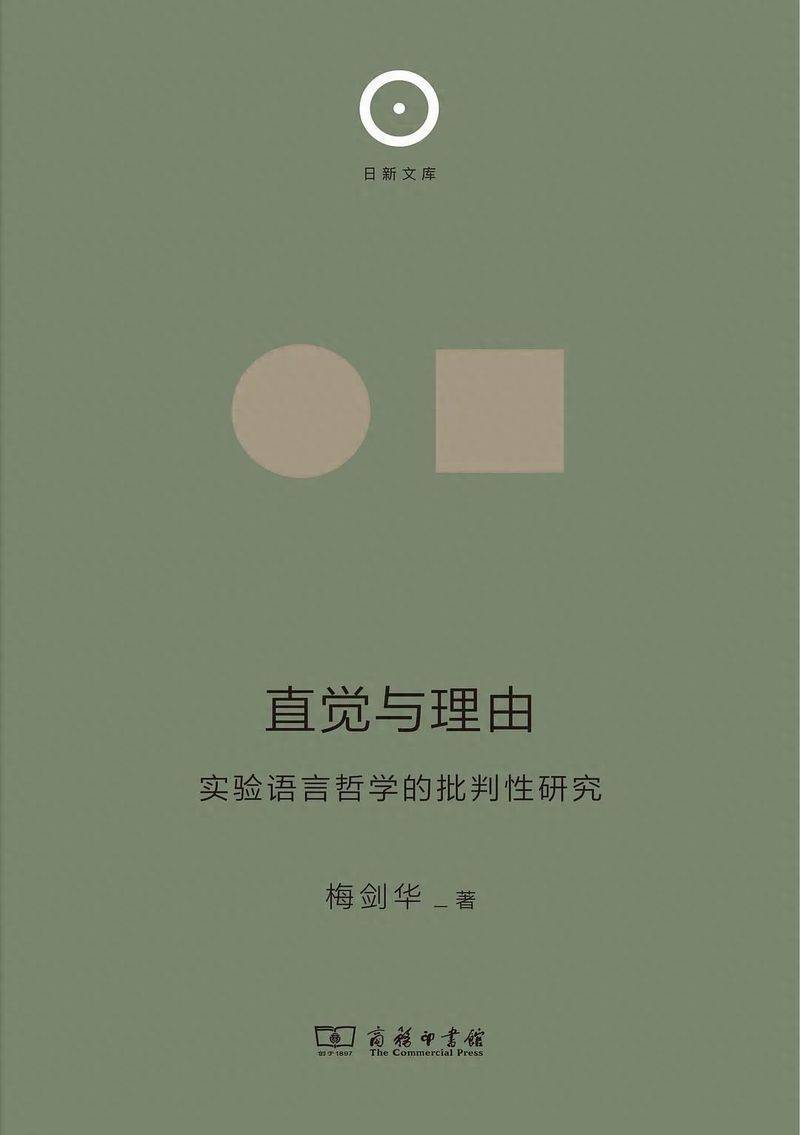
Intuitives and reasons - critical studies of experimental language philosophy, by may sword, business print library, july 2023。
The evidence of philosophy
What is experimental philosophy? The author defines it as the synthesizing of psychology and cognitive philosophy/science, which is subordinate to empirical philosophy. Pure experience is descriptive and experimentation is a normative experience。
In one course, the author equated his efforts with the emphasis placed on controlled experiments and the general repertoire of controlled observations. In this monograph, the author begins by stating that his “core motivation is to explore a true basis for philosophical theory”. But what does experimental philosophy mean by “theory is the true standard”? Failure to clarify this issue could lead to misunderstandings。
We know that truth or truth can be defined in the sense of conformity, intuitiveism, semanticism, etc. Experimental philosophy is distinct from experimental science and does not involve factual issues other than human psychology, which makes it difficult to meet the requirements of truth for conformity and integration, as well as the true value of semanticism. In terms of the reliability and universality of its testing instincts, we can assume that it presupposes that all philosophical judgements are based on universal intuitions. If general intuition is difficult to satisfy, it can be followed by limiting the cultural background of the subject of intuition or calculating the probability of intuition. This is close to satisfying the requirements of the intuitive truth. Of course, there are no isolated facts, and all “facts” are related to people's intuition. In this sense, there is no need to clarify the context of truth or truth. But in my view, this clarification is necessary, because truth or truth cannot be judged by unanimity or by a minority's obedience to the majority, but is often in the hands of a few. That's the real difference between science and philosophy, the difference between experimental science and experimental philosophy。
We can interpret experimental philosophy as evidence of philosophy. Any discipline requires evidence. Natural science becomes experimental science as evidence. Philosophy also requires evidence, which in the past was often based on the philosopher's own experience. For example, “100 years ago, mr. Leung, the new confucian representative, explained the cultural differences between east and west: the centre of western philosophy is knowledge, and the centre of chinese philosophy is life. “100 years later, these cultural comparisons between east and west can be realized through cultural psychology and experimental philosophical research methods”。
The author gave a definition of three “experimentary philosophy”. The first is the so-called “simple definition”: “the experimental philosophy is a discipline that uses psychological methods to explore people's instincts about philosophical cases”. This definition is limited to “intuitiveness” and is a partial concept developed by the author, indicating that experimental philosophy is deeply influenced by psychology. The second definition is the so-called “broad definition”: “experimentary philosophy is a philosophy of empirical support for philosophical theory” and the author “considers narrow definitions as a subcategory of broad definitions”. This definition leads to the concept of “justification”, which is the author's new part. The third definition relates to the shift in philosophy linguism: “the experimental philosophy is a linguistic philosophy based on a high degree of interest in languages, concepts. ... If the linguistic philosophy is the first, then the experimental linguistic philosophy is the first experimental philosophy, which occupies a fundamental place in the experimental philosophy”. This definition indicates that the author's experimental linguistic philosophy studies are limited to a shift in philosophy linguistics and do not exhaust the whole experimental philosophy, especially the experimental operational philosophy. But i think that the shift in philosophical action is probably the newest way to break the margins of philosophical language。
The documentary, life under review: philosophy is in the streets, 2008。
“intuitive” and “justification”:
A pair of evidence
The experimental philosophy was originally designed to test traditional philosophical evidence — the intuitive reliability and universality — through experiments (questionnaires, brain electron tests). “intuitiveness is a superficial, non-producer, non-reflective, direct reaction”. Authors prefer cultural diversity or pluralism. For example, “easters are more inclined to make similar judgments, westerners are more inclined to make causal judgements”, “easters are more inclined to describe intuitions, westerners are more inclined to interpret historical instincts”. The author has repeatedly stressed: “from the conclusion of the experimental philosophy, the meaning of the intuitive test is negative: the seemingly universal theory actually belongs only to a group within a specific historical and cultural tradition”. As a result, the general intuition of human beings is far from possible, specific historical and cultural traditions predetermine the intuitive coordinates or reference lines, many causal judgements are normatively influenced, and many dark elements, such as the so-called “neighborhood” of roux, are not limited to specific “nationality”. It is certainly not possible to rule out individual exceptions. However, there are always a number of intersections or overlaps in human intuitions, and there is always a “family-like” component, which would otherwise be attributed to cultural relativism。

The tv show, confucius (1991)。
Related to this cultural relativism is the author's popular philosophical position. The author categorically denies the intuitive credibility and superiority of philosophers in western academic institutions, affirming that “the traditional european philosophy is predominantly that of white-born men of nobility in europe and is highly biased. If western traditional philosophies are compared to noble philosophies, then experimental philosophies should be popular philosophies, which set no threshold of identity, background, class, intelligence, the only requirement being basic rationality”. However, the author also acknowledges that existing online surveys of philosophical intuition “have a serious cognitive bias” and a “high bias”: “it is people with sufficient time, online work and entertainment who are accustomed to living online who are willing to participate in the survey that makes university teachers, university students, white collars, young people the main group of investigators”。
Indeed, “basic rationality” as a “sole requirement” is also questionable. What kind of reason? Tool rationality or public rationality? What is the “basic” level? Is there a “threshold of identity, background, class, intelligence” that presupposes age, education? What is the reasonableness and correctness of the intuitive exclusion of infants and intellectual disabilities? The danger is, is this a convenient door for some ideology to define several people as “big babies” and “dumbs”
The author notes: “intuitives and reasons are pairs, which are largely non-reflective, non-inferences, direct, superficial. By contrast, the reasons are reflective, inference, systematic and in-depth. ... True stability is not the intuition of people, but the reasons that arise when they perceive things”。
It is therefore not possible to test only the intuition of the general population in a different cultural context, and it must go on to test the underlying intuitive reasons. Intuitive test authors refer to it as “quantitative studies” and reason test authors refer to it as “qualitative studies”. “the difference between qualitative and quantitative studies is, generally speaking, that there are usually small samples from qualitative studies and large samples from quantitative studies. In terms of reasoning, qualitative research usually uses logic and aggregation, and quantitative research uses statistics. The emphasis on causal inferences is also different: qualitative studies of pre- and post-factors, which detect multiple causes through results; and quantitative studies of possible effects of results seen through control causes (control variable experiments). Quality studies cover a variety of means, such as interviews, audio recordings, etc.; quantitative studies are mainly data analysis”。
“dialogue” and “concept analysis”:
Whether it's evidence or not
After presenting the quantitative and qualitative analysis of the double evidentiary method, the author then proposes the third and fourth evidentiary method。
The socrates dialogue approach is the third evidence method, and the conceptual analysis is the fourth evidence method. He said: “the fundamental difference between qualitative analysis and the socratic dialogue approach is that while qualitative analysis can help researchers to obtain more accurate data than quantitative analysis, it only reflects the subjectivity and partiality of popular experience. From quantitative to qualitative analysis, from subjective, one-sided intuitive experience to subjective, one-sided, reflective experience, to rational understanding, it is necessary to accept socratic cross-examination and finally to establish its own ideas. The ideas obtained at this time are objective, reliable and truly worthy of attention. From a qualitative study to the socratic dialogue, it can be said that it is a leap from empiricalism to rationalism”. “if the reasons explored by the institute of quality are described as descriptive, then the reasons explored by the socratic dialogue may be described as normative.” the author's so-called conceptual analysis included logical analysis and linguistic analysis, which he imitated the famous kandeh term “conceptual analysis without empirical research; empirical research without conceptual analysis without conceptual analysis” was empty, suggesting that “experimentary philosophy without a chair test philosophy is empty, and chair-test philosophy without experimental philosophy is short-sighted”, which is conceptual analysis。

The film le banquet, 1989。
The book initially proposed a two-fold evidence approach to empirical exploration and conceptual analysis, but quickly moved to a four-fold evidence approach, which still forms the basis for the four-fold evidence approach. The author states: “in the methodological exploration of experimental philosophy, the four pillars of evidence are embedded in each other: the combination of quantitative and qualitative research, qualitative research and the socrates dialogue, the socrates dialogue and philosophical reasoning, and philosophical reasoning and quantitative research”. In order to illustrate his point of view, the author deliberately chose the four-fold evidence method of yeh shu constitution to contrast: qualitative analysis is compared with philosophical reasoning; qualitative analysis is compared with sociology and folklore research based on the scientific paradigm; there is no analogy with the socratic dialogue approach。
I think there are a number of questions about the four-fold evidentiary approach: first, whether conceptual analysis constitutes one of the four-fold evidentiary approaches is questionable. It is clear from the author's repeated emphasis that “the experimental philosophy is a `conceptual analysis of the escape from the conceptual analysis'” that the conceptual analysis does not involve evidence, either intuitive or justified, but rather a back-office operation that provides basic research subjects, frameworks and materials for the operation of the front desk, designs questionnaires, responds to criticism, engages in dialogue, undertakes new experiments and seeks new directions for experiments. Whether it should be at the end or at the beginning would seem to be worth considering, both at the beginning and at the end, so that the four-fold evidentiary method would constitute a cycle that would be endless. There is no doubt then that qualitative analysis is higher than quantitative methods and that the socratic dialogue is higher than qualitative analysis. But how can conceptual analysis go beyond the socrates dialogue? The authors may wish to continue to dig into the socrates dialogue approach. The socrates dialogue approach lies not only in the generalization and definition outlined by aristotle, the question-and-answer method, the dialectic, the cross-examination of the author's focus on “normative reasons”, but also in the exhaustive approach of “all possibilities for mobilizing ideas”. This is precisely an intuitive and super-intuitive experiment: intuitive and super-intuitive, justified and super-justified, logical and ultra-logic, linguistic and supra-linguistic, even human and supra-human (new or post-human)。
Although there is much to question and to question in mejianhua's book " intuitiveness and reasons " , i think its significance is remarkable. In academic circles alone, since the 1990s, when deng zhenglai and others advocated “chinese academic autonomy” or “chinese academic standardization”, scholars have reverted to the academic ivory towers and even “the thinkers faded out and the scholars became prominent” (li zawa ho). Textology and literature studies in the form of my note six become academic fashion. Today, the primary school of this small age is asking the university that must return to the grand age. Moreover, there were two important responses at the time: zhu xiaoqin advocated “civil thought” and liu xiaomei advocated “individual academic”. Zhao tinyang, among others, adheres to the idea of "six bets on me", but it also focuses on "protesting" rather than "testing" "investigating". The experimental philosophy introduced and improved by may kawa offers us a new possibility to move philosophy back into the field — “the experimental philosophy calls for a return to the ancient tradition of philosophy-science and for an open mind to confront the theoretical, cognitive and practical problems that arise in human dealings with the world”
Author/professor, department of philosophy, university of the capital