The chess board is a switch from the “fuel age” to the “electricity age” of the global forklift market. There are three main players: the long-standing ruler of toyota industries in japan, the old european giant kai-hung group of germany, and the rapidly emerging china anhui. The chips are their respective technology reserves, supply chain efficiency and market strategies。
In 2025, toyota's sales rankings (honda's first, uniting second, keats fourth) marked the emergence of the winner and winner of the game – kae-hung's position in the middle and low-end mass market, which was punched with a combination of “efficiency plus electricization.”。
The three key cards of the ang-hui are playing on ka-po's soft side
The combined forces won this game not by luck, but by precision playing three cards that were too proud to keep up。
The first card is extremely expensive and supply chain efficiency. That's the toughest chip of the pool. More than 80 per cent of its core parts in a forklift come from the fertilizer and surrounding long-triangular industrial clusters, from steel roll-in to the entire offline, and only 21 days at the earliest。
It is surrounded by hundreds of ancillary plants that operate 24 hours a day during the active season, creating an extremely low-cost and fast-reactive self-cycle ecology. This has allowed the bid for the combined power and configuration products to be 40 to 50 per cent lower than the european brands like kaing. This is an irresistible attraction at the middle and lower price-sensitive and emerging markets。
The second card is a desperate investment in the wave of electricization. A combination of forces has identified the global trend of “oil-to-power” forklifts and has shifted the r & d focus and product lines to total electrical power. In 2025, its share of sales of electric forklifts rose to 70. 2 per cent, representing an increase of 24. 9 per cent over the same period, exceeding the industry's average growth rate of 12. 9 per cent。
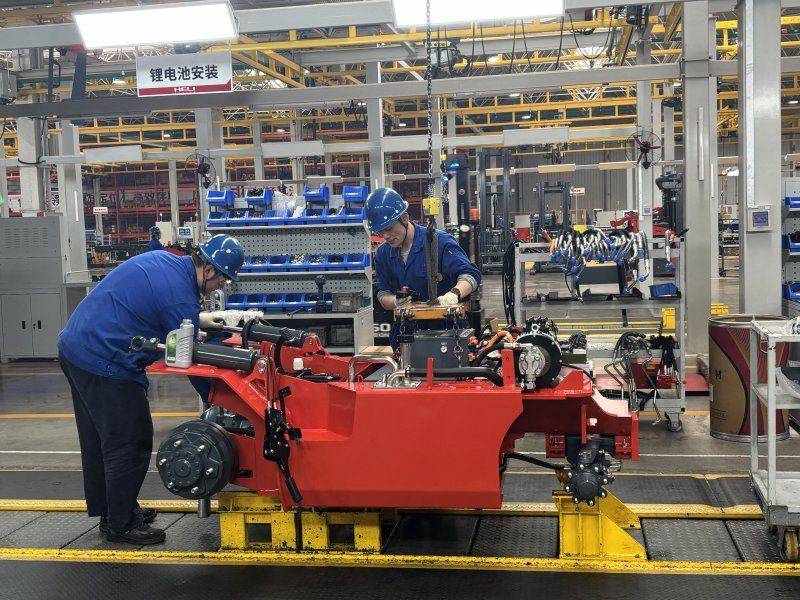
It introduces more than 340 new products annually, representing over 60 per cent of sales. This rapid iterative capacity allows it to respond quickly to market demand for the diversification and diffusion of electric forklifts。
The third card is a clear set of global “rural sieges of cities” strategies. Instead of hitting europe’s high-end markets at the outset, the combined forces start with emerging markets such as south-east asia, latin america, and africa, plowing them at “half the price” and then stabilizing their customers through the creation of after-sales networks。
Once heeled, electric products of high value entered europe, starting to infiltrate from second-line logistics firms in the netherlands and belgium. At present, its share of overseas earnings is 44 per cent, with the highest market share in more than 30 countries and territories. This step-by-step approach has continued to squeezing the share of kaiser in emerging markets and chilling at the middle and lower end of the european continent。
Proud dilemma: not technology, but strategy and structure
The root cause of the loss of sales ranking is the mismatch between its strategic focus and real market demand。
For a fast-disbursing low- and medium-end electric forklift market, its product layout and iterative speed are significantly behind schedule. When combined forces cover the market with hundreds of new cars each year, the reaction cycle of pride is much longer。
This forced it to “screw up” and strategically abandon some of its low-profit middle- and low-market shares and retreat to the high end。
Current situation: sales swaps, but real chess eyes are in profit and high-end markets
The current situation on this board is very clear: in the middle and low markets represented by the size of the sales volume, the synergy has gained a decisive advantage and pride has been passive. With the unreplicable efficiency of industrial clusters and the determination of all in electricization, the combined effort has created a powerful “scaling fortress”, which will be difficult to reverse in the short term。
However, the game is far from over. The real chess eye is on profits and high-end markets. In 2025, income from the forklift operation was approximately €8. 27 billion, while the embry company collected about $2. 8 billion. The profit gap is even greater. This is because the most lucrative part of the forklift industry — the full range of automated logistics solutions for large groups, the 10-year-long contract for security services — is still firmly in the hands of kaï-poo toyota。
The next step in the joint effort is also clear: while consolidating the sales advantage, it must be pursued. It is increasing its input in high-end areas such as intelligent logistics (agv), which increased its revenue by 69 per cent in 2025。
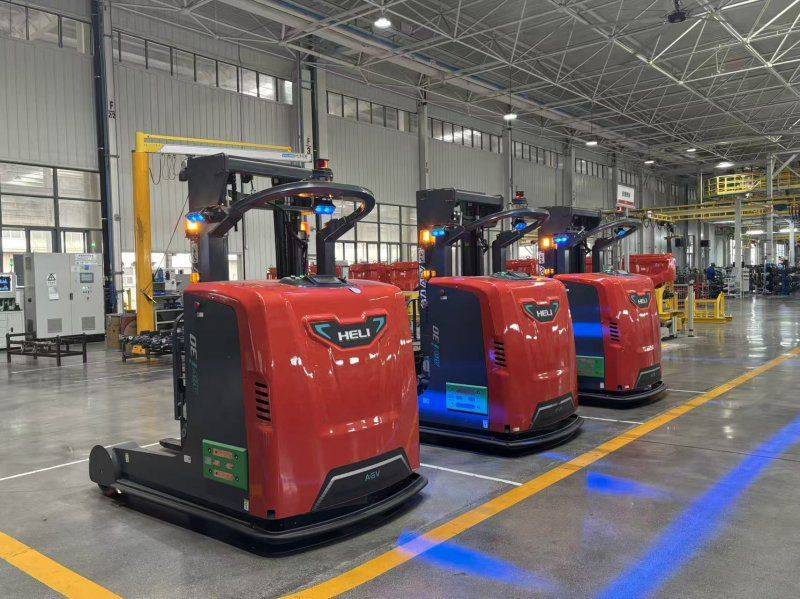
The next step, however, must be to rely on its accumulation of cutting-edge technologies, such as forklifts and digital twins, to reinforce high-end barriers, while potentially mitigating the loss of shares by optimizing supply chains or introducing more targeted intermediate products。
The conclusion is that the counterattack is far from the end, but the beginning of a new game. The synergies successfully pulled the chess game from a “brand and technology monopoly” to a “efficiency and scale competition” dimension and won the first phase. But now, the board is expanding to the dimensions of “intellectualization and service ecology”, and the two sides will compete in the next round of more complex battlefields。