Economic reporter for the 21st century
In the past 2025, concerns about a significant slowdown in global trade have not materialized。
In its most recent report, oecd assessed the performance of global trade as “unexpectedly dynamic”, and the agency expects a growth rate of about 4. 2 per cent in global trade in 2025。
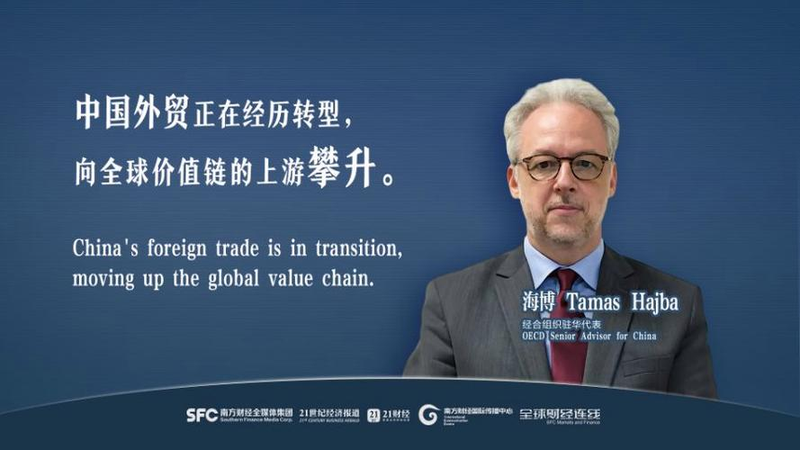
Recently, tamas hajba, the oecd representative in china, stated in an interview with southern finance journalists that global trade is expected to remain resilient in 2025. Looking ahead to 2026, global trade growth is likely to slow, owing to increased trade policy uncertainty, increased trade barriers and the impact of implemented trade barriers。
In the global trade network, heibo points out that the drivers of global trade growth are undergoing a structural shift, with emerging markets increasing their share in terms of trade size and expansion, particularly in emerging economies in asia。
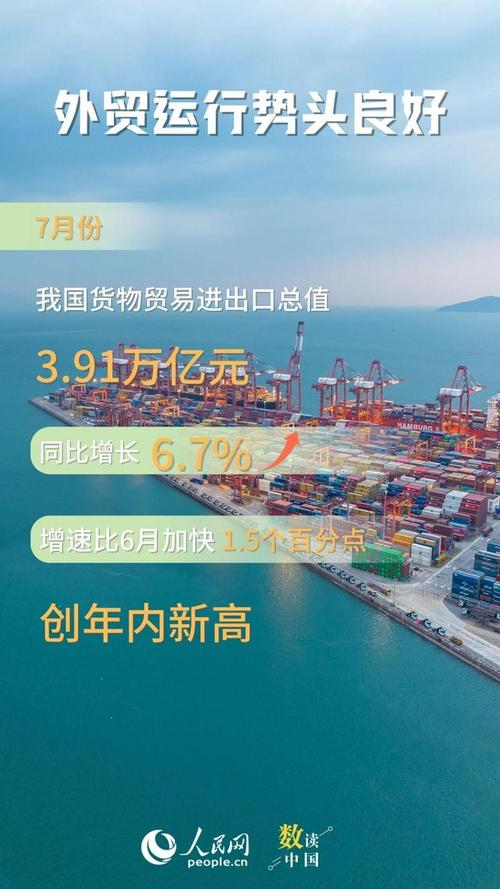
According to the general customs administration, china's total foreign trade exports and imports amounted to 45. 47 trillion yuan in 2025, an increase of 3. 8 per cent, which was recorded for nine consecutive years。
“china's trade performance in 2025 was remarkable,” haibo. In his view, china was undergoing a major transformation, moving up global value chains, from exporting high-value-added products to investing in manufacturing bases abroad。
Turning to the global trading environment, he noted that china's contribution to keeping markets open, shaping the global trading system and standards and maintaining transparency within the wto framework was becoming increasingly important。
Global trade may slow down in 2026
Southern economy and finance: how does the oecd assess global trade prospects for 2026 in the context of global demand volatility and supply chain restructuring
Heibo: the oecd published its economic outlook report in december 2025, and we believe that global trade is expected to remain resilient, but that the growth in global trade may slow in 2026 due to increased trade policy uncertainty, increased trade barriers and the impact of implemented trade barriers. We estimate that global real trade growth could be around 4. 2 per cent by 2025, driven in part by early trading by enterprises to circumvent anticipated tariff escalation. Trade growth is likely to slow again to about 2. 3 per cent in 2026 and to rise slightly to about 2. 8 per cent in 2027 as global demand gradually improves
Financial affairs of the south: looking ahead to 2026, what are the key drivers of global trade patterns that you believe affect
Heibo: there are many factors that influence the outlook. First, as i said, there is uncertainty about trade policy and tariff issues. Our analysis shows that the peak in global real goods import growth may fall by more than 4 percentage points a year for each rise in trade policy uncertainty, an impact exacerbated by higher and broader tariffs。
Second, strong investment in the investment and technology cycle, ict and artificial intelligence-related areas, which have underpinned trade in the recent past, is expected to diminish as policy uncertainty affects some investment decisions。
Thirdly, i would like to talk about trade in services and logistics, which tend to be more resilient than trade in goods, but at the same time constraints in transport, logistics and digital services continue to constrain trade performance。
Finally, disruptions caused by geopolitical and climate-related factors, shipping bottlenecks, conflicts affecting major transport routes and climate-related shocks may increase trade volatility and increase trade costs. Thus, overall, our basic judgement for 2026 is that the pace of trade growth will slow down and that the risks will move downward unless trade tensions are eased and policy predictability improves。
Southern finance and finance: how is this trend reshaping the traditional pattern of global trade, with emerging markets'share in global trade continuing to rise in recent years
Haibo: we are observing a structural shift in the drivers of global trade growth, an increasing share of emerging markets in the scale and expansion of trade, an increasing share of global trade growth in emerging economies, particularly in asia, and an expected more important role for south-east asian economies in global trade in 2026 and 2027。
At the same time, we note that global trade has become more network-based, reflecting the deeper fragmentation of production in multiple economies, with about 60 per cent of global trade today being intermediate goods and services, underlining the importance of cross-border supply chains。
We also note that there is a degree of concentration in global trade and that about 30 per cent of trade products remain relatively concentrated, which means that the supply chain in a given sector, once disrupted, will have a greater impact, so that the diversification of the supply chain is essential。
As the process of diversification of production and supply chains advances, the role of regional economies in this process will become more prominent than ever and the supply chain may be disrupted by factors such as future climate disasters, natural disasters or epidemics, increasing attention is being given to promoting the diversification of supply chains, let alone some trade barriers and trade policies that in the past have triggered disruptions in the supply chain。
As a result, regional economies, especially in asia, will play an increasingly important role in global trade and global supply chains, first because of the need to diversify supply chains, and secondly because of the growing domestic demand of these regions as export markets and their increasing integration with global trade。
China's foreign trade is undergoing a transition
The south: china's total imports and exports in 2025 amounted to rmb 45. 47 trillion. How do you evaluate the quality and sustainability of china's export and import performance
Heibo: china has a very strong manufacturing base, which is important for china's foreign trade. At the same time, however, china's foreign trade is undergoing a major transformation。
China's trade performance in 2025 was excellent, particularly with higher tariffs, which were expected to lead to early export arrangements by enterprises, especially in the first half of 2025. However, with a view to 2026 and beyond, china's trade growth will still depend on external demand. On the one hand, china is actively promoting market diversification, the diversification of supply chains and the highly efficient reorientation of trade and exports; on the other hand, it is also an expression of the productive and adaptive capacity of chinese enterprises, which react very quickly to the shocks caused by market signals and trade barriers. However, the continued growth of chinese exports in 2026 will depend on global demand。
China is also undergoing a major transformation. First, china is already producing and exporting technologically advanced products, with great success, particularly in green-related industries. At the same time, china is expanding its imports, and the balance between exports and imports is becoming increasingly important for china, which has taken measures that include further opening of markets for goods and services. The export and import potential of china's trade in services is enormous, helping to balance china's overall external trade structure and boosting both exports and imports。
Finally, the transformation of china’s trade is taking place at the same time as its outward investment, and chinese enterprises that have been exporting their exports to overseas markets for many years are increasingly considering investing abroad, establishing production bases, manufacturing bases and factories in other countries, building their own brands, strengthening their reputations and introducing products into local markets. Of course, this process will be reflected in the export statistics of other countries, not necessarily in china, but it is a natural development because these powerful and technologically advanced chinese enterprises are increasingly investing in other countries, sharing technology and bringing management experience and expertise to local markets. This is therefore part and very important of china's external economic relations, which also reflects the transformation of its foreign trade and investment activities。
The southern economy and finance: is china's “new three” exports growing faster, which means that china's external trade structure is changing
Heibo: it is an undeniable fact that china is moving up global value chains, is already producing high-value-added products, has the capacity to produce them, and has been exporting them to external markets. China has also achieved significant success in upgrading trade in services, not only for export products, but also for the increasing use of high-value-added products as a production base in overseas markets。
The second important factor is that china is building a single national market, which means that internal barriers to trade are being reduced, which will unleash consumption potential and boost domestic demand. The ability of china's domestic market to absorb many of the products produced domestically by domestic firms means that the focus of development will no longer be on exports alone, but also on internal markets, which have enormous potential. The establishment of a single large market would therefore play a very important role in that regard。
Finally, it needs to be stressed that countries need to engage in constructive, transparent and open dialogue at this critical juncture on trade standards, trade rules and how to collectively create a level playing field for equitable market access and fair competition in global markets。
The great bay region plays an important role in trade facilitation
Southern economy and finance: as one of the most open and economically active regions in china, how do you see the role of the bay of hong kong in the global trade network
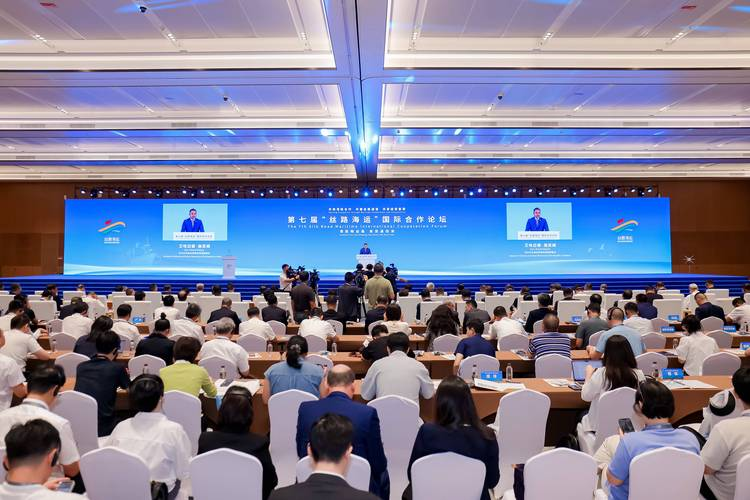
Heibo: i can say a few things from the oecd policy perspective. First of all, we are working on trade facilitation, which has an impact and an important role in this area in the context of the bay of hong kong, which has enhanced customs coordination, advanced digital processes and enhanced port connectivity, undoubtedly having a positive impact on trade, improving reliability of delivery and reducing associated risks。
The second point is brain mobility and services, since high-value-added manufacturing exports depend on legal, financial, engineering and digital services. In this regard, the bay of hong kong has the potential to reduce restrictions on trade in services, reduce trade costs and increase market competitiveness。
Finally, i would like to mention digital and technical cooperation, as cross-border e-commerce and digital supply chain management usually benefit from regulatory coordination in the area of digital trade, where the great bay region can and is likely to play an important role. China is actively engaged in shaping the global trading environment, helping to increase transparency and predictability while also reducing policy uncertainty surrounding trade。
As a major trading partner of many countries in the world, china's contribution to keeping markets open, shaping the global trading system and standards and maintaining transparency within the wto framework is becoming increasingly important. China is also developing its bilateral trade exchanges through regional mechanisms, which is also a very important component of the global trading system。
Enhancing global supply chain resilience
Finance and finance for the south: from the perspective of international cooperation, how can countries strengthen policy coherence, reduce trade barriers and promote a more equitable and open global trading environment
Heibo: while we expect that trade growth will slow in 2026, trade remains the main driver of global economic growth, with great potential for job creation and for driving economic growth in all countries. The global community therefore has a common interest in promoting an open, transparent and constructive trade dialogue, cooperation and communication on trade facilitation, mutual recognition of procedures, digital customs systems, risk management, etc., and the creation of an open environment and the maintenance of open markets。
In the area of trade in services, for example, costs could be reduced by harmonizing transport logistics regulations while keeping markets open and reducing regulatory barriers to trade in services growth. Of course, the adoption of common benchmarks to reduce regulatory fragmentation and enhance interoperability among countries is also crucial, as it undoubtedly helps to maintain healthy growth and a level playing field in global trade relations。
Finally, constructive dialogue and cooperation on the resilience of global supply chains are also important, and i believe that the diversification of global supply chains and their maintenance are becoming increasingly important, unlike local production, which, according to our calculations, can cost economies. We believe that diversification and the resilience of global supply chains are the right path to improving trade relations and sustaining global trade growth。
Planning: zhao hai jian
Production: poetry