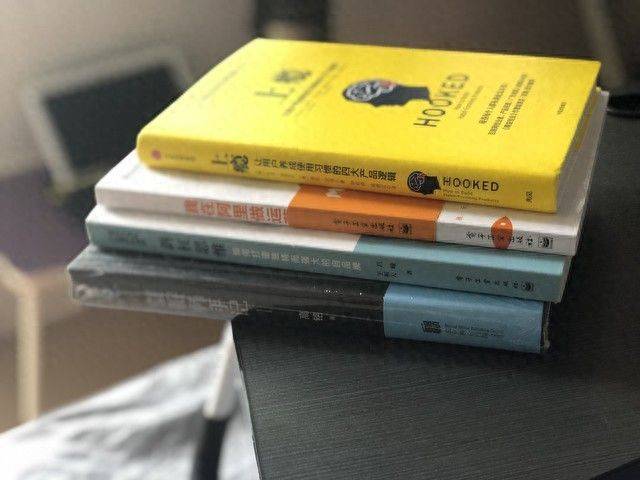
I have read the most well-known literature, each with a core view and a suitable audience。
Introduction (zero foundation preferred)
- dog money (bodo scheffer): a fairy tale of financial literacy, covering practical methods such as saving habits (e. G. 10 per cent of monthly earnings), dream-setting (e. G. Realizing travel dreams through savings) and successful journals (recording daily progress and positive ideas). The book simplifies the concept of complex financial management through the perspective of the little girl's money and is suitable for adults and children over the age of 8. According to statistics, over 30 million copies of the book have been sold globally and translated into 35 languages。
- the richest man in babylon (george krasen): through the cuban biblical story, the 10 per cent compulsory savings (e. G. The “pay yourself first” principle, i. E. The 10 per cent of monthly income deposited in savings accounts), the accumulation of gold (the symbolic asset) rather than the simple pursuit of silver coins (the symbol of debt), the learning of investment wisdom, etc. The stories of classics such as “agan” and “the richest in babylon” are still widely cited. Since its publication in 1926, the book has continued to sell best and has been hailed as one of the “bibles of finance”。
- " fathers rich and poor " (robert kiyozaki): to explore the distinction between assets (property that brings cash flows, such as rental property, shares) and liabilities (goods that consume cash flows, such as mortgages, luxury goods), the importance of passive income (income that can be obtained without continuous work) and how to move out of the “work for money” thinking and subvert the traditional concept of money. By comparing the author, “full father” (financial liberty) and “poor father” (seniorly educated but financially impaired), the book reveals the very different life trajectories brought about by different monetary views. The book, which sells more than 30 million copies globally, is an enlightening reader that changes the fate of millions of people's wealth. This book has the greatest impact on me, and i will describe it in detail later。
Ii. Re-thinking (cognitive upgrading)

- money psychology (morgan hauser): the best-selling book of the world, which points out that 90 per cent of money management depends on humanity, explains the core concepts of risk (e. G., the psychological impact of market volatility on investors), compound interest (e. G., law 72 calculates the time of double funding), greed and fear (the common emotional trap of investors). The book reveals irrational behaviour in monetary decision-making through historical cases and behavioural economics studies. For example, the reference in the book to the “lost aversion”, that is, the sense of suffering of loss is much greater than the joy of receiving equal returns, explains why many investors are afraid to sell when markets are down。
- the book of the poor charlie (charlie manger): the intellectual crystallization of the buffet partner, charlie manger, consists of multiple thinking models (e. G. The use of interdisciplinary knowledge such as physics, biology and psychology in investment), reverse thinking (reverse consideration of issues such as “how not to fail”) and error psychology (the identification of common cognitive deviations). It is hailed as an investment-scrambling bible, in which the theory of the “capability circle” (investing only in areas of its own understanding) and the idea of the “safe margin” have profound implications for value investors. The book contains speeches by manger at harvard, stanford, etc., which are lively and intelligent。
- the navar (eric jørgensen): reproducing the motto of silicon valley's grand master nawal ravicant, proposing wealth = leverage (e. G. Capital leverage, time leverage, product leverage) + skills (frequent and valuable capabilities) + compounding (long-term cumulative effects) — a guide to the hearts and minds of ordinary people. For example, according to navar, “real wealth comes from creating value and leveraging it to magnify value”, rather than simply pursuing high-paid jobs. It also emphasizes the importance of focus, patience and independent thinking for readers who want to escape the middle-yield trap and pursue financial freedom。
Iii. Investment in action (tools and methods)

- smart investors (benjemin graham): the classic bible of value investments, which introduces the concept of “safe margin” (purchase of stocks at a price below their intrinsic value, reducing risk), emphasizes fundamental analysis and long-term investment. Buffett's investment enlightenment, buffett once said, “my investment philosophy comes mainly from graham”. The book sets out the different strategies of defensive and aggressive investors and is suitable for readers who wish to establish robust investment systems. Graham is known as the “father of value investments” whose theory has been tested in the market for decades。
- the investment guide to index funds (bank screws): a manual for index funds on the actual performance, covering core a indicators at depths of 300 and 500, and global market indices (e. G., the general 500), detailing investment strategies (e. G., periodic quotas, valuation stakes), tariff controls and long-term holding logic. The data show that the long-term adherence to the index fund (e. G., annualized returns of 8-10 per cent) effectively runs the majority of active managed funds. An efficient tool for achieving robust asset value addition is a general public that is suitable for lazy investors and lacks time and expertise。
- the road to financial freedom (bodo scheffer): provides a seven-step financial plan (defined objectives, increased income, reduced expenditure, savings, investment, insurance, tax optimization), debt management (defining benign liabilities from nefarious ones, prioritizing high-interest liabilities) and asset allocation methods (e. G., “law 4321”: 40 per cent investment, 30 per cent living expenditure, 20 per cent savings, 10 per cent contingency funds), giving a clear and achievable path to financial freedom. The book contains a large list of specific cases and actions that help readers to transform financial freedom from dream to reality。
Iv. The evolution of wealth (deepness and patterns)

- the most important thing about investment (howard marks): the book by howard marks, the founder of oak capital, provides insight into the core investment philosophy of cycle (economic cycle, market cycle, industry cycle), risk (relationship with returns, risk is not a single event, but probability) and reverse investment (fear when others are greedy, greed when others are afraid). Demonstrate institutional-level investment thinking, emphasizing “second tier” (thinking beyond market consensus). The memorandum, published annually in the book as a systematic summary of max's investment wisdom, was used by investors as a guide。
- principles (re dario): the principles of life, work and investment shared by the founder of the bridge water fund, ray dario, help to address uncertainty. It proposes a formula for “suffering + reflection = progress”, emphasizing the need to improve the quality of decision-making by recording and analysing errors. The dalio principles apply not only to investment but also to personal growth and organizational management. For example, the principles of “extreme truth, extreme transparency” help to build efficient teams and decision-making systems。
- walking wall street (burton marquil): the introduction of the emh, index investment and long-term holdings strategy is a classic investment primer. The book demonstrates the advantages of “market effectiveness” and “indexed funds” by comparing the long-term performance of different investment strategies with a wealth of data. For example, studies have shown that the proportion of long-term running index funds of active-management funds is over 70 per cent. Since its first publication in 1973, the book has been continuously updated, with the latest edition (12th edition) incorporating market changes in the wake of the 2008 financial crisis and maintaining its classic status。
Recommendation for reading order
1. Read dog money first

And babylon's richest, building a sense of saving and a sense of purpose. Through stories and simple principles, these books help readers develop the right view of money and saving habits from scratch。
2. Read " fathers rich and poor " and " psychiatry of money " to recreate the perception of money. While the former subverts traditional notions of money, the latter interprets the motives behind financial behaviour from a psychological point of view and helps readers to understand why。
3. A progressive reading of the investment guides for index funds and smart investors, mastering of practical investment methods. The former provides simple tools (indexed funds) and the latter provides a classic investment philosophy (value investments), which combines to build a robust portfolio。
4. Final reading of investment first and the principles enhances in-depth thinking to address complex market and life challenges. Through this stairway of reading, from basic ideas to operational skills, to high-level thinking, a complete system of financial literacy is gradually being built. Each book is like a puzzle that collectively paints a clear path to financial health and freedom. In practical reading, the order can be adapted to individual interests and needs, but at the core is to maintain a mindset of continuous learning and practice and to transform the wisdom of books into a part of everyday financial behaviour。
And then i'm going to make my reading and practical psychology into a series of more detailed descriptions。