The moon, the object that we romanticly call the moon, has been given countless beautiful names since ancient times: the jade rabbit, the jade wheel, the jade disk, the palacio, and so on. These names sound like the dreams of ancient poets, but let's be realistic. How well do you know the moon? Let us take stock of the cold knowledge of our bright neighbours at night and see if you really know it。
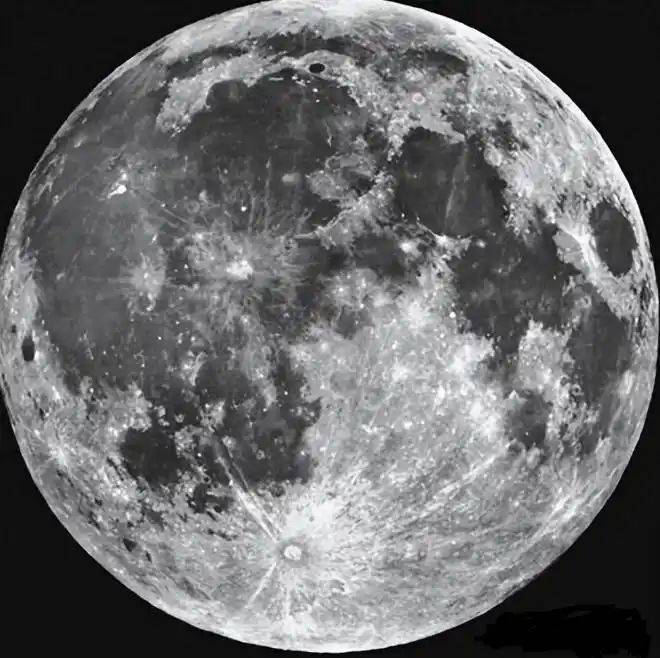
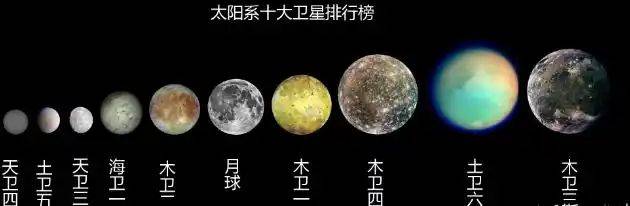
First, the moon is a giant object of the solar system, the only natural satellite on earth. In the family of the solar system, known planets surround 218 satellites, of which the moon ranks fifth in size. It has a diameter of 3476. 28 kilometres, which is larger than two thirds of ioji. Imagine it's a giant rock ball floating in our night sky。
But when we compare the moon with its neighbours — those satellites around other planets — you see that the moon is really a “large size”. The moon's diameter represents 27 per cent of the earth's diameter, which is quite rare in satellites in the solar system. In contrast, ioji's diameter is only about 4 per cent of jupiter. This proportion of the moon makes it particularly prominent in satellites of the solar system. The moon's diameter reaches almost one quarter of its home planet, the earth's diameter, which is unique in the solar system。
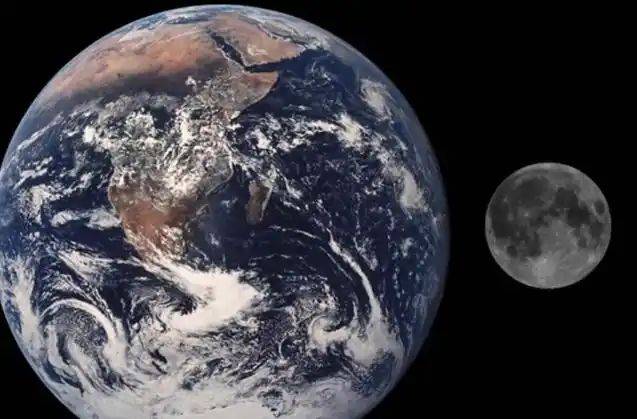
The moon and the earth, the true spatial proportions of the dancers in the universe, are amazing. The moon is 3476. 28 kilometres in diameter, while the earth has 12,756 kilometres in size. Imagine the average distance between the two bodies of 38,844,000 kilometres, 30 times the earth's diameter and 111 times the moon's diameter. It's like playing with the planetary version of "a snake."。
And when we talk about the space ratio between the moon and the earth, we cannot help but mention the distance between them. This distance is not just a big number, but a visual shock. If there was an opportunity to stand on the moon and look back at the earth, that must be an unforgettable picture. The earth is in the night sky of the moon, like a giant blue gem, hanging in a distant universe。
And again, the surface of the moon, where day and night temperatures are poor, is incredibly extreme. The absence of atmospheric protection of the moon and the pitiful low heat capacity and heating of surface materials have resulted in alarmingly high temperatures on the surface of the moon. In the daytime, where the sun goes straight, the temperature can soar to 150°c, and at night, the temperature drops sharply to minus 180°c, which is as cold as the ice cellar deep in the universe. The temperature of day and night, as high as 330°c, has to be lamented that the moon is an extreme world。
Such extreme temperatures on the moon are also on the count of two in the solar system. After mercury, this planet known for its high temperature。
The moon, the faithful companion of this planet, always attracts our eyes with its mysterious charm. It's incredibly cold, even in the elmet ring of the moon's arctic, and detector temperatures have reached an alarming 247°c, which is colder than the distant pluto surface, as we know it. It makes one wonder what kind of secret the extreme environment of the moon is。
The surface area of the moon, although it may sound large, is actually only 38 million square kilometres, which is only 7 per cent of the surface area of the earth. By contrast, asia, the largest continent on earth, has an area of 4. 458 million square kilometres, and the surface area of the moon is 6. 58 million square kilometres smaller than that of asia. It is an incredible fact that the surface area of the moon is not as large as the asia we know. More interestingly, the fact that the moon is about four times the size of our territory gives us a more intuitive picture of its size。
And when we talk about the size of the moon, by its radius we can extrapolate the size of the moon to about 22 billion cubic kilometres. What kind of concept is that? If we compare the moon to a huge pot of water, it will be enough for us to try to pour all the water on earth. According to scientists, the total amount of water resources on earth is approximately 1,386 million cubic kilometres. But the size of the moon is 16 times that figure, which means that even if we put together all the water on earth, we cannot fill it。
When people look up to the night sky, the full moon is always desired. It's round, but the moon's "round" is not just a visual illusion. The lunar equator has a diameter of approximately 3476. 2 kilometres, while the polar diameter is slightly small, at 3472 kilometres. This small difference — only 4. 2 kilometres — gives the moon a subtle elliptical shape, a slight expansion in the equator and a slight flatening of the poles. This shape of the moon has striking similarities with the earth in which we live. The moon has a flat rate of about 0. 0012, compared to a slightly higher flat rate of 0. 00335 on earth. From that perspective, the moon seems to be closer to the perfect circle than our blue planet。
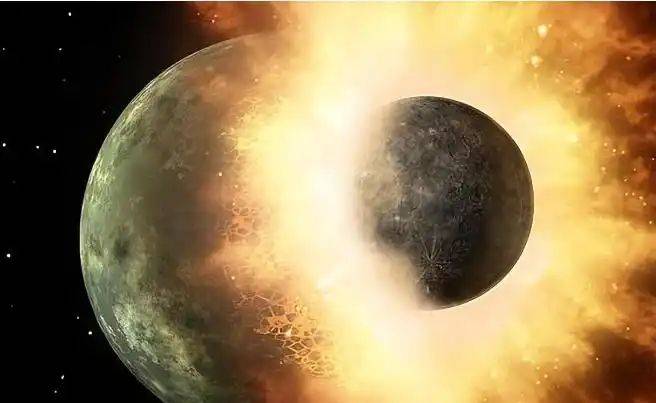
However, the perfect shape of the moon is not naturally formed, but a cosmic “accident”. About 4. 5 billion years ago, an object called teia — the size of mars — had a violent collision with the young earth. This collision was so large and far-reaching that it not only reshaped the face of the planet but also gave birth to the moon as we know it today. The large amount of debris and dust generated by collisions was thrown into orbit around the earth, which, after long periods of ingestion and condensation, eventually formed the moon that we see today. This process, known as big collision, is currently the most widely accepted scientific theory of the origin of the moon。
The moon, this romantic object, seems to be moving away from us. Scientists have been able to measure accurately the distance between the moon and the earth and have discovered an interesting phenomenon: the moon is leaving us at 3. 8 centimetres per year with grace. Imagine, if the moon were conscious, it might be planning a cosmic “runaway”。
Let us return to the birth of the moon, when it may be only 38,000 kilometres away from the earth and how close it is. But with the passage of time, this intimacy seems to be slowly diminishing. About 2. 46 billion years ago, the distance of the moon from the earth had increased to 60,000 kilometres. Today, the average distance of the moon from the earth has reached 38. 44 million kilometres. Scientists have even predicted that, in the tens of billions of years ahead, the moon could stabilize at a distance of 550,000 kilometres from the earth. It sounds like a long separation, and the sun is already the beginning of this cosmic drama。
Speaking of the moon, we have to mention its brightness in the night sky. Although it is only a reflection of the sun, the moon is undoubtedly the second bright object next to the sun in the sky. However, the lunar albedo rate is alarmingly low, at 0. 12, which is not much different from that of coal. This means that, when the sun's light is exposed to the surface of the moon, 92 per cent of the light is absorbed by the moon and only 8 per cent of the light in the zone is reflected back into space。
Let's play a game of comparison, with jupiter's satellite io and our familiar moon. Imagine what would happen in the night sky if io took over from the moon? Io's diameter is as small as 200 kilometres larger than the moon, but it means a lot less. Even more surprising, io's reaction rate is 5. 25 times higher than that of the moon. This means that if io really replaced the moon, it would be six times as bright as the moon in the night sky, and it would be a spectacular sight
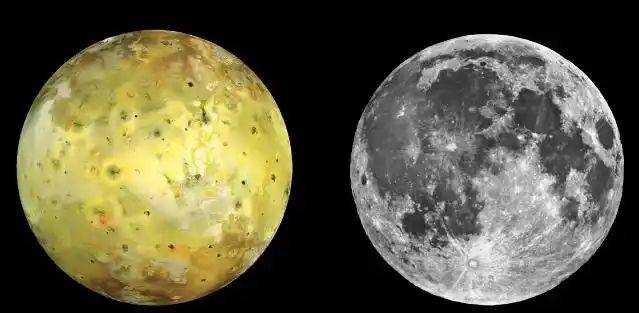
This is not just a simple comparison; it reveals the diversity and complexity of objects in the universe. The moon, as a regular guest in our night sky, is already a habit for us to see its brightness and presence. But io's presence may have radically changed our perception of the night sky. Imagine how shocking it would be if the moon that hangs in the sky was no longer our familiar moon, but a new star whose brightness has increased sixfold。
Now, we've given you 10 cold stories about the moon, but the mystery of the moon goes far beyond that. The surface of the moon is filled with meteoric craters, and its gravity affects the tides on earth, and its back is full of unresolved riddles. The moon, the nearest celestial object to us, is worth exploring and thinking about in every detail。
So what do you know about the moon? # deep and well written #