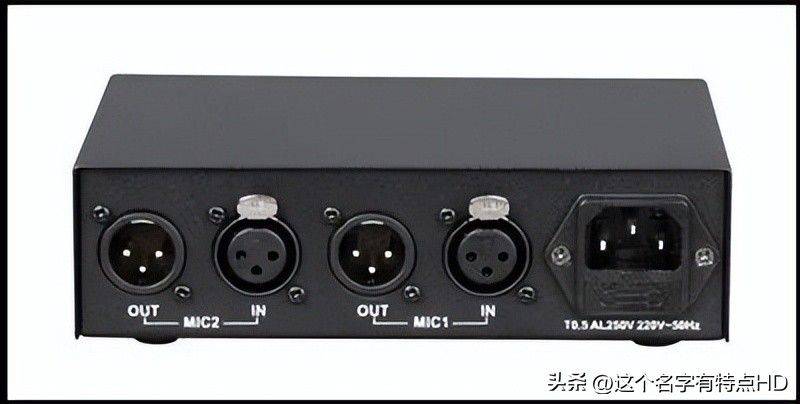
The reason for the use of the electrons was to provide them with stable direct current voltage to ensure their normal work. Mirage power uses a 2-chip shield cable to power the microphone through its connector, while the microphone receives the power through the same cable and sends an audio signal to the tone. This method of power supply does not require the use of separate cables, but rather “hidden” in cables used for signal transmission and is therefore called “phantoms”。
Capablephone
01

The electric microphone is one of the oldest of its types and can be found back in the early twentieth century. Compared to other types of microphones, the mechanical construction of the capacitors is simple, mainly by placing a thinly stretched electrocutive amplitude on a metal sheet called the backboard, using this structure to form a simple capacitor. The capacitors are then powered by external voltage sources (usually phantom power, but most capacitors also carry their own power supply). When the acoustic pressure acts on the diaphragm, the diaphragm produces a variety of minor vibrations with the wave shape, which in turn causes the output voltage change through a change in the capacity of the electricity, which constitutes the output signal of the microphone. In fact, they can also be divided into several types, but they all work on the same basis。
Some of the electric microphones are powered by internal batteries, and more are supplied by signal lines from their connected stereos or front amplifiers. Mirage power is also called simplex powering. It is usually a direct current of 11 to 48 volts, with the supply of polarizing and magnifying circuits for the head. The currents used for various electric microphones range from 1 to 12 ma. Many modern electric capacitating microphones can allow 9 to 54 volts of voltage, which are internally fitted with currenters capable of adapting to a wide range of voltage。
From the point of view of the principle of equipment, the main reasons for the need for an approximation device are the following:
Voltage needs: the convalescent microphone requires a stable direct current voltage to function. As a rule, the phantom power can provide a stable 48v current voltage, which is necessary for the proper functioning of the microphone. Electricity supply: mirage power can provide sufficient current supply to the conceiving microphone. The electromechanical microphones need to consume a certain amount of current during the recording process, while the phantom power is capable of providing sufficient currents to ensure their normal operation。
Signal transmission: mirage power not only provides electricity to the conceiving microphone, but also enables simultaneous transmission of audio signals. During the recording process, the microphone captures the sound signal and converts it to a telecommunications signal, which is transmitted to a telephonic station or recording device by a phantom source. Block interference: the use of vision power can avoid the effects of external electromagnetic interference on the cones. As the cable from the vision power is shielded, it is effective against external electromagnetic interference and ensures the purity of the sound signals collected by the capacitors。
How does the voltage of the vision power match the voltage requirements of the cones
02
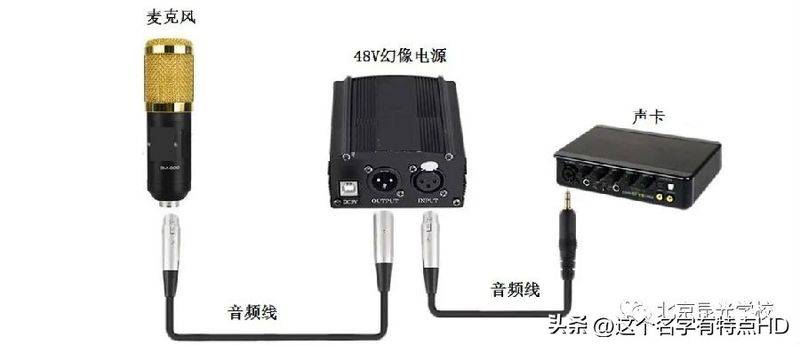
The voltage of the vision power source can be matched with the voltage requirements of the capacitor microphone by:
Knowledge of the voltage requirements of the mpc: the first requirement is to understand the voltage requirements of the mpcs used. Most canisters require direct current voltage around 48v, but some may require other voltage. Select the right source of vision: select the right source of vision for the output voltage according to the voltage requirements of the electric microphone. If the voltage does not match, it may result in the failure of the capacitor microphone to function properly or damage. (c) connecting to the mirage power and the capable phone: connecting the mirage power to the mpc can be done using xlr plugs and corresponding cables. Adjusting the voltage of the spectrum power: if the voltage requirements of the mpc are not fully matched with the output voltage of the mpc, the voltage of the mpc can be adjusted appropriately to match the voltage requirements of the mpc。
It is important to note that the voltage of the approximation power must be matched with the voltage requirements of the conceiving microphone, otherwise it may be rendered non-functional or damaged. Therefore, attention needs to be paid to the compatibility of voltage in the use of vision power。
How does a vision power source provide a stable voltage for an electric microphone
03
Mirage power provides a stable voltage for the mpc, mainly through:
Isolator transformers: isolated transformers are usually used to provide stable voltage. Isolated transformers can effectively isolate the voltage of the phantom power from the signal line of the capacitator to avoid interference. At the same time, the isolation transformer also provides a stable voltage output to ensure the normal operation of the capacitors. Steady voltage circuits: mirage power sources usually include steady voltage circuits to ensure stability of output voltage. The voltage circuits can stabilize the voltage of the approximation power to suit the voltage requirements of the capacitors. Electricity: the mode of power supply is usually based on a balanced transmission line, which can save a wire and provide a stable direct current voltage. Balancing the transmission lines transmit the voltage of the vision power through the balancing signal lines into the capacitor microphone, while also transmitting audio signals。
What do you need to know about the use of the mirage power
04
The use of vision power requires the following attention:
The voltage match: the voltage of the approximation power must match the voltage requirements of the capacitor microphone. If the voltage does not match, it may result in the failure of the capacitor microphone to function properly or damage. Electricity supply: mirage power needs to be able to provide sufficient current supply to meet the working needs of the electric microphone. If the current is not supplied adequately, it may cause a malfunctioning or noise in the conceited microphone. Block interference: in the use of vision power, attention needs to be paid to the effects of external electromagnetic interference on the electrocoustic microphone. In order to reduce interference, a number of measures could be taken, such as the use of shield cables, distance from the source of interference, etc. Maintenance: periodic maintenance of the vision power source to ensure its normal operation. For example, regular dust cleaning, check whether the connection is loose, etc. Safe use: security needs to be observed in the use of vision power. For example, hands should not be placed near the plugs in the vision power source in order to avoid electrocution。