A-b, a-a-a-d, what's the difference
First, different types of magnification can be classified according to performance: class a (also known as category a), class b (also known as category b), class ab (also known as category ab), class d (also known as category d). () the above are commonly used on cars。
1. Pure alpha power amplifiers
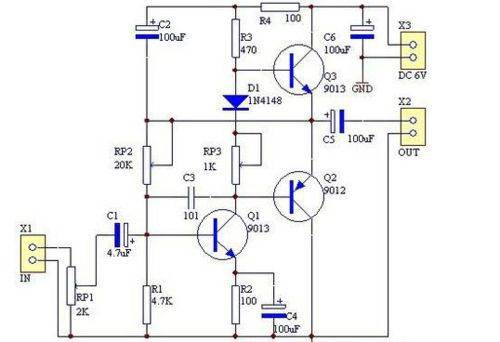
Pure alpha power amplifiers, also known as class a power amplifiers (class a), are fully linear amplifiers. When a pure alpha power amplifier works, the transistor's positive and negative channels are open, whether with or without signal, which means that more power is consumed as heat, but the failure rate is extremely low. Pure alpha power amplifiers are less common in the application of car acoustics, as is the case with the sinfoni advanced series in italy. This is due to the very low efficiency of the pure alpha power amplifier, which is usually only 20-30 per cent, but whose sound is appreciated by the sound fever friends。
2. B. Power amplifiers
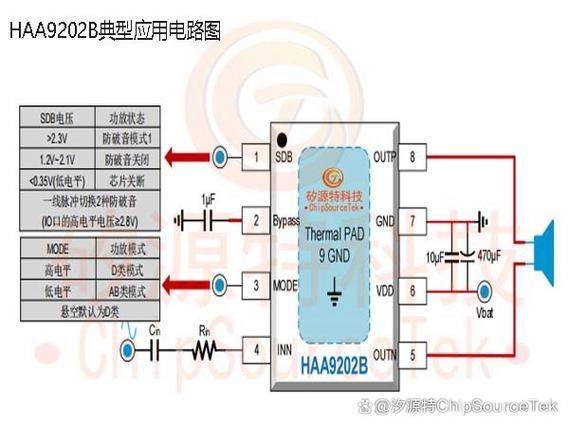
B power amplifiers, also known as class b power amplifiers (class b), are also called linear amplifiers, but they work in very different ways from pure alpha power amplifiers. When working, the positive and negative channels of the transistor are usually in a closed state unless there is a signal input, that is to say, only the direct channels work when a positive signal comes in, while the negative channels are closed, and the two channels never work simultaneously, so that there is no loss of power in the absence of the signal. However, when both positive and negative channels are opened and closed, cross-fiscres often occur, especially in low-altitude situations, so that a type b power amplifier is not a truly high-fiscal amplifier. In practical applications, it is true that many early car acoustics are type b because they are more efficient。
3. Enrichment of alpha-b device
The ab power amplifier, also known as the ab power amplifier (class ab), is a design compatible with the advantages of a and b power deployments. When there is no signal or when the signal is very large, both positive and negative channels of the transistor are frequently opened, at which point the power is depleted, but no a-type operation is severe. When the signal is positive, the negative channel is open before the signal becomes stronger, but the negative channel is closed when the signal turns strong. When the signal is negative, the reverse works. The weakness of the ab power amplifier is that it can produce a slight distortion, but it is better than the a and b categories relative to its efficiency ratio and the level of authenticity, and the ab type amplifier is also the most widely used design in the current car sound。
Ab distinction and application of ab d
4. D power amplifiers
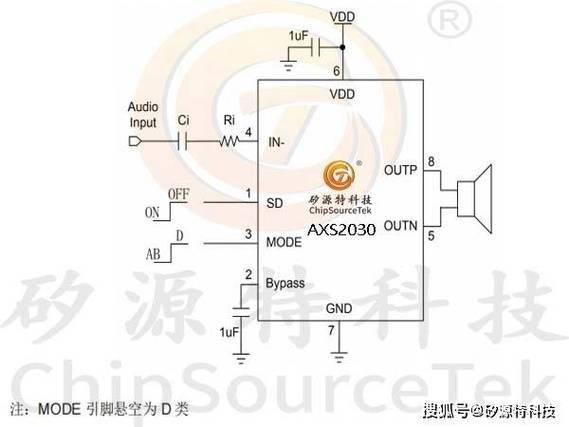
The d amplifiers, unlike the a, b or a-type amplifiers described above, operate on the basis of a switch transistor that can be fully readable or completely closed in a very short period of time. The two transistor tubes will not be transistored at the same time, resulting in very little heat. This type of amplifier is extremely efficient (around 90 per cent) and, ideally, 100 per cent, compared to only 78. 5 per cent for ab type amplifiers. On the other hand, the switch working pattern also increases the distortion of the output signal. The circuits for the d amplifiers are divided into three levels: input switch level, power magnification level and output filter level. Category d amplifiers work in a pulsed (pwm) mode with switches. Using pwm to convert audio input signals to high frequency switches, a comparison of audio signals with high frequency triangles is made by a comparator, with output being low level when the reverse end voltage is higher than the same end voltage, and high level when the reverse end voltage is lower than the same end voltage。
In the d type amplifiers, the output of the comparator is linked to the power magnification circuit, where the metallic oxide field effect tube (mosfet) replaces the bipolar transistor (bjt) because the former has faster response times and therefore applies to high frequency working patterns. Category d amplifiers require two mosfets, which can be fully operational in a very short period of time under a conductor or deadline. When a mosfet is fully steered, its pipe pressure is low; when the mosfet is completely closed, the current through the tube is zero. The two mosfet rotations are very fast on the switch in the conductivity and cut-off state, resulting in high efficiency and low heat generation, so that the d type amplifiers do not need a large radiator。
There are many other terms of reference for category d, such as category t, which are a deformation of category d. In practical applications, it was not until 1980 that this switch was rapidly developed as a result of the presence of mosfet. In real development, while efficient, there are also high levels of distortion, noise and poor resistance. As technology develops, such deficiencies will become fewer and it is expected that future d-type work will be more widely applied in the field of car sound。
The mode of operation and characteristics of these performances will be presented to the reader on the basis of the generic so-called " a " , " a " and " d " categories。
Category a: the sound is a wave-shaped signal, so the power-enhanced sound signal is equal to the amplitude of the wave. In the a-class, every magnification component will always have a sufficient power supply to magnify every full acoustic waveform as long as the power is in the power supply. Thus, the a-based sound is sweet, natural, authentic, not empty. However, since the amplification components of a class are still high in power consumption even when no signal is entered, and many electricity is wasted by thermal energy, it is somewhat inadvisable to deplete the power, low output power and high operating temperature, to listen to the sound that is appropriate and to drive ultra-low sound that requires high power。
Category ab: ab-type zoom is divided into two parts, one magnifying the sine wave of the sound signal wave and the other ab-type zone。
Distinction and application of ab category d credits
Ab class is much better in terms of power consumption and output power than a class, since the other half of the magnification components, which are responsible for magnifying the negative wave, can rest only through micro-altitude electrical currents and vice versa, when the magnification components of the sine are working. However, ab-type performances face the problem of the combination of sound signal swirling and negative chording, with the risk of “facilitation” and loss of sound quality in poorly managed products. It's a good thing that auto acoustics are highly sophisticated today, and that the need to avoid acoustics has become a basic condition for ab-type power to be satisfactory in sound quality and power output
Category d: the d power plant is operated using a “exchange magnification” method, i. E., the control of power output switches and switches at a rate at least twice the frequency of the sound signal, so that the d class power is used in very small quantities, with almost 90 per cent of the power of the motor horn being used to drive ultra-low sound systems that require high power. However, due to the magnification principle of decomposition and off of d-type power, it is inevitable that the sound is very rough, and the high-sounding horns are less conducive to sound expression。
Apart from a, a, a, d, there are b, t, g, but they're rather rare in car acoustics, so here's a little less