On 11 may, listed companies such as mantung, wide-technology, fulbright, visual intelligence and others disclosed the announcement of the use of idle funds to purchase property。
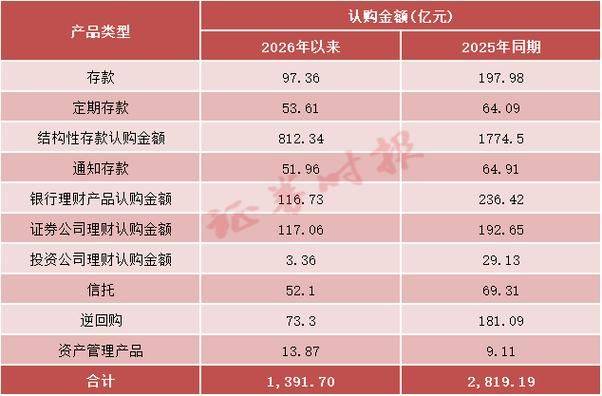
Wind data show that, as of 11 may, since this year, shares of a listed companies have subscribed approximately $25,287 million in property, involving nearly 600 listed companies. Compared to the same period last year, the amount of property requisitioned by listed companies decreased by about 50 per cent and the number of participating enterprises decreased in parallel with the number of subscriptions。
Structural deposits, structurally speaking, remain the largest category of financial management by listed companies, but their share has continued to decline in recent years, resulting in a marked increase in reverse purchases, and stock company management products becoming “new pets”。
Property requisitioning is down
On 11 may, a voice-based smart announcement was issued that the company would use up to $200 million in idle funds for cash management and would choose to buy in stages items of property that were highly secure, liquid and guaranteed the security of the principal of the investment for a maximum period of 12 months。
On the same day, man-tung chile also indicated that, in order to improve the efficiency of the use of funds, companies would use up to $200 million of their own funds for cash management, within the above-mentioned levels, which would be used on a rolling basis。
Journalists found that the types of property recently accepted by listed companies include, inter alia, reverse purchases, structural deposits, and negotiable bulk certificates。
As of 11 may, according to wind, the total value of the property requisitioned by listed companies since this year is approximately $25,287 million, down by about 50 per cent from $50,485. 3 million in the same period in 2025. At the same time, the number of listed companies involved in the management of property has decreased, from 1,043 in the same period last year to 595 companies, a decrease of over 40 per cent。
Prudence in the use of idle funds
According to industry sources, the decline in the financial resources used by listed companies reflects the cautious use of idle funds by listed companies, which are further reinforced by the logic of “liquidity preference” in the face of multiple factors, such as the expected decline in returns on property management and tighter regulation。
“the most immediate drivers are fundamental changes in the interest rate environment. Since 2024, central bank interest rates have fallen several times and interest rates on bank deposits have continued to decline, with structural deposit yields having been reduced from more than 3 per cent to 1. 5 per cent - 2 per cent, and yield attractiveness declining. At the same time, in recent years, regulators have continuously strengthened penetrating regulation of the use of public companies for fund-raising, reducing the operational space of some companies.” the director of the shanghai financial and development laboratory has just analysed it。
It has also been suggested by industry sources that, with the recovery in some industries, some of the listed companies have moved their idle funds back from management. In addition, many enterprises tend to retain cash guarantee operations in response to the rise in uncertainty in external demand。
Logical strengthening of the “liquidity priority”
In terms of structure, listed companies favour low-risk products that are safe and mobile. As of 11 may, the amount of structural deposits contracted by listed companies has exceeded $140 billion since the beginning of the year, representing about 57 per cent of the total amount of property requisitioned by listed a companies and the first largest category of subscription。
Senior think tank researchers have come to believe that structural deposits are more favoured than other properties because of their relatively high security and customized revenue structure. Such products, which are usually linked to market indices, exchange rates, interest rates or certain assets, can provide the listed company with a higher return while securing the principal。
However, data show that the share of structural deposits has declined continuously in recent years, and the share of subscriptions by listed companies to reverse buy-backs, trusts, securities firms to finance products has increased。
In particular, since this year, the amount of structural deposits contracted by listed companies has decreased by 5. 76 percentage points in relation to the total amount of the fund, while the share of reverse purchases has risen from less than 5 per cent to 8. 5 per cent in the previous year, and the share of securities companies in terms of property items has increased by 2. 64 percentage points in relation to the same period。
It has just been stated that behind the structural changes is the strengthening of the “liquidity preference” logic. “the core reason for the increase in the share of reverse buy-back investment is that its super short product term corresponds to the need for the enterprise's capital to be available at any time, and the increase in the share of portfolio management by securities firms reflects the firm's preference to opt for a flexible and more transparent form of product for which there is little variation in returns.”