The supreme people's court and the supreme people's procuratorate (hereinafter referred to as “two highs”) have successively issued judicial interpretations, such as the 2001 interpretation of the supreme people's court on the specific application of the law in criminal cases related to the illicit manufacturing, trade, transport of firearms, ammunition and explosives (as amended in 2009, hereinafter referred to as “interpretation of guns”) and the 2014 “two highs” interpretation of certain issues of the law applicable to the handling of criminal cases of smuggling (hereinafter referred to as “interpretation of smuggling”), clarifying the sentencing criteria for illicit manufacturing, trading, transport, mailing, storage, possession, possession, possession, smuggling and smuggling of firearms offences, which play an important role in combating gun-related crimes and maintaining social stability and harmony。
However, there is no distinction in judicial practice between the type of gun power and the power of the gun relative to the mobility of the gun, without taking into account the subjective and objective behaviour of the suspect and the consequences of his or her harm, and the method of mechanically striking against the quantitative criteria of the relevant legal and judicial interpretation, in violation of the principle of proportionality of criminal penalties, which results in unreasonable and inappropriate sentences. At the same time, there are problems of mechanical application of criminal law and related judicial interpretations in criminal cases involving lead in gas guns. In order to ensure that such cases are dealt with in accordance with the law, there is a need to explicitly address, in the form of a batch, issues relating to the sentencing of persons convicted in criminal cases involving compressed gas-driven firearms and lead in gas guns and to deal with the cases properly。
With the assistance of the ministry of public security and the general customs administration, the supreme people's procuratorate, in conjunction with the supreme people's court, has studied and drafted the text of a copy of the report of the supreme people's court and the supreme people's procuratorate on the sentencing of persons convicted in criminal cases involving gas-powered firearms, lead gas guns and ammunition (hereinafter referred to as " the rectification " ). After a number of research discussions and consultations with interested parties, the text of the review was adopted. At its 1732nd meeting, on 25 january 2018, the trial committee of the supreme people's court and at its 74th meeting, on 2 march 2018, the twelfth session of the prosecutor general's office of the supreme people's procuratorate adopted a recontribution, which was in force from 30 march 2018. The main elements of the review are explained in two ways:

(i) basic principles. The following principles were followed in the preparation of the review:
The first is adherence to the principle of strict firearms control. Maintaining the standards of sentencing and identification of firearms as provided for in the judicial interpretation of firearms-related offences and combating firearms-related offences from a strict perspective. The repository did not amend the provisions of the explanation on firearms and the interpretation on smuggling on the criteria for the quantity of firearms. The criteria for the identification of firearms in firearms-related cases are based on those established by the ministry of public security in force。
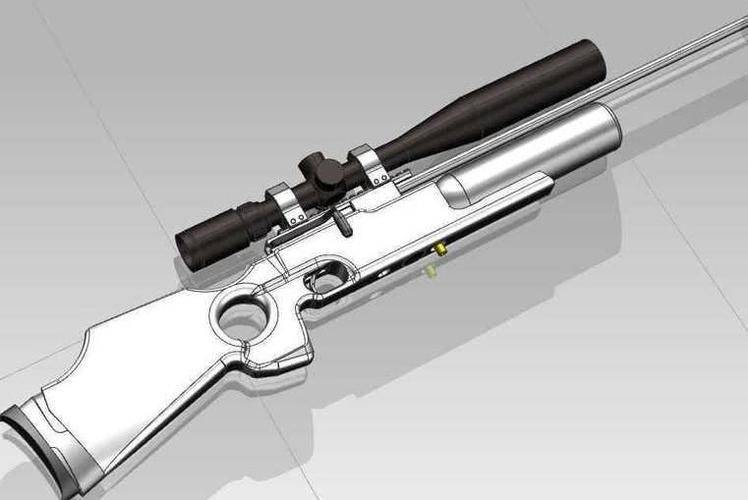
The second is the implementation of a generous criminal policy. To maintain the overall seriousness of the fight against gun-related crime and to implement the spirit of leniency in individual cases. A proper distinction is made between cases of compressed gas-driven firearms, with clear reference to the sentencing criteria in cases of compressed gas-driven firearms with a lower level of gunpoint than kinetic energy。
Thirdly, it is in a spirit of realism. In cases involving guns driven by compressed gases and with a lower level of gun power, the principle of proportionality of criminal liability is upheld, and the outcome of the case is accepted by the population at large, with a view to harmonizing the political, legal and social effects。
(ii) main elements. A total of two provisions of the reconfirmation are as follows:
1. Article 1 of the revision provides that, in determining whether or not to impose criminal liability and to impose penalties for the illicit manufacture, trade, transport, postage, storage, possession, possession, possession, possession or smuggling of compressed gas-powered firearms, which are lower than the mobility of the gun, account shall be taken not only of the number of firearms involved, but also of their appearance, material, launch material, place and channel of purchase, price, use, strength of the injury, ease of repair through modification, as well as of the subjective perception of the perpetrator, motive, consistent performance, the proceeds of the offence and evasion of the investigation, in order to ensure that criminal liability is proportionate. This article sets forth the principles of sentencing in cases of illicit manufacturing, trade, transport, mailing, storage, possession, possession and smuggling of firearms driven by compressed gases and with lower mobility at gunpoint。
This is understood primarily by avoiding mechanical enforcement in practice. In 2007, the ministry of public security's scientific court decision on the scientific determination of gun injured power used gun-shot contrasting kinetic energy as the basis for determining the strength of a firearm, i. E., the strength of a non-manufactured firearm was determined to be greater than 1. 8 j/cm2. The 2010 regulations on the identification of the performance of firearms and ammunitions involving the public security organs clearly define firearms as non-manufactured firearms that cannot be fired into the form of ammunition, when the power of the gun is greater than 1. 8 j/cm2. In practice, in the context of the strict suppression of firearms-related offences, the judiciary tends to apply strict criteria for the identification and quantification of firearms, which are punishable under the corresponding offences when the number of firearms in question is greater than 1. 8 j/cm2 and meets the criteria set out in the explanation on smuggling of firearms, which leads to a disproportionate sentence in individual cases. This is partly due to a lack of discretion in the judicial interpretation of the relevant provisions and, more importantly, to the mechanical application of criminal law and judicial interpretation provisions by members of the judiciary. In cases involving compressed gas-powered and lower gun-point than kinetic energy, in terms of the consequences of harm, the perpetrator is not subject to mechanical punishments based on the number of gun-related offences, which are neither subjective nor objective social hazards. Second is a comprehensive assessment of social hazards. There are many elements of any criminal act that are socially harmful. The principle of comprehensive social hazard assessment should be upheld in cases involving guns driven by compressed gases and with a lower level of gunpowder than energy. For example, the number of firearms involved should be taken into account, as well as the objective factors involved, such as the appearance of the firearm, the material, the launch material, the place and channel of purchase, the price, its use, the size of the injury, whether it is easy to increase the strength of the injury by means of a change, and the subjective factors, such as the subjective perception of the perpetrator, the purpose of the motive, the systematic performance of the offence, the circumvention of the investigation, etc., should be taken into account。
2. Article 2 of the recontribution stipulates that the illicit manufacture, trade, transport, mailing, stockpiling, possession, possession, possession and smuggling of lead in gas guns shall be determined by taking into account the number, purpose and motivation of the perpetrator, consistent representation, illicit proceeds and evasion of the investigation, in the determination of criminal liability and in the determination of the penalties to be imposed, the social hazards shall be assessed in a comprehensive manner to ensure that the penalty for the offence is proportionate. This article sets forth the principles of sentencing in cases of illicit manufacturing, trade, transport, mailing, storage, possession, possession and smuggling of lead in gas guns。
In cases of illicit manufacture, trade, transport, mail, storage, possession, possession and smuggling of lead in gas guns, the amount of lead ammunition may lead to an unreasonable level of criminal repression and punishment. For example, the illegal manufacture, trade, transport, post and storage of lead in a gas gun is punishable by imprisonment for three to ten years and for more than 2,500, and by imprisonment for more than ten years until the death penalty, in accordance with the interpretation of firearms; illegal possession and possession of lead in a gas gun is punishable by imprisonment for more than 1,000 rounds, imprisonment for up to three years, detention or control for up to 5,000 rounds, and by imprisonment for up to seven years. In judicial practice, the number of lead cartridges involved in such cases is often large, usually over 500 in small boxes, meeting the threshold. Thus, this article makes clear the principle of comprehensive consideration, requiring that, in the pursuit of criminal responsibility and in the application of discretionary penalties, circumstances such as the quantity, use and consistent behaviour of the perpetrator, the proceeds of the offence and the evasion of the investigation be taken into account。
(author: office of legal policy studies, supreme people's procuratorate)