Author: wei xiaoyan (researcher, centre for research on ethnic policy and social development, university of the south china national university)
Max devoted his whole life to exploring the emancipation of all mankind, and ultimately attributed this objective to the “free personality based on the full development of the individual and the productive capacity of their common society as their social wealth”. Whether it be the exploration of human liberation or the pursuit of a free personality, when faced with real society and reality, the problems of the community are bound to arise. Because the human person is “the sum of all social relations”, the individual is present in the community, which makes it possible for the individual to survive and develop in real life. The individual and community form an important two-way dimension of marx's observation of human history。
The idea of marx's community is a product of the era of capitalist machine production. On the one hand, the industrial revolution and the development of science and technology have greatly contributed to the development of social productivity. On the other hand, there have been dramatic changes in the production relations of capitalism. It was in the process of reflecting on the productive way of life of humankind that marx began to explore the community. In the 1940s, when the “three workers' movements” were raging, the proletarians came to the historical stage as a united political force. Self-conscious associations of the proletariats have replaced unorganized, unwitting, passive alliances and have grown and grown in one struggle. The disintegration of the primitive community as a result of capitalist production methods and the rise of the proletariat have laid the social conditions and class base for marx community thinking。
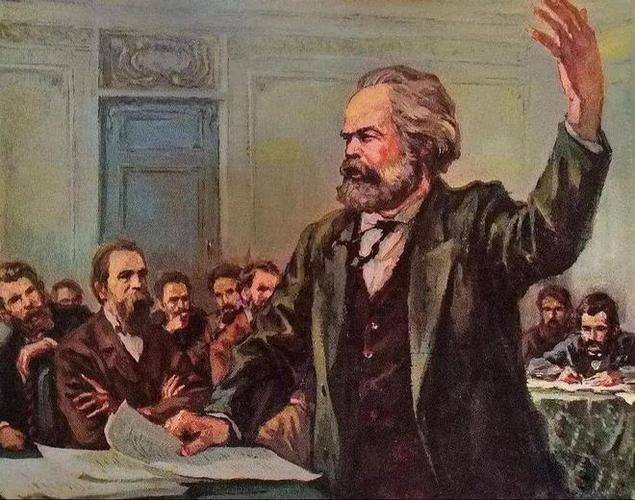
Marx abandoned the idea of a community that had remained at school in form, from ancient greek to german classical philosophy, and critically inherited and developed the theories of ferbaha and hess, looking at the idea of a community in terms of the human condition, not only boosting the development of a materialistic view, but also giving rise to the idea of a community embedded in a materialistic view. By analysing the different stages of history, marx reveals the relationship of individuals to the community and its characteristics: in the former period of capitalism, individuals were attached to a community based on “blood relations” and natural connections, with the individual having the same direct relationship with the community, as marx called the “natural community”; in the capitalist phase, individuals were present in a community bound by “currency-capital” and individual and community constituted opposing relations, as marx called the “false community”; in the period of communism, individuals were “full and free to develop” individuals, and in the “real community” formed on the basis of “free association”, there was a dialectical unity between individuals and the community, as marx called the “real community”。
In the economics manuscript 1857-1858, marx analysed the production methods and ownership systems of the former capitalist stage. In his view, in the former period of capitalism, “first human beings were the species, tribes, community animals”, meaning that the original social form of human beings was linked by blood, kinship, a naturally formed and self-sufficient community, an unconscious existence that preceded human historical activity. Such a community, in the form of a community of families, tribes and clans integrated into one another, forms a stable and traditional set of social relationships internally for survival and reproduction, constituting a “natural community” or a “community of origin”. In such a community, the individual is a member of the community and the individual's division of labour is limited to the natural division of labour within the community, in which the individual is bound by the ties of blood and family relations, while the individual's subjectivity is bound by the system and regulations within the community and is an unfree and unequal social relationship。
According to marx, in the former capitalist society, there was a “dependent relationship” between the individual's state of existence and the means of production, with the social characteristics of the strong community and the weak, the individual being present in the community in a state of dependency and dependent upon it, the human capacity to produce is limited to a certain extent and location, the individual's work is limited to the simple needs of survival and the individual is not free to develop. In this social relationship, however, there is no division of interests between individuals and the community, each of whom considers himself to be an owner and a member of the community. The purpose of individual work is to maintain the survival of their families, clans and the community as a whole。
With the development of productivity, the natural community of the former capitalist stage was forced to break up under the shock of its internal factors and society entered the capitalist phase. Capitalism is a physical, individualistic and self-serving society, characterized by strong individuals and weak communities. Individuals have moved away from their original dependence on the natural community and become independent individuals capable of producing and exchanging. Individuals appear to have gained freedom and no longer have internal dependence on the community, but have become dependent on general external exchange. This dependence is reflected mainly in dependence on property, which exists in the form of property or currency, which replaces social relations between human beings and gives them the independence they have lost. At this stage of historical development, individuals are self-serving, each seeking only his or her own special interests, and common interests are “false, different” for the individual. The state, as the representative of the public interest, should have acted to reconcile special interests with common interests. But in a capitalist society, this self-proclaimed state, which represents the public interest, essentially represents the interests of the bourgeois, and, under the influence of capitalist economic relations, the promotion of human development becomes an instrument of oppression by the ruling class. This community, based on division of labour, ownership and property relations, is essentially an illusory community. On the face of it, the community represented the general interest, but in fact only the special interest of capitalism, reflecting the exploitation of human beings by the capitalist community. People living in an illusory community have gradually moved from “human-dependent relations” to “material-dependent relations”, and the freedom of individuals is not only limited by class status but also enslaved by “matters”, who have lost their freedom in the process of alienation, at a time when the relationship between “individuals” and “community” manifests itself in opposition。
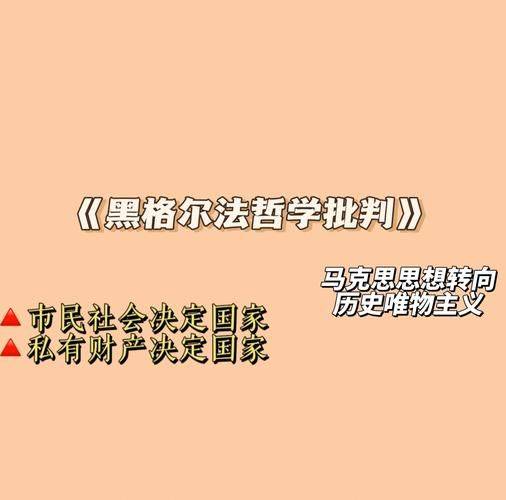
Marx has also interpreted the theory of the alienation of this capitalist society in books such as hegel law philosophy critics, the jewish problem, and the 1844 philosophy of economics. Civil society, as a form of alienation, is a special stage in community development. Marx believes that, in order to eliminate this alienation, human beings must completely renounce private ownership and strip themselves of their essence from the illusory community. Only in this way can a new productive and communication relationship be established。
As capitalism continues to develop, the constraints and exploitation of individuals have deepened, the collapse of value-based production systems, the deterioration of individual living conditions and the resulting rise in resistance to existing systems have led to the formation of a powerful social force that has created a class — the proletariat — composed of the majority of the members of society, who bear “all the burdens” of this society and “exclusion” from it, and “from this class a sense of the need for a radical revolution, that is, a communist consciousness”. Marx called this community formed on the basis of free association of individuals a true community. In such a community, everyone is involved as himself, and the individual is free in his own union and through association, that is to say, the “free personality based on the full development of the individual and the productive capacity of their common society as their social wealth”. In so doing, the “individuals” and the “community” have developed a new dialectic unity。
In books such as the german ideology, marx criticized concepts such as “false community” and “false community”. Marx made it clear that only in a true community can individuals be given the means to fully develop their talents and that individuals acquire their own freedom in and through their own union. The true community is the association of free human beings, i. E. A communist society — a society where the individual coexists with the community, where individual freedom is conditional on community freedom and community freedom presupposes individual freedom. The idea of a community no longer remains at a purely critical stage, nor is it a top-level architecture that lacks a practical basis. It is the starting point of marx's human-practical approach to the conclusions drawn from the materialistic perspective of the development of human and social patterns and the integration of a community of practice with a community of values. As an important theoretical outcome of the marx community's ideas, the true community expressed not only its ultimate concern for the free and comprehensive development of the individual, but also its vision for the future of society. In books such as " the golda platform criticism " , marx divided the communist society into two stages of development: (b) infertile communist society (i. E. The first stage of communist society) and mature communist society (higher stage of communist society). A mature communist society is what is commonly referred to as a socialist society; a mature communist society is what is commonly referred to as a communist society。
Commodity, monetary and capital communities contribute to the alienation of the community. Criticism of the capital community is an important focus of marx's modern criticism. The true community is a rejection and transcendence of the illusory community of capitalist societies. The realization of a true community and the full and free development of each and every human being is a lifelong quest of marx. Marx has vividly depicted a communist society that guarantees the free personality of the human person, where people can “hunting in the morning, fishing in the afternoon, livestock in the evening and critical after dinner”。
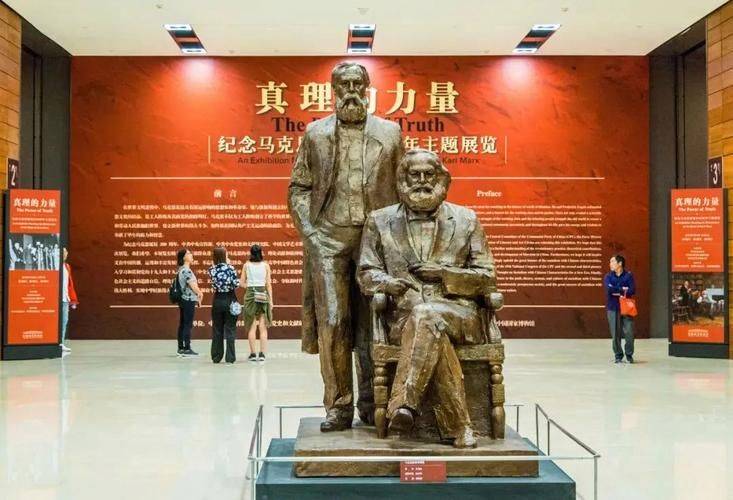
Building the china national community: from response to reality
Marx's community thought sketches the chinese national community's response. Moving from response to reality requires a difficult and convoluted process of exploration. The history of the struggle of a chinese communist party is a history of the actual exploration and practice of the marxist community in china. Guided by the marxist position approach, the chinese communist party has developed a theoretical outcome that has evolved through constant exploration and practice. It is the result of the interaction between the marxist community idea and the chinese-style chinese-style national theory. Since the 18th congress of the party, general secretary xi has creatively put forward the important conclusion of “building the awareness of the chinese national community” and has made important developments and innovations in the marxist national theory and the party's national theory. The main lines of the party's ethnic work demand how to move forward in politics, theory and practice. It is important to maintain the political commitment to the central unity of the party's work with the nation and to ensure that the unity of the party, the rule of law in the administration of the government, the leadership of the warring departments, the due diligence of the national staff, the cooperation of the various departments and the participation of the entire society in the work of the nation in the new era are firmly established; in theory, it is important to grasp the main line, to properly grasp the relationship between the main line and the main line based on the two-point theory, and to improve the work of the nation in the direction of promoting commonality; in practice, it is necessary to advance effectively the main line by placing the identity of the chinese national community in the whole process of the party's national work, by holding the cause of national unity and progress as the fundamental cause, giving all reform and development meaning to a strong sense of the chinese national community, by promoting the common modernization of socialism among the national races, by adhering to the idea of marxist ideology, and by making the ethnic groups a participant, builder, beneficiary and judger of the chinese national community。
(the present document is the result of the project funded by the central college of higher education on the funding of basic scientific research operations, the “study of the chinese national community of conscious education in the context of informed consent”