Submitted by: peng xiaohui (special fellow, centre for the study of china's specialist socialist theory systems, hunan province, vice-president, hunan first teacher training college)
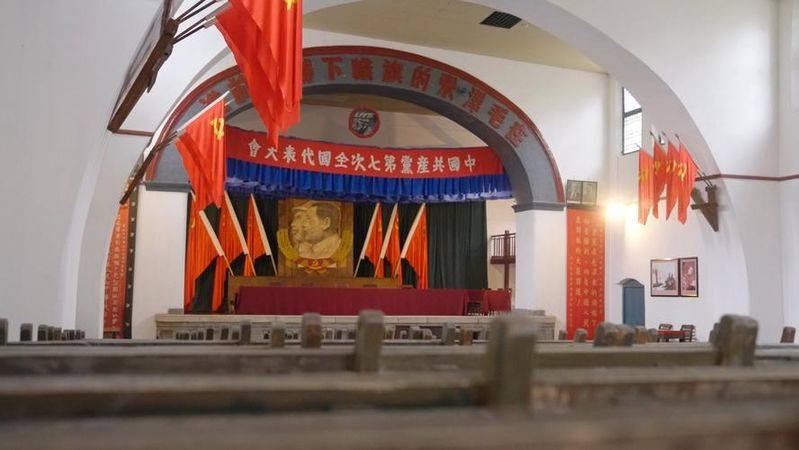
The truth is that it is the fundamental idea of marxism, the fundamental requirement for the chinese communist party to understand the world and transform it, and the basic thinking, working methods and leadership methods of our party. Looking back at the party's history, “practical” is the chinese communist party, represented mainly by comrade mao zedong, who has taken a deep grasp of the essence of marxist ideology and, in the context of chinese revolutionary struggles, has given a high profile to marxist worldviews and methodology in chinese. In his symposium to commemorate the 130th anniversary of the birth of comrade mao, secretary-general xi stated: “in applying materialism and historical materialism to all the work of the proletarian parties, comrade mao has developed positions, perspectives and methods that feature the chinese communist party in the long and difficult struggle of china's revolution and construction, reflecting three fundamental aspects: realism, popular orientation and independence. This is mao zedong's living soul." a multi-dimensional look at comrade mao's quest for realistic thinking is important to our sense of “realism” as a weapon of effective thought, to better understand the world and to transform it。
Mass history. The marxist popular view of history is that the people are the subjects of practice and the creators of social history. All for the people is the point of departure and endpoint of comrade mao's revolutionary work and has become the driving force of his values and revolution. Comrade mao has been concerned about the suffering of the people since he was a child, and has named himself a “child” in the name of the world. He made it clear, "why revolution? In order to liberate the chinese nation, to achieve the rule of the people and to achieve the economic well-being of the people”. As a committed marxist, comrade mao has always been able to think and solve problems from the standpoint of the people, stressing that “all actions of the communists must be of the highest standard in the best interests of the largest masses of the people, and in the best interests of the largest masses of the people”, and that everything must be done for the sake of the masses, from the masses to the masses, as a basis for the understanding and practice of the truth, for the people, “in the service of the people”, and with the sincere support of the masses, leading the revolutionary and socialist construction of china from victory to victory. We have followed the course of the party's realism and ideology, and we must maintain the primacy of the people from the historical point of view of the marxist masses. We must take the people's position firmly, grasp their aspirations, respect the people's creativity and pool their wisdom. We must insist on all efforts to bring about the great revival of the chinese nation through china's modernization for the sake of its people and for all。
Subject view. The chinese people have always been the main force in the development of china, and have always been aware of china's main forces and of china's specific practical and excellent traditional culture. Comrade mao has always regarded the chinese people as the main force, believing in them, relying on them and transforming china and the world with their strength. On the basis of a realistic survey and analysis of the specific situation in china, he developed policy measures to mobilize a large number of farmers and workers and to explore the path of china's revolutionary and socialist construction. He noted that “the success of the chinese revolutionary struggle depends on the knowledge of chinese comrades”. “codes in china are run by the communist party and by the people”. It is on the basis of chinese practice, with the courage to uphold the truth and to learn deeply from the failures of the great revolution, that he put forward important arguments such as the idea of “out-of-government” “party command gun” in the barrel of a gun, leading the chinese people out of a neo-democratic revolution that surrounds cities and seizes power by armed force. He insisted on a full-scale criticism of wang ming's “left” dogmatic error, using the principles of marx leninism to resolve party routing, guidelines and policy issues, saving the party at a critical historical juncture, saving the red army and saving the chinese revolution. The chinese communist party, represented mainly by comrade mao, relies closely on the people to explore the path to success of the chinese revolution, and one of the fundamental points running through it is that china’s problems must be solved by the chinese themselves, in accordance with china’s basic national conditions. We have followed the course of the party's realism, and we must remain self-confident and self-reliant from the standpoint of the marxist subject, and make a new contribution to the development of marxism with a more active historical commitment and creative spirit. We must neither seek swords, seal them off, nor copy them。
Paradoxically. The paradox exists in everything and runs through the process of its development. The problem was an external manifestation of contradictions, and to be realistic it was necessary to adhere to them, confront problems and find ways and means to solve them through research and study. Comrade mao has a strong sense of problem, adheres to a combination of theory and practice and actively explores the truth of national salvation. Research and studies are important methods of working towards solving problems and resolving conflicts between comrade mao and are an effective way of continuing the marxist theory and chinese practice. In order to explore the path of the chinese revolution, comrade mao carried out a number of social surveys, prepared the analysis of the social classes in china, the study report of the hunan peasant movement, the survey of the search for the wu, the survey of changgang, the survey of the zongkang commune, and other reports, including the famous “no investigation, no say” in opposition to the underworld, which provided the party and the red army with a wealth of first-hand material and important basis for understanding the situation in rural and urban areas at the time, studying the outstanding problems in the revolutionary struggle, and formulating the right policy. Research is a prerequisite for realism, and it is only through research into objective facts and analysis that can be conducted in such a way that the facts can be understood, the nature of the problem can be grasped and ideas and responses can be found. We are following the course of the party's realism, and we must be guided by the marxist paradox. We must focus on the new problems we face in our practice, the deep-seated problems that exist in reforming development and stability, the problems that the people are anxious to face, the major problems in international change, the salient problems in the construction of the party, and continue to come up with new ideas and new ideas for real solutions。
Development perspective. Truth is itself objective, independent of subjective consciousness and social history, while truth depends on the social and historical conditions of humanity, whose perception is constantly evolving. Comrade mao did not use marxism as a fixed formula. On the issue of china’s revolutionary power, he has conducted in-depth analysis of the economic status and political situation of the various classes of chinese society, and has concluded that “the chinese revolution cannot be won without the leadership of the proletarians.” farmers are strong allies of the working class, as well as of the urban small bourgeois class, which is a reliable ally, and the national bourgeois class, which is an ally for some time and to some extent. On the basis of these circumstances, the development perspective has led to different policies following the central work of the chinese revolution and the major social contradictions. For example, at the beginning of the party and during the great revolution, the central task was anti-imperialism and feudalism, which led to the policy of the national revolutionary unity front; after the collapse of the great revolution, the focus was shifted from the urban to the rural areas, which led to the policy of the democratic unity front for industry and agriculture; during the war against japan, the central task was to defeat the japanese aggressors and to propose the policy of the national unity front for japan; and during the war of liberation, the central task was to liberate the whole of china and achieve popular ownership and to propose the policy of establishing a broad popular democratic front. In line with the development of chinese revolutionary practices, comrade mao has adhered to the great unity and unity line, resolved the human heart and power problem, enriched and developed marxist theories and policies on the united front, and became an important asset in the party's victory and in power. We are following the course of the party's realism, and we must remain committed to positive innovation from the perspective of marxist development, both by upholding the fundamental principles of marxistism and by breaking down dogmatism, instinctiveism and empiricalism in practice, by treating all new things with enthusiasm, by constantly expanding the breadth and depth of understanding, by speaking of new things that have not been said by previous generations and by doing things that have not been done by previous generations, and by guiding new practice with new theories。
System view. Marxism believes that the world is an organic whole and that everything in the world is in interaction, interaction and mutual constraint. Comrade mao is good at thinking and solving problems in general or in general, focusing on using the marxist concept to recognize, analyse and resolve a number of major issues of the chinese revolution. He pointed out that “without a comprehensive picture, it is not true that a good piece will be cast”, emphasized the importance of using the concept of “globalization” to understand the chinese revolution, and insisted on studying and grasping the characteristics and patterns of the chinese revolution with strategic thinking with distinct systemic features. During the early construction of the red army, comrade mao studied and analysed the basics of the old army, suggesting that the military must not be separated from politics, economics, culture, etc., and must rise to war, take up the task of propagating the masses, organizing them, arming them and helping them to establish a revolutionary regime. By the time of the anti-japanese war, he had thoroughly analysed china's anti-japanese war and the world's anti-fascist war, scientifically grasped the dynamics of the anti-japanese war, and wrote " the enduring war " . Not only did he systematically articulate a comprehensive anti-war course and a long-lasting strategic approach, but he had also created a set of strategic tactics for the constant elimination of the enemy's living strength and strengthened the chinese people's confidence in its victory. During the war of liberation, comrade mao systematically organized the three battles of liao shen, huaihai and hinzin, which were not scattered and isolated, but were planned in a comprehensive manner, closely linked to each other, with each other taking care of each other's full deployment. Comrade mao has always insisted on taking into account the actual state of our society, on the understanding and systematic control of the characteristics and patterns of the chinese revolution and on its deployment around the main contradictions, which has also been a successful experience in analysing the specific problems of chinese revolution, construction and reform practices. We are following the course of the party's realism and thinking, and we must continue to adhere to the concept of the marxist system, forward-looking thinking, holistic planning, holistic approach to the party and the country's causes。
The day of light (28/02, 11th edition, 2024)