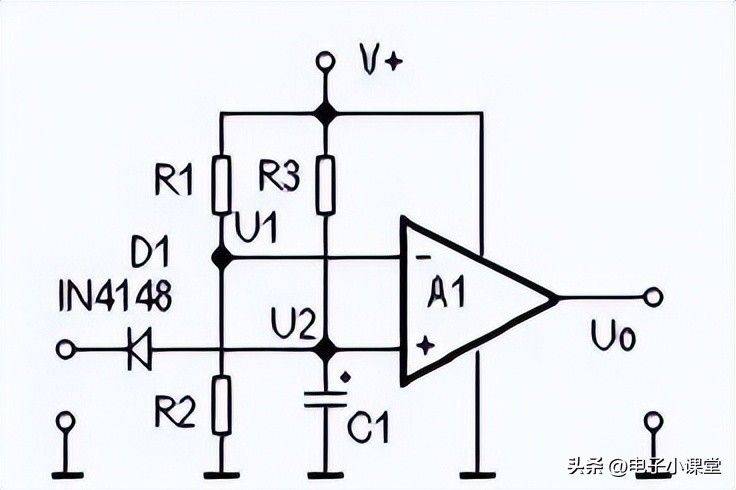
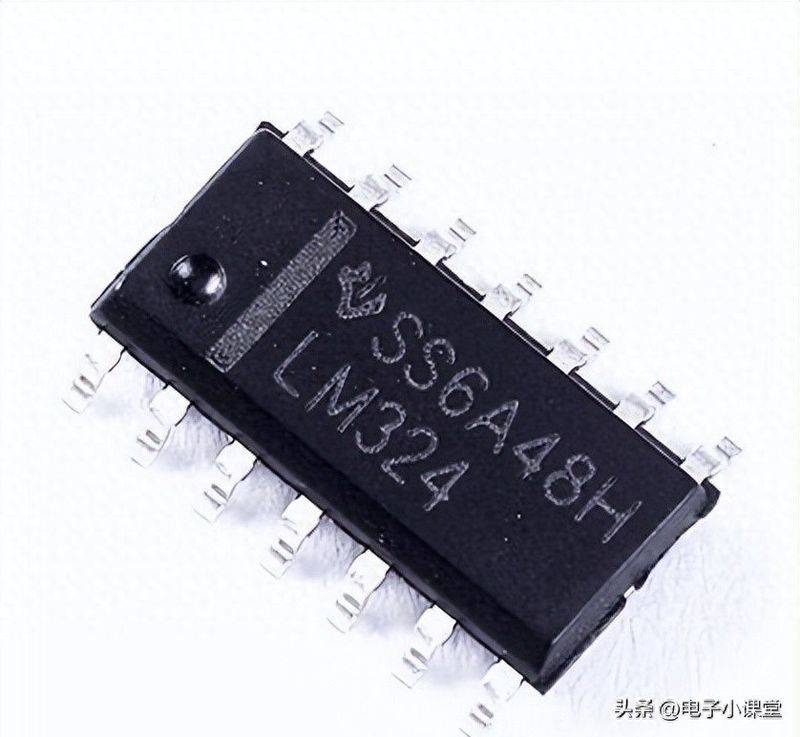
Recently, a chip called lm324 was put on the table, and friends said that the four amplifiers together could do a lot of tricks. It's been half a month since i've been shopping, i've made a dozen circuits, and i think it's really interesting to just remember what i've done recently。
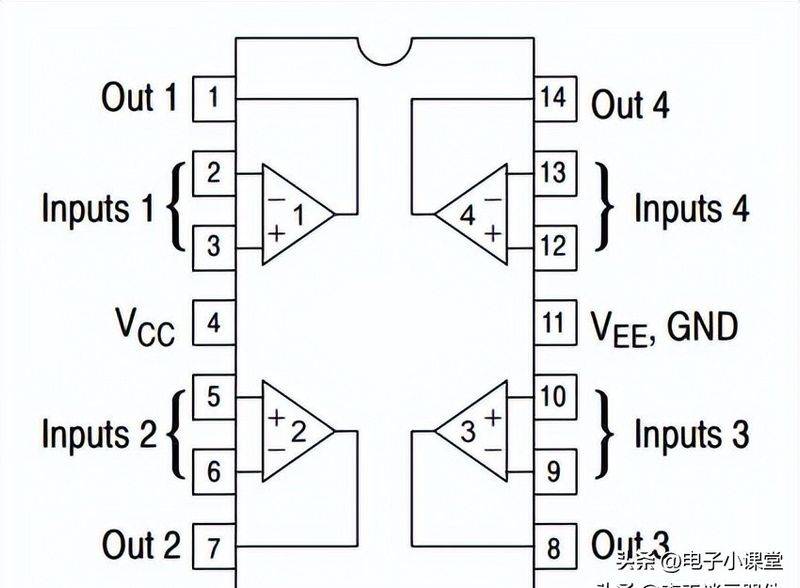
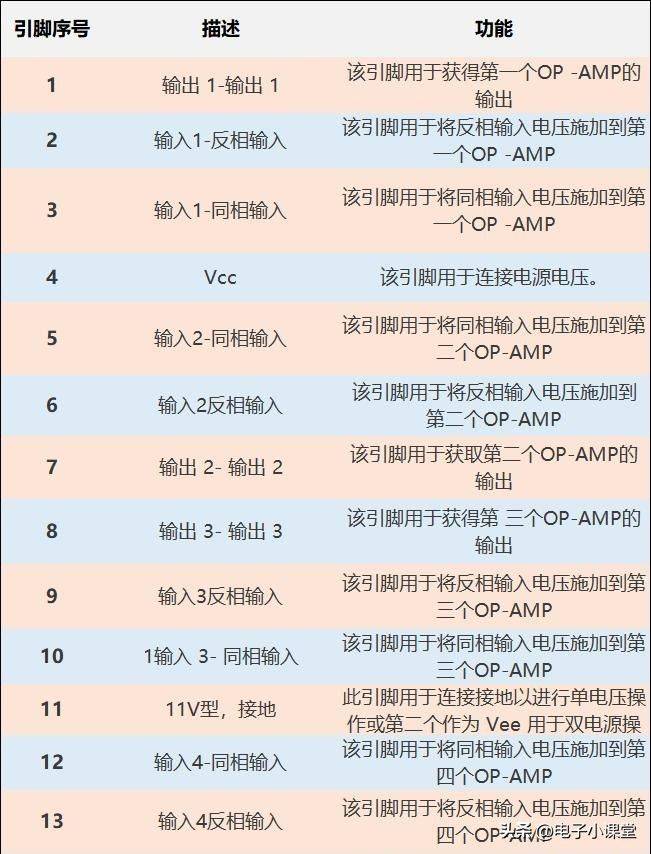
The chip is small and contains four independent amplifiers that can be powered with single power. For example, there is a problem with a double power supply, a switch to a 5v battery and an internal automatic adjustment of the intermediate voltage as the baseline. For different types of packaging, the most common is the 14-foot liner type, which is clearly marked in the instructions。
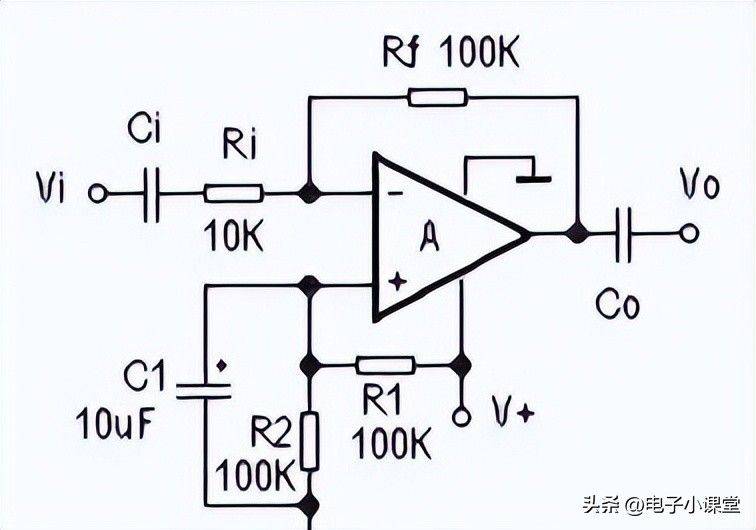
We'll double the number by two. For example, two of the resistance is 10 k, which makes feedback resistance 100 k 10 times larger. Enter the signal and reverse the output, which is clearly visible in the universal watch. The same amplification of the input resistance is higher and suitable for high resistance devices such as electro-capable microphones, with a significant reduction in signal decay。
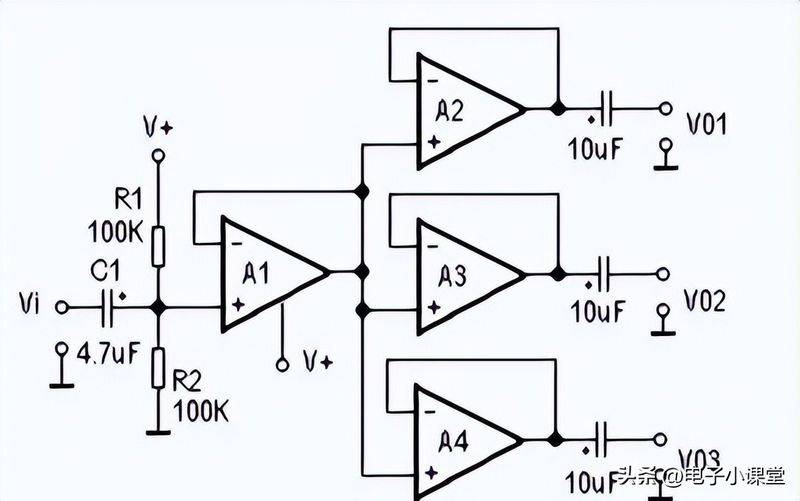
There's a signal distribution circuit that's interesting. One input is three-way simultaneously. Triggered to connect to three level lights and press the button to light them together, it was felt to be suitable for multi-road alerts or simultaneous controls. Each amplifier amplifier is fixed at a factor of one, similar to the triode follower。
On one occasion, a filter was made with a specific frequency signal. Arguments are a little twitchy when measured by formulas, and then randomly retorted the resistance and the noise was much smaller when the microphones were found. It may be used to filter specific frequency segments in sound devices, but more information is needed on how to reconcile parameters。
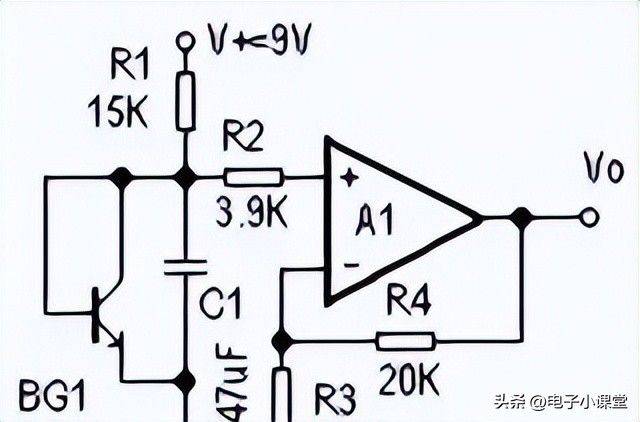
The temperature measure used a 3dg6 diode as a sensor, and the high voltage was tested several times. A subsequent adc model conversion allows real-time reading, although the accuracy is general and may be suitable for simple temperature control, such as heater switches。
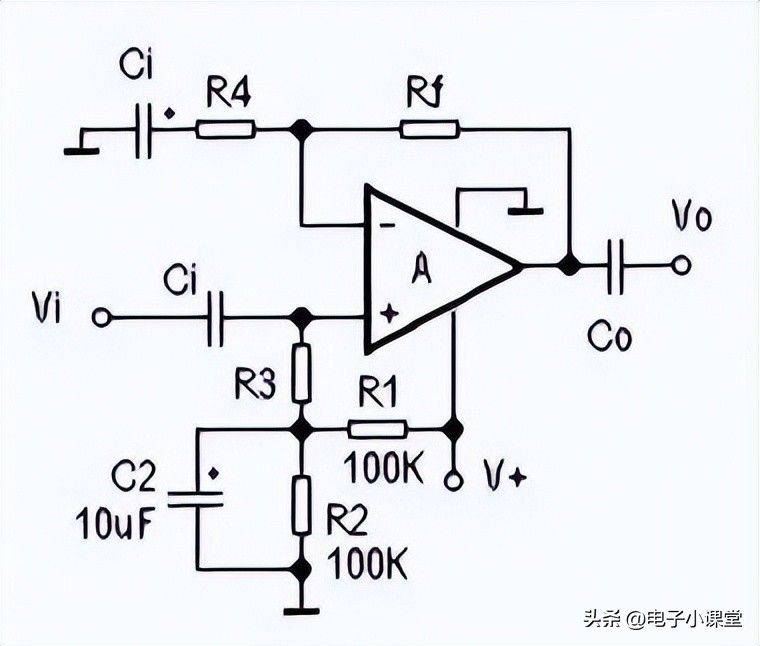
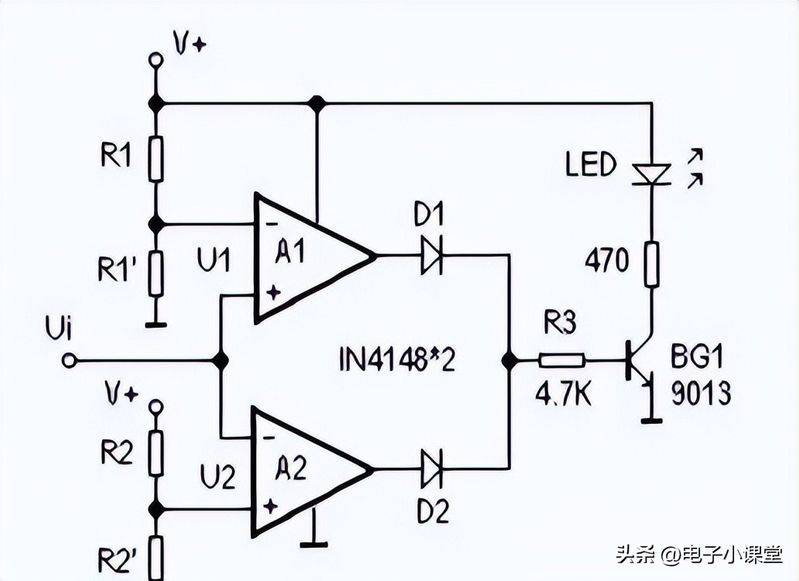
The comparator circuit removes feedback resistance and turns it directly into a high- and low-level rating. A double alarm was made, and the temperature went beyond range and the bells were ringing. Two drops were used to set floors and floors, which were more useful than single-point alerts, although the response rate seemed to be slow, and it had to be optimized。
Single-state triggers create a time-delayed circuit, for example, when buttons are pressed and the lights automatically go out for seconds. Capacitive discharges were used to adjust the resistance capacity values for longer periods. It is measured to start on a time count and to be invalid at midway and suitable to automatically turn off a street light。
The step-by-step generator didn't get it right at first. It worked with the two, one pulse and one score. When debugged, the wave shape was crooked, and it was only normal to discover that there was a leak in the air. This step wave could be used for led gradients
Finally, a high-sensitivity microphone was created, with a double-carrying cascade magnified and powered by a 6v battery. The voice of the cell phone is particularly loud, and the voices 10 meters away can be heard. However, it is too sensitive to squeal, and it is necessary to add a concussion button limit magnifier, which is suitable for wiretapping but not legal。
Recently, attempts were made to combine the comparator with the time-delay circuit and make a answering machine. The four buttons will not start again until the light has been pressed. The tests found that bugs were occasionally pressed at the same time, which is estimated to be a charge rate problem, possibly with a barrier。
These circuits play and find a lot of things they don't understand, such as how frequency reimbursement is going to work and how feedback networks are designed to be stable. The data manual will have to be scrutinized later, and the experiment will have to be taken into account. There is no time to test if the chip four amplifiers interfere with each other at the same time。
There's been a lot of experiments with this chip, and it's fun to set the circuit boards online. There are places where the rationale is not clear, but at least know how to get out. We'll use it later as a smart home project, like an environmental monitor or a simple alarm。