


The working method of the fan clutch is to use silicon oil as a medium to control the operation of the fan through temperature changes。
When air temperatures pass through the radiator are low, such as below 65 degrees, the temperature control valves are closed, the silicon oil is not entering the working cavity, the fans are separated and the fans do not turn or turn at very low rates, the engine water temperature rises faster。
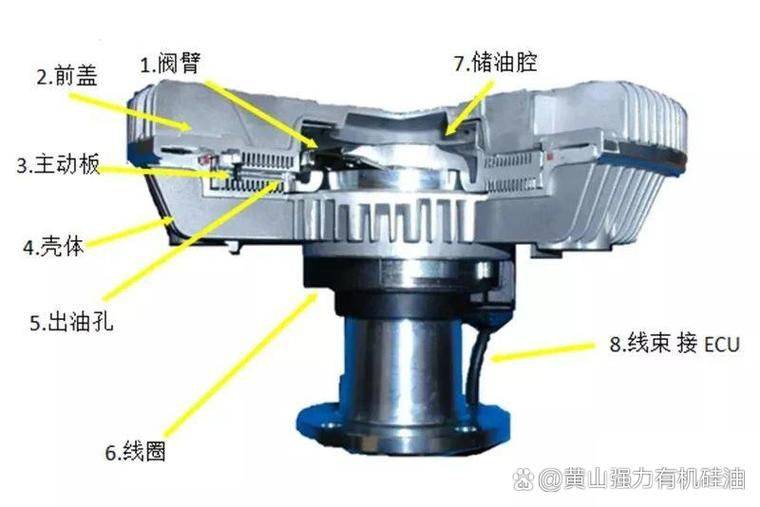
When the air temperature of the radiator exceeds 65 degrees, the valves of the thermostat are opened, and because the active part turns at a higher rate than the aerodynamic part, the high viscosity of the silicon oil enters the working cavity by way of the cavity of the oil entering the cavity and flows back from the extremity of the oil. Silicon oil cut-off forces pass the rectangles on the active plate to the shell of the clutch, drive the fan to a high rate of rotation, and the fan clutch is in a state of convergence, at which time the engine's water temperature drops faster。
The key sensory component is a spiraled double-metal thermostat on the forecap, which perceives heat and creates a deformation to control the valves and thus to control the flow of silicon oil into the working cavity connecting axes and fans。
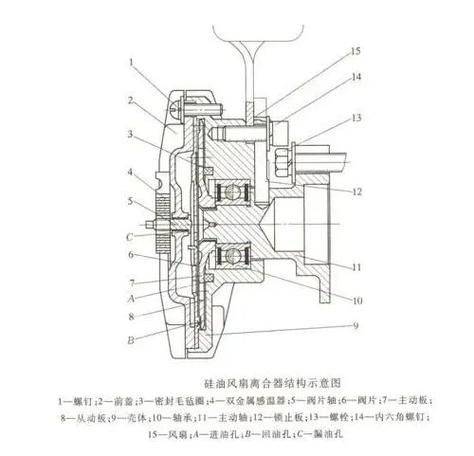
When engine loads are increased and cooling fluid temperatures are increased, the high-temperature flow is blown on a two-metal thermometer, deforming the two-metal tablets, driving the valve to move and control the valves to one angle. When the current temperature exceeds a certain temperature, the entering hole is opened, the silicon oil enters the working cavity and the fan starts to rotate at high speed。
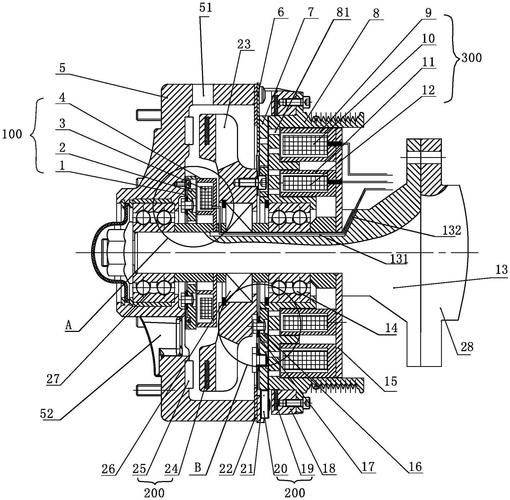
The electro-controlled silicon fan cipher has a structure similar to that of the common silicon fan cipher, unlike the replacement of the hot-sensitive double-metal thermometer valve with an electromagnetic valve with an electromagnetic ring, which automatically adjusts the speed of the fan to the optimal temperature, depending on the external conditions of the engine, such as water temperature, air intake temperature, air conditioning, etc. This has the advantage of being more precise in control and more energy-efficient, allowing for a no-spacing。
In general domestic vehicles, cooling fans are controlled by electronic control systems and sensors such as water temperature sensors control the opening or closing of fans based on water temperature. On the other hand, on some large trucks and trucks, silicon oil clutch fans may be used。



