Daily title: theory of knowledge gaps
Basic concepts
Theories propose that:
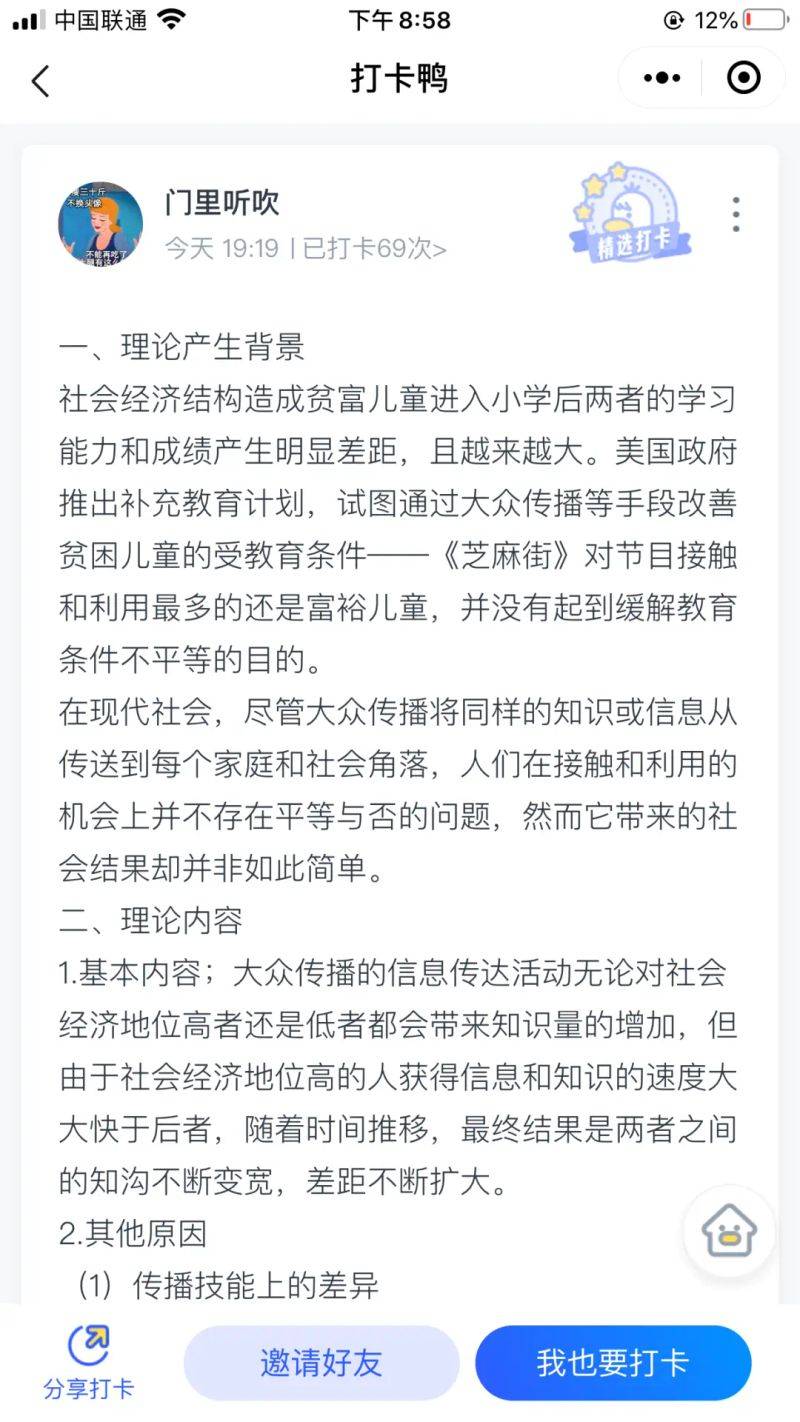
In the 1960s, the united states tried to improve the educational conditions of poor children through mass communication and other means. One such project is the children's enlightenment education television series entitled sesame street, which aims to reduce inequalities in access to education for rich and poor children by using highly accessible television media。
Subsequent studies have shown that, despite the fact that sesame street has produced good educational results for both rich and poor children, it is clear that wealthier children have far greater access to and use of programmes than poor children, which in fact widens the gap between the two。
This suggests that while mass communication conveys the same knowledge or information to every corner, there is no question of equity in access and access, it does not bring about social outcomes。
In 1970, american scholars, ticino and others, put forward the theory of "know-how": "the more information the mass media conveys, the more the knowledge gap between them tends to widen as the socio-economically advanced usually get information faster than the economically disadvantaged." in their view, the middle class value orientation of the print media exacerbates the “challenges” of transmission。
Ii. Basic views:
1. The socio-economically better-off people have faster access to information, and the knowledge gap between the two groups has widened rather than narrowed
2. The mass media have been promoting a topic for some time, and people with a higher level of education learn more about it than people with a lower level of education
3. The relevance of the knowledge obtained to the level of education through the mass media is higher than that of topics that are not well covered
4. Gaps in areas of interest to all, such as public affairs and scientific and technological news, are particularly vulnerable, while in certain specific areas based on interest they are less likely to occur。
Iii. Factors influencing knowledge gaps:
Differences in communication skills — a certain degree of reading understanding is required
Differences in the amount of knowledge stored — the more it is stored, the faster it is understood; (education)
Differences in social scope - the more active interpersonal communication, the faster the acquisition of knowledge (economic status)
Selective exposure, understanding and memory of information — the closer individual needs and media content, the greater the exposure to and use of the media
The nature of mass media content — • the medium for the dissemination of public affairs and scientific knowledge of a certain depth is mainly the print media and its audience is concentrated in the higher academic strata。
Unlike advertising, scientific knowledge, public affairs and news tend to be less repetitive, while they contribute to the learning and familiarization of subjects among people with low social status. The “know-how theory” argues that when one or more of the five factors above works, the socio-economically high classes are in a favourable position, which is the underlying cause of the widening of the “know-how gap”。
Iv. Conditions for narrowing the knowledge gap:
1. The higher the level of social attention on a topic, the hope is that the knowledge gap will diminish (social)
2. The stronger the motivation of individuals to seek information, the smaller the knowledge gap. (individual)
Policy responses:
For hardware:
Increased support policies for underdeveloped areas or low-income groups. For example, price subsidies, low-income households, boosting the social penetration of hardware。
Software: 1. Enhancing the capacity of members of society to use the media
Vi. Theory development:
In 1974, katzman introduced another information gap theory, which was an expansion of the knowledge gap. There has been a new development in the web age of the “knowledge gap” theory, the “digital divide”。
The information gap: it refers to the huge gap between the information-rich and the information-poor, the gap created by the availability of modern information technology and information resources, and the extremely uneven expansion of information technology in the context of its diffusion. The information divide is the result of uneven development of the dual structure between urban and rural areas, and it is also an important factor in widening the rural-urban gap。
Digital divide: the digital divide is a question of “information gap”, “knowledge segregation” and the division of wealth and wealth between countries, regions, industries, enterprises and communities due to differences in the application of information, networking technologies and innovation capabilities. The digital divide manifests itself in four dimensions, the digital divide abcd. Moreover, in 1999, when the “digital divide” was just introduced, it was mainly referred to as the “first digital divide”, that is, the divide in access to the internet, which, in the new media era, is gradually decreasing as a result of economic development, technological progress, government support, etc., and is becoming more apparent as a result of the gap in skills in internet use。
Vii. Theoretical challenges:
1977 etima and klein “ceiling effect”: an individual's pursuit of a particular knowledge is not endless, and when a certain “ceiling point” (saturation point) is reached, the increase in the volume of knowledge slows down or even stops. While the “ceiling” of those with high socio-economic status acquires knowledge at a fast pace, those with low economic status, while slowly increasing their knowledge, are eventually able to catch up with the “ceiling” over time。
The reasons why the new media era has expanded the "know-how"
When the concept of the “digital divide” was introduced, the internet had just emerged, and access to equipment and networks had been expensive, and only socially and economically advanced segments of the population had made use of it conditionally. With the development of new media technologies, the “second digital divide” - the “missing in use” - resulting from differences in levels of internet use will become more apparent。
Differences in media literacy
For most low socio-economic audiences, the new media are much more entertaining than their media。
Instead of increasing the time for audiences to take full advantage of their resources, such as mobile phones, to acquire information and learn, the spread of the new media has left some irrational audiences without themselves in the new media, taking advantage of the time and energy that it can really shorten the “know-how gap.”。
2. Differences in communication skills
In the new media age, daily information updates and speeds are alarming. The question of how to get rough and easy from useless information is a daily issue for internet users. On the other hand, the proliferation of information waste and information has become a growing concern, with internet rumours almost ubiquitous, involving a wide range of areas such as health care, food security, health, politics, international relations, and most of these rumours in the guise of science, making it more difficult to distinguish audiences。
Low cultural audiences do not have the capacity to search for valuable information in vast, unconvinced information, much less scientific and rational ways of thinking to fake it and extract it。
The internet-use skills of the audience will directly determine the effectiveness of the audience's use of the internet, and it is clear that both the knowledge level and the more educated audience dominate in the search for useful information and the identification of its authenticity。
3. Differences in dissemination content
In today's intense media competition, influenced by advertisers and other objective factors, the mass media are always at the service of the mainstream of society, which see their economic power and real influence. Moreover, many of the high and obscure content on the internet cannot be understood and accepted by groups with low knowledge and reading skills, such as political and economic journalism。
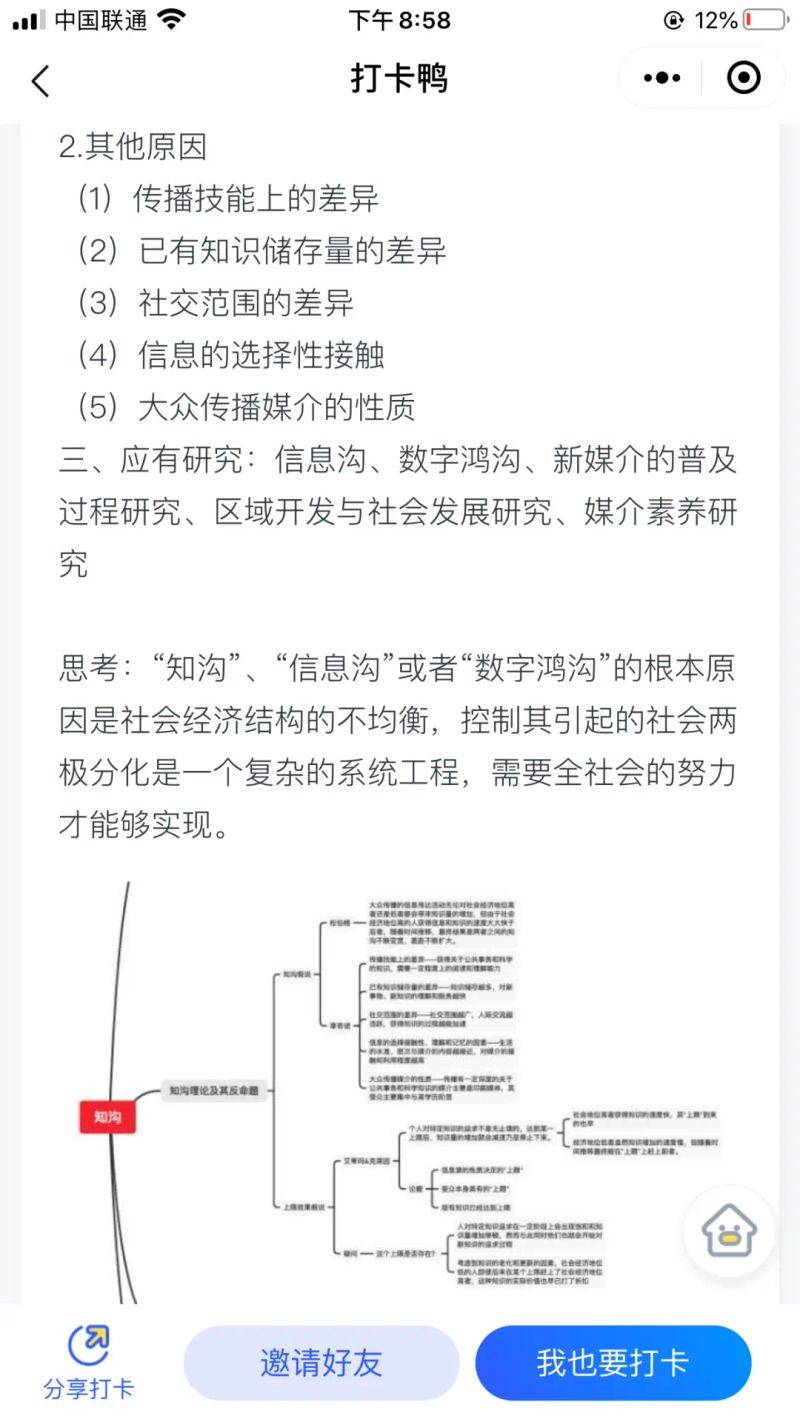
The knowledge gap theory is a more important point of knowledge in communication science, not only in terms of the context, main perspectives and theoretical developments it generates, but also in terms of analysing current communication phenomena。
The post-factor
The daily summary has been updated to june
Sure
Just leave the mailbox behind
280656343