I. Marginal utility of probability
While in economics there are various theoretical interpretations of uncertain choices, such as the theory of prospects, the desired utility, etc., there is a common understanding that these theories are equivalent:
(1) policymakers are at risk of aversion
(2) the marginal effect of the currency is diminishing, i. E. The effect is the dent of the currency, which is expressed in m, n for different monetary gains, and
Au(m)+(1-a)u(n)<u(am+(1-a)n)
In fact, for the two expressions to be equivalent, there is an implicit condition that the marginal effects of probabilities remain the same, that is, the linear relationship between probabilities and effects。
It is hard for writers to understand that many scholars attribute the interest in risk to the increasing monetary marginality of policymakers. It is important to know that the basic assumption of economics is that the marginality of all goods is diminishing, and how can the currency violate this rational assumption? Perhaps the marginal utility of the currency is assumed to be incremental only because it is the only explanation for assuming a linear relationship between probability and utility。
As a result, the author abandoned the assumption that the marginal utility of the probability would remain the same when the monetary gain remained unchanged, whereas the marginal effect of the currency would always be reduced as a reasonable assumption, extrapolated as follows。
If an individual is only faced with a lottery choice with a probability of p and a profit of i, the initial effect is u (p, i), and now a very small expectation de is added to his lottery, which can be achieved in two ways:
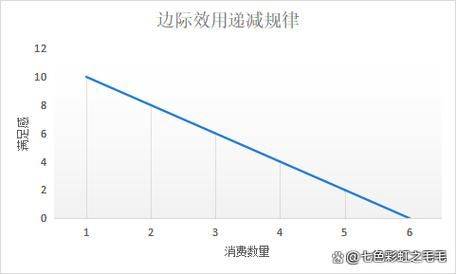
(1) increase it to probability and keep monetary returns unchanged, i. E. Increase the probability of winning the award to p+dp, apparently de=dpxi. So the added effect is
D(1)=(∂u/∂p)xdp
(2) increase it only in monetary gains, keeping the original probability that the lottery will be converted to
(p, i+di)
Add
Px(i+di)=(p+dp)xi
So di=dpxi/p, i. E., its monetary gain increased by dpxi/p, with the effect of:
D(2) = (∂u/∂i) (dpxi/p)
If policy makers show a risk preference, it is clear at this point that he considers the added utility of option 2 to be greater than that of option 1 (du (1)):
(∂) (dpxi/p) > (∂u/∂p) xdp
It's easy
(∂) (i/p)
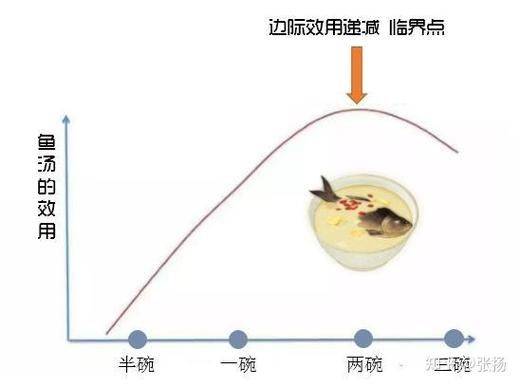
Because the marginality of the currency is decreasing, it is a dent, and it is established below:
(i) < (i/p)=u (p, i)/p
Come on
U(p,i)/p>u/p
That is, the probability is dentive, the marginal utility is diminishing and the second-order bias is less than zero. It is indicated that, while monetary gains remain constant, the probability of each additional marginal unit is becoming less and less satisfying for policymakers as the probability increases. In the case of declining marginal utility of currencies, risk appetite is due to declining marginal utility of currencies。
The above reasoning is purely theoretical. Can it be confirmed by the facts? The elsberg paradox is a good proof。
In 1961 daniel elsberg carried out the following experiments。
There are 90 balls in one can, of which 30 are known to be red and the remaining 60 are either black or yellow. One is drawn randomly and four games are designed as follows:
Game a: if it's a red ball, the gambler gets $100; if it's another color, it's zero。
Game b: if it's a black ball, the gambler gets $100; if it's another color, it gets zero。
Game c: if it's a black ball, the gambler gets zero dollars; if it's another color, 100 dollars。
Game d: if it's a red ball, the gambler gets zero dollars; if it's another color, 100 dollars。
The results of the experiment found that the majority chose a rather than b between a and b; and d rather than c between c and d。
The subjective probabilistic theory suggests that it is better from a than b, that it is less likely that a person would be able to extract a black ball than a red ball, and that it is more likely that a black ball would be drawn from d than from c than a red ball。
But i believe that this paradox is the result of the habitual thinking of researchers that they sublimely believe that gamblers' judgment of the probability of various colour balls is a certain value! In practice, however, this paradox can be explained from another angle if it is assumed that gamblers do not think that game a is better than game b because policymakers believe that the probability of winning a red ball is greater than the probability of a black ball (one-third) and the match game c is better than game d is not less likely than the probability of a black ball。
In the view of authors, for individuals, the probability of winning a red ball is one third, and the probability of smoking a black ball is one third, but this probability is not certain. We can assume that the probability of hitting a black ball is considered by decision makers to be one third of an uncertain value of 1/3+, so:
The utility of a can be expressed as u (1/3,100), but the probability of b occurring is not certain, and to a certain extent it can be expressed as 1/3 + ε, as an uncertain small deviation, and the utility of b can be expressed as u (1/3 + ε 100), and a is expressed as u (1/3 + > 100) > u (1/3 + > 100). The fact that d is superior to c is expressed as u (2/3,100)>u (2/3 + ε 100), there is no contradiction between the two options, or the fact that this proves that utility is a dent of probabilities and that its marginal utility is diminishing。