Section one, what is knowledge -- from plato to wittgenstein
From the time of ancient greece, the history of philosophy can be seen as the process of seeking answers to the question of “what is knowledge”. Despite the fundamental differences between rationalism and empiricalism, western philosophers generally agree with the definition that knowledge is “validated true belief”. Plato, 427 b. C. - 347 b. C., introduced the concept of knowledge for the first time in his “meno, phaedo and theaettus” and “meno, phaedo and theaettus”. However, the definition of knowledge is far from perfect logically. According to this definition, our belief in the truth of something cannot become true knowledge as long as our beliefs are wrong, no matter how unlikely. As a result, western philosophy is skeptical of the pursuit of knowledge, which prompts many philosophers to find ways to help them build a way beyond all doubt, to pursue knowledge and the ultimate truth. Their aim is to discover “the self-evident foundational knowledge” that can then be built upon。
As noted above, there are two great intellectual traditions in western philosophy. Rationalism insists that true knowledge is not the product of sensory experience, but a process of rational thinking. According to this view, there is a priori knowledge (priori knowledge) that does not need to be validated by sensory experience. Absolute truth is derived from rational reasoning based on justice, which is typical of mathematics. On the contrary, empiricism claims that there is no so-called a priori knowledge and that the only source of knowledge is sensory experience. According to this view, everything in the world is intrinsically objective, and it makes sense even when a person is hallucinating something. Experimental science is typical of this view。
Thus, there are sharp differences between the intellectual approaches of rationalism and empiricalism on what constitutes the actual source of knowledge. Another fundamental difference lies in the way knowledge is acquired. Rationalism believes that knowledge can be acquired through the use of mental conception, such as conceptual law or theory. Empiricalism argues, however, that knowledge is derived from specific sensory experiences through inclusion。
Currently, most of the literature on knowledge management is rooted in the minds of two philosophers, gilbert ryle and michael polanyi. These two names and their logical behaviorist ideas can be seen in many books, and it seems that they are less questioned about their ideological basis. This chapter is intended to fully explore the nature of knowledge, to equip readers with different perspectives related to knowledge and, to some extent, to engage in philosophical reflection. Readers, for example, may find knowledge production and consumption opposed to a unified post-modernist view more attractive than traditional logical behavioural views。
This chapter begins with a debate about the centuries-old perception of “knowledge” among western philosophers. In order to help the readers of the first encounter with philosophy to better understand, we have divided western philosophers into two factions of rationalism and empiricalism, with the intellectual knowledge management perspective of rationalism and empiricalism as shown in figure 1-1. This simple conceptual division could serve as a basis for the participation of readers in the exploration of relevant knowledge。
Gilbert ryle introduced the concepts of “know what” and “know what”, which michael polani believes exist as a continuum, not as separate and separate. The development of a wide range of cognitive perspectives is based on the framework of burrell and morgan, and we will explore in detail the following four philosophical perspectives: provenism, construction, modernism and critic realism. The aim is to provide readers with a better understanding of the assumptions contained in the literature of different scholars in the field of knowledge management。
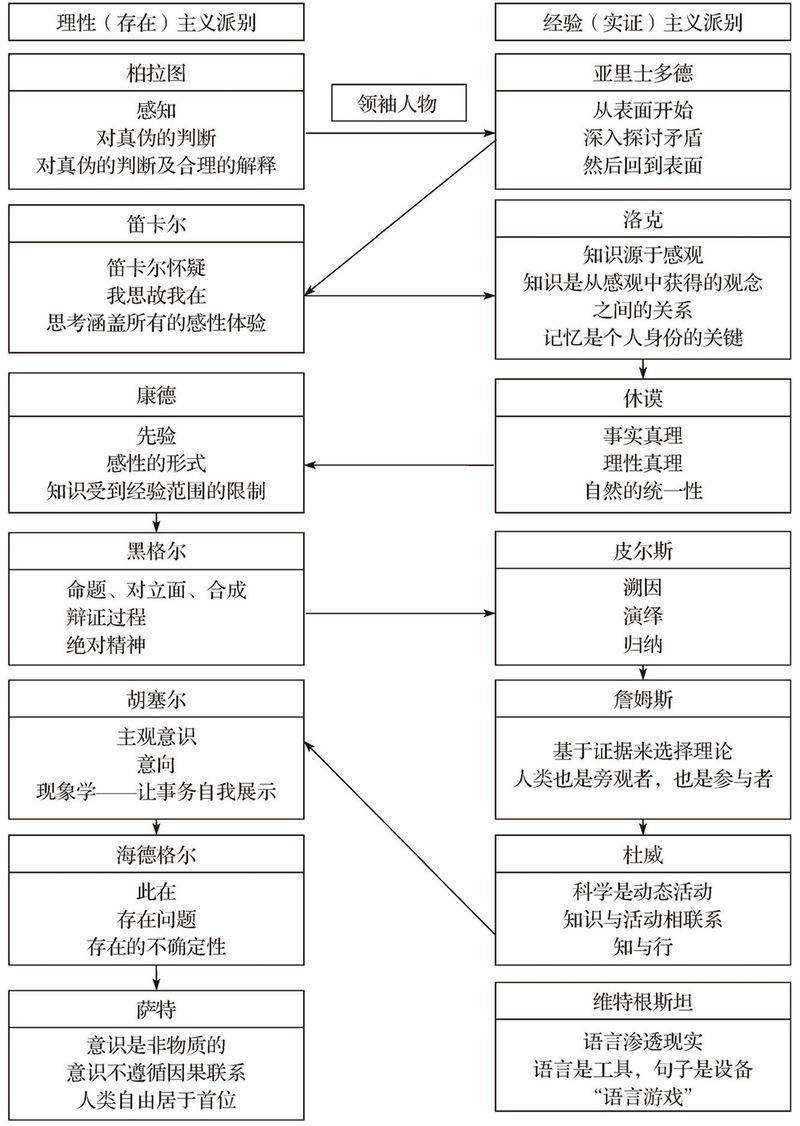
Figure 1-1 knowledge management perspectives of rationalism and empiricalism