Chapter 2 engine construction
2. 2 organs and thrusts
Function: the power of the gas at the top of the piston is converted into a rectangular axis。
Main parts:
Body group
Pistol company
Curved wheel groups
2. 2 organs and thrusts
2. 2. 1 organs group
The gas tank covers are used to seal the top of the tank and form a combustion room with the piston top and the cylinder wall. The gas tank caps and the reservoirs in the machine, as well as the oil casings, are part of the cooling and lubrication systems, respectively。
Body composition: air body, air tank cap, gas tank cap, gas tank liner, main axle cover, oil floor shell
Substrates for engines, assembly matrix for the main parts of the warp poles, gas distribution units and engine systems
2. 2. 1 organs group
Body
Physical working conditions:
Pull, press, bend, twist many forms of mechanical load
Hot load
Body requirements: sufficient strength and intensity, wear and tear resistance, airframe cooling, structural compactness, mass light
Body material: high-intensity ash or aluminium alloy casting
Structure of the airframe: related to the formation of the cylinders, the structure of the cylinders and the structure of the warpcases
2. 2. 1 organs group
High-temperature, high-pressure gas on the inside of the tank and contact with high-speed motion pistons are highly susceptible to wear and tear. There are different types of gas tank structure and surface treatment methods to improve the resilience and extend the life of the cylinder。
Wet tank suite
Dry tank suite
No air tank suite
2. 2. 1 organs group
I'm sorry
Wind-cool engine gas tank structure
Thermal change factor for metals to air = 1/33 for metals to water
2. 2. 1 organs group
Step4
Step3
Step2
Step1
There are three types of airframes in the form of arctic box structures: flat, dragon door and tunnel
Base body: base plane is aligned with arcs. Small height, light mass
It's easy to process, it's bad。
Dragon gate body: down below the warp axis below the base plane, with a high degree of bending and reversal
Tunnel-type airframes: the structure of the airframe, which is unsectivated by the main bearings. The size of the body is reduced by having a narrow scroll bearing. Tunnels are so hot that the main bearing is so coaxial
2. 2. 1 organs group
Working conditions: gas stress, rigid mechanical load, heat load
Gas tank cover material: the gas tank cap is generally made of high-quality grey or alloy cast iron, whereas the gasoline machine used in the sedan uses the aluminium alloy gas cap。
Requirements: sealability, sufficient strength and intensity, good cooling
Gas tank cover structure: complex box-shaped parts, entry, exhaust door openings, gas door catheters, spark plugs with holes (carine) or oil dispensers with holes (diesel engine), water hoses, vents, combustion rooms, cam axle bearings or cam axle bearings and their lubricants。
Tank cap
2. 2. 1 organs group
Burning room
When the piston is located at the upper stop, the space formed above the top of the piston and below the bottom of the gas tank is referred to as the combustion chamber. On the bottom of the gas tank, it is common to create pits of varying shapes, which are customarily referred to as combustion chambers。
Battery burner room, simple structure, air doors parallel to cylinder axes
It's got a lot of bends. The compression process ends with a crowding vortex。
Wedge burner room, tight structure, air doors tilted towards cylinder axes, and airways were smoother. Straight
There's little infusion resistance. The compression process ends with a crowding vortex。
Hemispheric combustion chambers, with the most compact structures, have the smallest surface area (face-to-face) relative to their volume. The vent door is set in two rows tilted, the gas door is larger in diameter and the airway is smoother. The flames are relatively short-range and cannot generate crowding vortex。
2. 2. 1 organs group
Gas tank cushions
Requirements: sufficient strength, stress resistance, heat resistance and corrosive resistance, with a degree of elasticity, to compensate for roughness and unevenness on the top of the airframe and on the bottom of the gas tank, as well as repeated deformations during engine work。
The gasket is sealed between the top of the airframe and the bottom of the gas tank cap. Annex
Working conditions: tight pressure, high temperature, high pressure effects and corrosion of oil and cooling fluid
The function of the gas tank cushion: to keep the gas tank sealed, to keep the cooling fluids and oil clear
Categorization and structure of gas cylinder cushions: the gas cylinder cushions can be divided into metal-asbestos liners, metal-composite liners and whole metal liners, depending on the material used
2. 2. 1 organs group
Oil floor shells
Role: storage of oil, closed body or rotor case
Structure: the shell is made of thin steel plates or aluminium casting. There's a barrier inside. It reduces the oil surface shock. It's deep in the shell
2. 2. 1 organs group
Engine support
Supported on the frame by support on the airframe and flying vessel or gear transformer shell. The engine support method is typically three-point and four-point. Three dots may be placed in the first two or two. When the four-point approach was adopted, there were two main points each。
Collapse
The function and composition of the cortex pole
Function: it is a rotational movement that transforms the piston's back-to-back motion into a curved axis, while transforming the force that works on the piston into a rectangular for external output of the piston
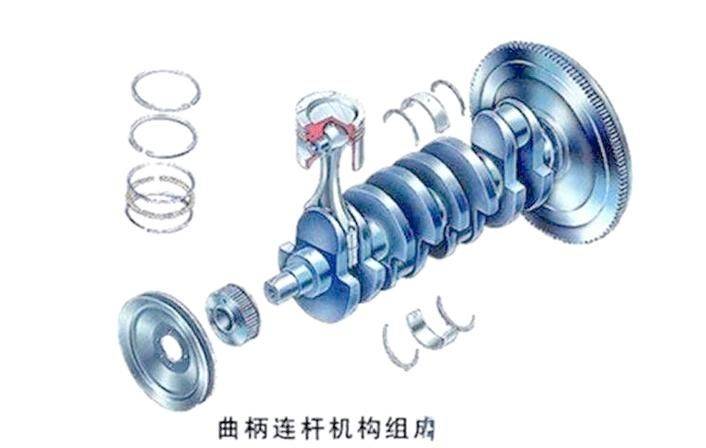
Composition: pistols, condensers and curved wheel groups
Collapse
Pistols, piston rings, piston sales
Pistol team
01
Pistol function: the burning gas pressure is passed through the piston sale to the bar to drive the rotor axis rotation, and the top of the piston forms a combustion chamber together with the gas tank cap and the cylinder wall。
Working conditions: gas power, inertia, heat loads, high-speed slides along the walls of the cylinders and severe wear。
Pistol material: mostly aluminium alloy
Very few are cast iron or hot steel
Pistol
02
Collapse
Gas ring, oil ring, heat insulation
Thermal insulation cells:
The heat flow from the piston top to the first piston ring is severed, allowing some heat to flow from the second and third piston ring, thus reducing the heat load of the first piston ring, improving its working conditions and preventing the piston collage。
Collapse
Pistol skirts -- pistols in the gas tank
Gap between cylinders and pistons: too big a gap, pistons knock on the pistons
The gap is too small, the piston may be stuck in the cylinder。
Second thrust
Main thrust
Collapse
Pistol ring
Gas and oil rings
Gas ring function: seal and heat transfer
(b) the operation of the ring: scraping the excess oil that has been spilled on the walls of the gas cylinders and coating a uniform oil membrane on the walls of the cylinders。
Seal the ring:
Collapse
The oil rings have three types of tank holes, poaching reeds and steel bands
Quantities: processing of a ringed oil tank on the outer circle to form two upper and lower shaved lips and processing of refuelling holes at the bottom of the tank. The oil scraped from the upper and lower lips flowed back to the oil casings through the oil vents and the pistons。
Cyclops: the internal circle is refuelled with springs, which increase their ability to shave and durability by increasing pressure on the ring to contact the cylinder wall。
Combination oil rings: composed of upper and lower scratches and orbital springs. The pressure of exposure is high, up and down scratches act alone, and the ability to adapt to the loss of the cylinder and the disfigurement of the pistons is strong. However, steel belts combined with oil rings are made of high-quality steel at high cost。
Collapse
(iii) pistol sales
Role: connection, transmission
Working conditions: high temperature, cyclical shock load, poor lubricants
Request: rigidness, strength and tenacity。
Materials: are typically low-carbon steel or low-carbon alloy steels, such as 20, 20mn, 15cr, 20cr, etc., with carbon-coated hard external surface, refined and polished
Pistol marketing structure:
Insider characteristics
Collapse
Liners
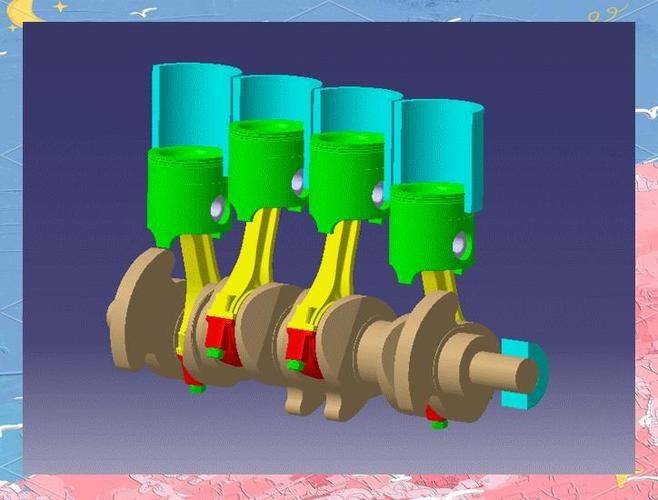
Combines, caps, bolts, bearings
Function: transfer of power, shift towards rotation
Combine material: high-quality medium carbon steel or medium carbon alloy steel such as 45, 40cr, 42 crmo or 40 mnb exercise
Coop construction: small head, pole, big head
Collapse
Small-head connections: full- and semi-float。
Full-float: pistols are sold in small head holes and piston vents to ensure that the piston is evenly worn along the circle。
Semi-floating: stuck the piston with bolts in the small hole of the pole, at which point the piston is only rotated within the piston, and not within the piston。
Collapse
Slash and application
Comparison: rigidity, deformation, manufacturing costs
Flat-cut mouth poles: combined sides vertically with pole axes
Tilt-tip poles: a combination of axle and axle of the poles in an angle of 30-60°。
Large head structure: sufficiently rigid, small in size and light in mass. Anatomy structure, with bolts or bolts secured by coding
Collapse
Curved wheel groups
(i) axis
The function of a curved axis: to withstand bending and reverse the intersection load and turn the gas from pistons and poles into rectangles
Curvatures:
Medium carbon steel and medium carbon alloy steel, e. G. 45, 40 cr, 35 mn2, manufactured from exercise, with axle neck surface treated with high frequency gill or nitrogen, and final processing。
The ball ink casts arcs, which are cheap, well-rebranded, do not require hardening of the neck, while the amount of metal consumed and the amount of mechanical processing is low。
Arc structure: the axis consists essentially of several unit turns. (a) a warp sale consisting of a unit twist between the arms of the right and the right and the necks of the main axis。
Straight engine curve? V engine curve
Collapse
The order of work for the twisting and multi-cylinder engines
Crushing depends on the number of cylinders, the manner in which they are arranged and the order in which the engine works. When the number of cylinders and their sorting are determined, the twisting depends only on the order in which the engine works. In selecting the order of work for engines, the following should be noted:
1) two consecutive cylinders should be kept as far away from each other as possible to avoid gas rushes。
2) the intervals between cylinders should be the same. The interval between the fires is referred to as the corner of the fire in a curved arc. Each cylinder should be burned once in the convex corner at which the engine completes a cycle of work. For a four-strike engine with a number of cylinders i, the fire spacing angle shall be 720°/i, i. When the axis turns 720°/i, a cask is activated to ensure that the engine works smoothly。
Collapse
Flying wheel
Role of the ship:
There's only one four-string engine to work with, the rest of the process is deplete, cyclical shifts in curves, and energy accumulation from fly-wheels reduces rate fluctuations
Scraper initiative
The rims are equipped with flying gears for start-up engines
There's also a stop sign on the wheel for calibrating the timing of the ignition or the oil spray and adjusting the air doors