Optical measurement sensors, as important branches of modern technology, use the physical properties of light to achieve non-contact measurements of objects or the environment, with the advantages of high accuracy, high sensitivity and non-destructiveness, and play an irreplaceable role in scientific research, industry, medicine and environmental monitoring. This paper will explore the working principles, types and applications of optical measurement sensors in various fields。
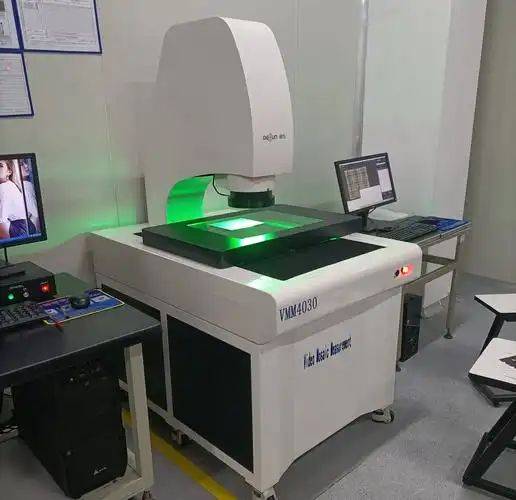
Rationale and type of work
Optical measurement sensors are primarily based on photo-reflection, refraction, interference, dispersion, etc. Depending on the principle of measurement, it can be divided into pv sensors, laser ranging sensors, fibre-optic sensors, spectrometers, etc。
Photo-electrical-effect sensors: pv signals are converted to telecommunications numbers using photoelectric effects to detect the strength, frequency, etc. Of the light, which are common in light switches, photovoltaic cells, etc。
Laser ranging sensors: using the high direction and monochrome of laser beams, calculating distance by measuring the time or phase difference between launch and receipt of lasers, are widely used in areas such as industrial automation, robotic navigation, etc。
Fibre-optic sensors: the measurement of the physical amount of temperature, pressure, position transfer, etc., is achieved using fibre-optics as a transmission medium by measuring parameters such as loss, phase change, etc. During light transfer in fibre-optics。
Spectrometers: spectrolysis of light into a spectrum of different wavelengths through spectrosystems, analysis of spectral characteristics, use in material composition analysis, environmental monitoring, etc。
Application areas and examples
Optical measurement sensors show a wide range of applications potential in a number of areas。
Industrial automation: laser ranging sensors are used to accurately measure the location and size of objects and to achieve precision control of automated production lines; fibre-optic sensors are used to monitor the operational status of equipment and prevent malfunctions。
Environmental monitoring: spectrometers are used to analyse contaminant components in the atmosphere, water bodies and to assess environmental quality; pv sensors are used to monitor photo-intensity and guide the design of lighting systems。
Biomedicine: optical sensors are used to measure physiological parameters such as blood oxygen saturation, heart rate and provide important information for medical diagnosis; fibre-optic sensors are used for temperature, pressure monitoring in microstart operations。
In the area of scientific research: optical measurement sensors play a key role in optical experiments, scientific research of materials, astronomical observations, etc., and contribute to scientific and technological progress。
Future outlook
As technology continues to develop, optical measurement sensors will evolve in the direction of higher accuracy, smaller size and greater integration. The application of cutting-edge technologies such as quantum optical, supermaterial and nanotechnology will bring revolutionary breakthroughs for optical sensors to achieve precision measurement and intelligence control in more areas。