


Today's mini-editor is introducing you to the technology of iron platinum seedlings and planting. Technical studies and tests have shown that the three canyon natural medicine parks have proven to be mature, operational and well-developed, as well as low-cost and safe environmental practices, and have played an important role in the region-wide and town-wide expansion of iron platinum seeding and planting techniques。
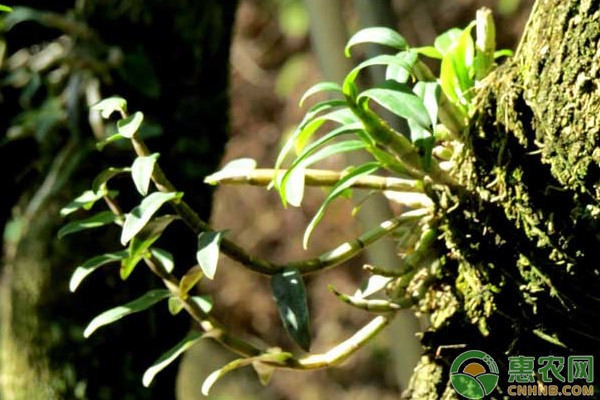
1 physical and geographical overview
The town is located at the eastern gate of the hill, where the western mountains make their way to the jianghan plain, where they are located at 111° 27 ' 8 ' to the east and 30° 32 ' 33 ' to the north. East danyang city, west side of the golden and silver linko institute, wu jia district, south of jiejiang, south of the town of tsuenyang, north of the town of dragon springs in the hilly district. The north-west gradually leaned south-east, and the sea fell from the highest phoenix, 313m, to the top. The 68m of the cave, which is populated by low mountains, hills and plains, forms a typical landscape where hills intersect with plains。
Crowds are part of a subtropical monsoon climate with abundant rainfall, abundant light, mild weather, cold summer and hot winters, four seasons with very uneven annual rainfall ranging from 1,200 to 1400 mm. Rainfall and rainfall are concentrated in may to september, and rainfall is around 800 mm, accounting for 74 per cent of annual rainfall. Rainfall is 14 per cent in october-december and only 12 per cent in january-april. The annual average temperature is 16. 6°c, the frostfree period 245-290d, the extreme maximum temperature is 41. 4°c, the lowest temperature - 12°c, and the annual average number of days taken is 1,669. 2h。
2 basic information on the area of implementation
The science and technology park is located in the village of five dragons in the town of shibuya ridge, in the city of yichang, hubei province, with a beautiful environment。
The implementation of the science and technology park project, with its substantial benefits, will serve as a catalyst for the cultivation, production and development of the medical industry, which will lead to the creation of special features throughout the town and the city. The formation of a chain of pharmacies+company+farmers will certainly increase the incomes of large numbers of farmers in the project area。
Table 1 comparison of major stone species
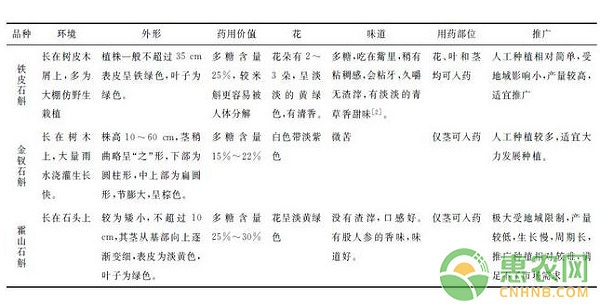
3 comparative table of major stone species
As can be seen from table 1, iron platinum, with its characteristics of adaptation to the environment, physical variability, easy absorption of the value of medicines, taste, abundance of food and simple promotion, shows a clear advantage in comparison with other quartz varieties。
4. Benefits analysis
It is all planted in contours (high hangars) with specifications of 30 m x 6 m, with an 8 m span between the shed and the shed, with a 1. 2 m gap between the shed and the shed (facilitation of personnel) and a 667 m2 conversion according to three sheds, i. E. 540 m2 (30m x 6m x 3), 108 m2 (30m x 1. 2m x 3), and a radiation area of 19m2 such as artificial walkways. Production varies according to the first and second year of production after iron platinum cultivation. However, production increased steadily after the third year (the second harvest). This data is analysed in the third year of zhu's building, which was planted with iron and stone:
Number of plants 1 m2 x 70 ~ 100/m2 = 80 (several of seed and seed)
80 active units x 90 per cent (technical indicators) = 72
72 (species) x 3-5 (fresh) / strain = 216 (based on 3) for the following year
216 (fresh strips) x 4-8g/bar = 864g (4g)
The production of large sheds (540 m2 in active area 350m2) was 350 m2 x 864g = 302,400g = 302. 4kg of related materials, utilities, medicines and manual wages for the year, totalling approximately $18,000, and annual lubrication (non-health) is projected at $220,000, with an acre production value of more than $240,000 (300 kg x $800/kg)。
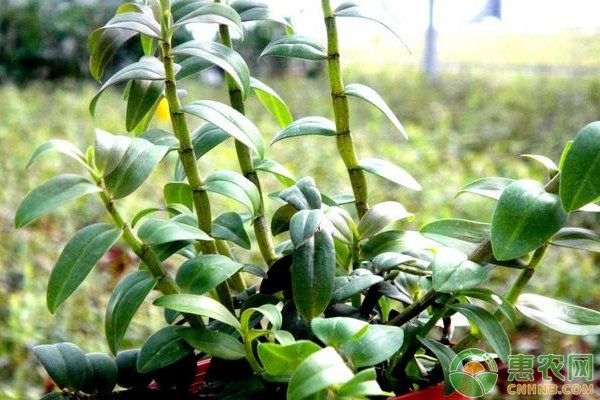
5 iron pebble seedlings
An iron platinum unit has been set up, which, after a process such as “group training - bottle seedlings - screening - seedlings - scavengers - domestication” can be used to plant scavengers that meet the requirements to plant beds in large sheds。
6 iron platinum platinum cultivation techniques
In combination with the habit of stuporling, plants must be grown in a series of three series, with a distance of 8 to 10 cm. The same strong seedlings shall be planted together in a series of three strains, with care that the seeding shall not be heavy on the roots of the seedlings, and that only organic tissues shall be placed on the roots of the seedlings, and that the planting shall be reasonably dense, organized and lined, so that the seedlings may be ventilated. (a) the site specification of the solar shed shall be selected first on the basis of the growth habits of the platinum platinum and then the project area shall be selected with due regard to the area free of industrial environmental pollution; the construction of the solar sheds must be planned, with a north-south orientation, a relatively flat surface level, the digging of drains around the sheds, the installation of high-power air conditioners under well-funded conditions, and the timely adjustment of the temperature, humidity, spraying, etc. For iron platinum growth in accordance with temperature changes. The shantytown must be a steel-structured large congested shed at heights of 5-6 m or more, with an area of over 2,000 m2 per shed. Under the solar sheds, the imitation of wild plants can be divided into trunk bundling, casserole cultivation and bed planting, depending on the vehicle that they cultivate。
(1) technical aspects of planting beds under the shed. The width of the bed must be easy to operate, such as four beds of 1. 3 m wide in a sun shed of 8 m wide. It has a base thickness of about 10 cm and a blending matrix. The sheds are equipped with slabs above 30 cm above the ground to ensure the planting of base-based ventilated water and the subsequent laying of organic particles on top and the replanting of plaster seedlings. The average temperature of the plant is 15-30°c, and neither too low nor too high should be removed from the bottle, except for the coldest month of january to february and the hottest month of july to august, where small holes of 3 to 5 cm are dug in the matrix at the time of planting, and light iron pebbles. The root is put in a small hole, so don't break the roots of the platinum. The planting distance is 12 cm x 15 cm, and one series of three to five standard seedlings. Cultivation density and the number of small seedlings directly affect production. The roots are fully covered, with deep leaves planted prone to decomposition and shallow foundation planted to be exposed to air and not to new roots. The management of hydroponic seedlings from newly grown plants is critical, and water shortages are slow to dry and dry, with low rates of activity, but too much water is used to rot. High temperatures cause soft decay when the temperature is high, so that air temperature is around 80 per cent within a week of planting, and a new root air temperature can be maintained in about 70 per cent of the matrix to keep dry and humid alternations after one week。
(2) elements of techniques for bundling of trees under the shed. Selecting as a subsidiary owner more than 10 cm or more, with multiple branches, thick tree crowns, wetting under the forest, ventilation, condensation of the trunks, laxation of the barks, the presence of faulty ditches, easy-to-manage mammoths, euphemisms, euphemisms and ponytail pines, etc., to carry out the cultivation of the platinum under the forest. For each 666. 7m2, 80 trunks are selected for binding, and for each trunk 50 bushes, depending on the size of the trunk, between 2 and 3 of 8,000 and 12,000 acre. The seedbeds can be tied to the trunks with ropes, with sufficient organic particles, and with tungsten seedlings。
(3) point of plant cultivation under the canopy. The shed requires a 70 per cent shade, with the matrix chosen to be the same as the matrix of the planted bed, and the seedlings choose to grow a strong, green, green, green, well-developed, disease-free plant, with 5 to 7 leafy tubs per basin, with 4 to 6 plants per tree, with 400 to 600 basins per acre, 2 to 3 plants per acre, 8,000 to 18,000 plants per acre。
7 field management of iron platinum
(1) field management is a key link in the success of cultivation. It says, "thirty, seven, " which refers to the daily management of the field and which has been summed up in the eight main areas of daily management, which are aimed at the iron and stone platinum. It is common to grow in the middle of or adjunct to the trunks of the sun cliffs in the middle of an old mountain forest and a cliff wall with little human presence, in a warmer, semi-massive, humid and permeable environment, and to imitate wild growth. The design of the solar sheds and plant culture is also based on this feature, which, according to the relatively humid characteristics of the quartz, surrounds a layer of sunnets at the top of the sheds with a certain radiance rate, the selection of which is more critical, which burns the seedlings to death at too high a rate of light, and which affects their light co-operation and slows their growth. The upper part of the shed is a aerosol sprayer, which controls the temperature of pyrotechnicism in the shed and is observed at any time during the management period of the iron platinum seedbed: the moisture of the stock (thermometer monitoring) is suitable at 60-75 per cent, the temperature of which should not exceed 35 °c (summer), the temperature of which is above 35 °c, and the optimal constant temperature of growth between 25 and 27 °c. In order to enter the post-winter sheds to enhance the anti-icing and anti-frozen facilities, the entire shed must be covered with rigid plastic sheeting, with conditions for installation of air conditioners, temperature control and avoiding freezing of seedlings。
(2) wet temperature. The most suitable temperature is 20 to 32°c and 60 to 90% humidity. At high temperatures, cooling and wetting is achieved by installing automated spray systems, using weak acid or neutral water; at low temperatures, appropriate temperature protection measures are required。
(3) getting fat. During the growth season, fattening should be pursued in a timely manner, depending on the state of growth, with the option of towing with a mixture such as ripe soybeans, vegetable cakes, calcium phosphate etc. In the root, in addition, 0. 1 per cent of potassium phosphate can be used for external fatting。
(4) the whole branch. Every spring, before a new sprouts, the bush is cut off in conjunction with the pick-up of the tubers and the removal of the rods, the rods and the roots of the rotors。

8 pest and pest management of iron plumstone
(1) prevention and control of pests and diseases must be guided by the principle of prevention. “preventively based and integrated”, based on horticultural control, strengthens manual control and integrated pest and disease management. The following prevention measures are in place: 1. Creating environmental conditions that are not conducive to the occurrence of pests, introducing steel beds with a distance from the ground, increasing water penetration and reducing the hazards of underground pests such as snails and tigers. The two huts were equipped with a week-long insecticide-treated net to prevent moths from flying into the shed to lay their eggs and breed other insects。
(2) observed diseases and pests that are easily produced by iron and stone. 1 diseases: soft rot, anthrax, etc., mainly affecting leaves and stalks, with brown or grey spots in the affected leaves. Method of prevention: 50 per cent of the polybacterium can be sprayed with 800 times the liquid spray one to two times and 50 per cent with 1,000 times the liquid spray with methiosulphage. 2 insects include snails, snails (snotloughs), etc., which are mainly hazardous to pups and leaves. Prevention and treatment: live lime or salt can be spilled around planted beds, and snails can be killed with erythrobin and snails. The guidelines for the use of green food pesticides should be strictly enforced, for example, through the use of chemical control of pests and pests, which must be primarily preventive and lethal。
9. Processing of iron platinum
(1) take the best opportunity. The relationship between the growth of the iron platinum and the medicinal component, which is built up at about 18 to 20 months after planting, is the best time to accumulate, and the stalks have been completely removed or their base to the top have been wrapped in white saps, with the accumulation of sugar。
The harvest time is controlled by the clear order that falls to the following year. The branches, which are usually harvested from november to march, are cut for more than three years, leaving them to keep growing. Flowers, collected in march-june of each year, usually for three years。
(2) processing. The traditional method of processing is to remove impurities, to cut off parts of the stubble, to twist into spirals or springs, to dry or to dry, or to dry at low temperatures, which are commonly referred to as iron-coated windstorms, or earring stone, which is referred to in detail as iron-coated rock。
Based on the project's technical analysis and research on the production and cultivation of iron platinum seedlings, while many factors have influenced the production and cultivation of iron platinum seedlings, the results of the experiment suggest that the techniques of seeding and planting of iron platinum platinum seedlings are suitable for replication in the razing areas。



