


In the renovation, the selection of the plates is directly related to the environment, durability and beauty of the home. Faced with a variety of types in the market, many owners are prone to confusion. From raw materials and processes to applications, the document is designed to provide a system of nine main retrofitting boards to help you quickly establish a cognitive framework for rational decision-making。
I. Original board: the cost of natural senses
Production methods: the logs are cut, polished and dryed directly, with little manual reorganization。
Core characteristics: maintaining natural woodlines and touches, best environmentally friendly, but vulnerable to temperature and humidity deformations and expensive。
Application of scenes: areas where high-end furniture, wood floors, background walls, etc. Are of high quality. If the budget is sufficient and natural senses are sought, an option is available; otherwise, the cost of future maintenance needs to be carefully considered。
Fingerboard: “economic alternative” for logs
(b) production methods: wood is made into strips, collide through the finger-linking process and glue。
Core characteristics: it is more stable than the original plank, with some wood textures retained, with a moderate environmental bias. However, there may be visible traces of the collage, with a slight loss of beauty。
Applying scenery: closets, cabinet cabinets or furniture foundations that require low level of integrity. It is suitable for owners who want to use wood but have a limited budget。
Ecoplasms: a home-wide custom “master force”
Production method: wood block coring cores with melamine impregnated paper (with decorative texture) on both sides。
Core features: non-painted, colour-rich, easy-to-build, and directly tailored. Environmental and damp-proof, relying on glue quality。
Applicable scenery: all-house custom furniture, such as closets, bookstores, television cabinets and wall decorations. It's one of the most common panels in the current household。
Iv. Multilayers: tide-proof and stable balancers
Production method: multi-layered thin wood filmed with staggered thermal pressure, similar to the "kilo-layered" structure。
Core characteristics: the interlocking fibre structure significantly increases stability and is more damp-resistant than the particle plate. There are, however, many layers of glue, and environmental risks are concentrated on glue。
Applies to scenes: furniture backboards, drawer sides, toilet dryer cabinets, and walls. Suitable for humid areas or areas that require weight。
Particle plates: a choice of value for money, but subject to conditions
Production methods: wood shredded into granule form, followed by high temperature and high pressure after mixed glue。
Core characteristics: high utilization, low cost and stable structure of raw materials. The fatal weaknesses are low-tide resistance and water inflatability; and high environmental dependence on the type of glue。
Applicable scenario: rental furniture, temporary lockers, or cabinets in dry areas. For household use, it is important to select enf or e0 products。
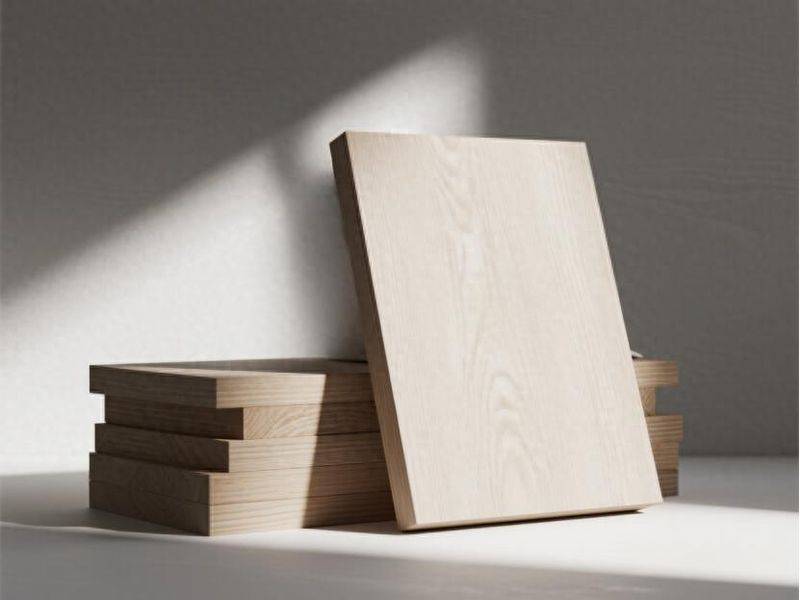
Vi. Density panels: prototypers, water taboos
Production: wood fibres are powdered and glued into high-density plates。
Core characteristics: the surface is delicately engraved and suitable for complex configurations, but it is almost insulated, water is swelling and the grip is poor。
(c) applicable scenes: kick wires, decorative lines, slabs, or surface decorations of the door. Don't use it in humid areas such as kitchens。
Oscones: a structured “industrial wind player”
Production methods: scratching flowers with directional coating and glue suppression, forming cross-cutting structures。
Core characteristics: high intensity, good stability and generally better environmental protection than normal granular plates. There's obvious gravitation on the surface, and it's rough。
Applicable scenario: laminate floor, wall liner, industrial wind furniture. Fits the parts that need to bear or make an alien structure。
Viii. Whipboards: environmental attempts for reuse of straws
Production methods: crop screeching mixed with wood cut flowers, using mdi glue。
Core characteristics: reduce wood consumption through the use of agricultural waste; mdi rubber is free of formaldehyde, and environmental performance is high. It's better to be damp and stable。
Appliance scenario: home-wide home-based adaptation, especially for children's and elderly people. Market awareness is still growing。
Ix. Pieces of pieces: a different equipment of strengthening and science
Production methods: bamboo pieces are cut to pieces, and glued。
Core characteristics: high rigidity of bamboo fibres, strong grinding resistance, natural anti-fouling resistance, and light bamboo lines. It's more environmentally friendly and fresh。
Applicable scenery: floors, furniture cabinets, especially suitable for chinese, japanese or field-style renovations. The southern humid areas could be considered for use in cabinets。
Selected key indicators: not just categories, but kernels
1. Environmental protection level: priority is given to epf level (no formaldehyde addation level) or e0 level, with third-party testing reports。
The type of glue: mdi (without formaldehyde), soybeans, better than platinum resin。
3. Sealside process: laser-sealed > pur-sealed > eva-sealed edge, with a good seal that locks formaldehyde and dampproofs。
4. Usage matching: wet zone selection of multi-layer/ossoon plate, modeling of density panel, bearing area selection of ossoon/wormboard。
Summary recommendations
- sufficient budget + heavy environmental protection: raw planks, boards, fragrance boards, mackerel boards。
- mass domestics + value for money: eco-paste, multi-layered (note glue grade)。
- special needs: model density panels, re-election of the oscones, multi-layer panels in the wet zone。
The plates are not absolutely good or bad, but only suitable for your space, budget and needs. It is recommended that the scene be explicitly used before the purchase and that vendors be required to provide a corresponding batch of test reports to justify the selection。



