It shows that consumers are choosing to buy board
"the granular plate, the oscillation plate, the density plate, the eco-plate... Which is the most environmentally friendly plate?" in recent years, the release of formaldehyde from man-made tablets has been the focus of renovation attention as public health awareness has risen. How can consumers, in the face of a myriad of marketing tricks in the market, unwind the fog and choose to purchase environmental panels that really fit their needs? Journalists interviewed。
Look at the vest
It's all about glue
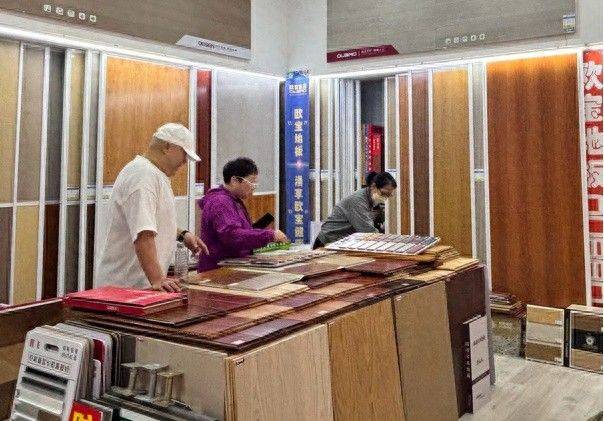
On 20 april, journalists visited the city of ten river, located in the hoangyang district of beijing. The artificial model is full of eyes in the pedestals and home-made shops。
"particle plates, oscones, density plates, eco-plates... Are too many names." ms. Lin, who was in the process of purchasing, told reporters that “some sales said that eco-plates were less rubber-based and more environmentally friendly than granular plates, which seemed to make sense”
Is that true? Journalists have learned that the most common man-made panels in the market are in the three main categories of picker, fibreboard and plywood. Grain plates, oscones, auscones, fragrance plates, etc., are in fact placards, and eco-plasms are a type of plywood。
“the environmental performance of panels depends critically on the type of adhesive and the production process, and there is no automatic link to the name of the plate.” zhang zhongtao, senior engineer, professor, industrial development planning institute, national forestry and grassland administration, stated that。
According to him, the type of adhesive adhesive that is commonly used on board is divided into two main categories: formaldehyde adhesives, such as adhesive resin adhesives (including modifications), phenol resin adhesives, etc.; and non-hydemphasic adhesives, such as polyurethane adhesives, such as mdi, hydro-high molecule-ocyanate adhesives, epis, and bean-based protein adhesives, woody adhesives。
"many consumers feel that the granules are pressured by wooden dross, full of glue, and are not environmentally friendly." the salesmen of a family brand store told journalists that, in fact, granular plates have the advantage of being rigid and non-conformable, so that they can meet enf-grade environmental standards by using non-hydragic glue such as mdi glue or soy glue。
In particular, zhang jong-tao reminded consumers not only to listen to the names of the boards but also to ask them about the type of glue they used。
Read the standard
"import is better than national production"
During the visit, journalists found that some vendors, when marketing their products, would claim that imported plates were more environmentally friendly than domestic ones。
“in fact, our country is at the forefront of international standards for controlling the release of man-made formaldehyde.” zhang chutao said。
For example, the core eu standard for building panels is en 13986, man-made buildings - characteristics, qualifications and markings, where the release limits for formaldehyde are divided into e1 (0. 0. 124 mg/m3) and e2 (> 0. 124 mg/m3); and japan jas certified release limits for formaldehyde are divided into f1 (>5 mg/l), f2 (≤1. 5 mg/l), f3 (0. 0. 5 mg/l), f4 (>0. 3 mg/l). In our country, the mandatory national standard gb 18580-2025, “limitation limits for the release of formaldehyde from interior decorating materials and their products”, requires the release of formaldehyde from man-made products up to level e1 (0. 0. 124 mg/m3) and from coated panels, wooden wall panels up to level e0 (≤0. 050 mg/m3). At the same time, the recommended national standard gb/t 39600-2021 " levels of releases of plasms and their products for formaldehyde " sets the enf level (0. 00. 025mg/m3); the group standard t/cnfpia 3002-2024 " no plasms and their products " provides for the release of formaldehyde tablets of <0. 020mg/m3 and the application of nondehyde glue or non-enactment glue during production。
Zhang chung-tao noted that much of the marketing skills such as “quality meets international advanced standards” and “more stringent international standards” are commercial, and that consumers first need to ensure that products meet our mandatory national standards when selecting to purchase them. On this basis, products of higher environmental grade can be identified and selected according to national recommended and group criteria according to their needs。
Good load
There's a lot of green panels and it's going to be "overrated."
"why is formaldehyde still beyond the standard, even though it's all environmental? This is the pain of many consumers。
Zhang jong-tao explained that, even if the single plate met environmental requirements, overuse of formaldehyde in limited space could result in an excess of indoor formaldehyde concentrations after the release was superimposed。
It is understood that, in 2021, in order to guide consumer science in the use of man-made plates, we published the gb/t 39598-2021 guide to man-made boarding limits based on the extremation of extremist formaldehyde, which provides a formula for the calculation of the man-made plate-based indoor load limits。
In the case of a room measuring 10 square metres, the maximum area used for the e1-class plate is approximately 8. 5 square metres; the maximum area used for the e0-class plate is about 21 square metres; and the maximum area used for the enf-class plate is about 42 square metres, to meet the limit of the gb/t 18883-2022 indoor air quality standards for formaldehyde concentration. It should be noted that this result does not cover other decorative materials such as floors, wall paints, which may release formaldehyde。
“consumers, in choosing the type and quantity of panels to be used, must not only plan rationally on the basis of load calculations, but also take into account the use of population groups, space types and other potential sources of release of formaldehyde in space, and avoid overloading the release of formaldehyde by excessive use.” zhang tao indicated。
Rejection of the “oral promise”
Active verification inspection reports
"does the merchant tell me that the board is `mother and child' and that it is ready to live? Questions were raised by ms. Liu, the consumer who was customizing the closet. At the same time, journalists have seen similar complaints on social platforms such as little red books, dancing, etc., such as “the enf-class declaration when purchased and then the e0-grade when installed”。
Zhang zhongtao reminds consumers to refrain from relying on merchants ' oral propaganda when choosing to buy board boards, and to be proactive in requiring merchants to present inspection reports for the respective batches and to check the details of the reports carefully:
The first is to confirm the qualification of the report. The report must be produced by a state-sanctioned third-party testing body, with consumers able to check whether the report contains a cma (testing the certification of qualifications of the testing body), cnas (china's national commission for accreditation); or the network of officials of the national commission for accreditation oversight, which enters a report number to verify the authenticity of the report or enters a test body number to search for institutional qualifications. It can also scan the cover of the report for false 2d or bar codes and enter key information to identify authenticity。
Secondly, attention should be paid to the timeliness of reporting. In general, consumers may request sellers to provide valid inspection reports for the product for one year. More than one year of reporting, the results may not reflect the current quality of the product。
Third is to verify the consistency of product information. The product name in the inspection report is to be consistent with the procurement contract, the trade name indicated in the product packaging, and be alert to the trader's use of vague expressions such as “environmentally friendly woodboards” to replace normative names such as “enf-class osb-directed structural boards”. The product model in the inspection report must match the technical parameter table provided by the supplier. At the same time, there is a need to guard against the confusion between letters, digital variants, such as the number 0 in “mdi-osb” and the letter o. The production batch numbers in the inspection report need to be fully consistent with the product overpack spray code, logistics documentation, and suppliers may be required to provide trace-source records of the production batch, including batches for the purchase of raw materials, thermal pressure line numbers, etc., to ensure traceability of the product。