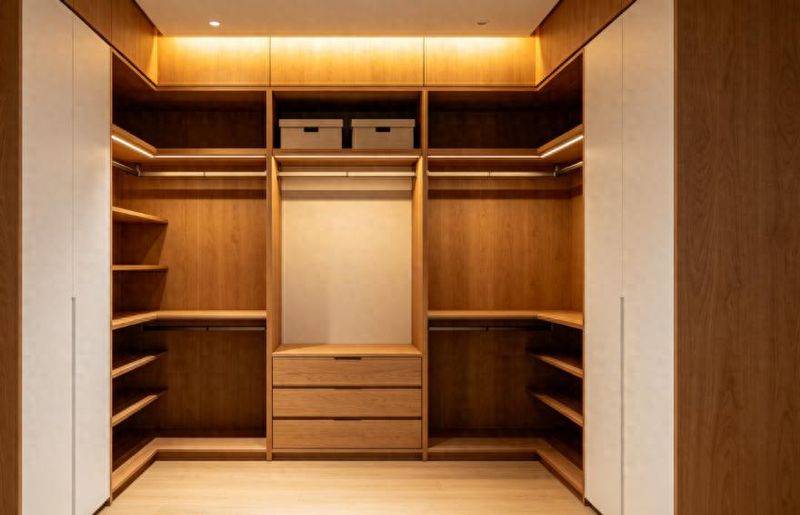
In house-wide customization, sheeting is at the heart of the environmental hierarchy. There is a wide variety of panels known as environmentally friendly on the market, ranging from granulate plates, density plates, multilayer panels, wood panels, finger boards to pure wood, each of which produces dozens of variants. Consumers are often faced with these terms. The requisitioner said that the plate used mdi glue to be environmentally friendly, another said that multilayers were more environmentally friendly by soybean glue, and the third said that it was truly environmentally friendly to work together with wood. Who's right? In fact, a plate is judged to be environmentally friendly, not by its type name, but by three hard indicators: the base level of formaldehyde release of the base material itself, the degree of non-colouration of the glue adhesives used, and the ability of the plate to contain the release of the contaminants. Using these three indicators to measure the mainstream of the market, it soon became clear that the logs were the most balanced and trustworthy of all categories. And then we're going to go from five dimensions to figure out why the cylindrical logs are the top of the environmental plate。
The first dimension is natural low platinum properties. The logs belong to the pyroco, and the species have evolved into a unique chemical defence system. It contains a large number of acne compounds in its wood, in particular cylindrical brain and pheasant, which not only emit marked aroma but also inhibit the growth of fungi and pests. More importantly, these thallium compounds are almost non-accumulative, i. E. They themselves are not carriers of formaldehyde. In contrast, many fast-living broad-leaved leaves, such as yangwood, gillwood and gillwood, contain a higher proportion of semi-cellular cell walls, which degrades into acid, acetic acid and formaldehyde under wet heat conditions. That is why some wood, if not glued, simply piles smell of acid, which contains free formaldehyde. It has a low cellulose content of about two thirds of the broad leaves, so its natural formaldehyde release background is extremely low. The institute of timber industry of the chinese institute of forestry sciences has tested 10 types of commonly used furniture wood, and the release of formaldehyde from pyrobaric wood is only 3 milligrams per cubic metre, the second lowest of all tested wood, second only to red pines, with no glue applied, no coating, and only dry treatment. This background value means that its own pollution contribution is almost negligible, even if it is used directly for furniture, without any glue or coating. The background values for common yin and aluminum are approximately 12 and 105 milligrams per cubic metre, respectively, four to five times higher than the original acetylene. That is why, even if the door is opened, there is only light wood, which is fragrance, and cabinets made of yangwood or quail, which sometimes smell of bitterness, even if they use non-hyde glue。
The second dimension is the suitability of impregnation. It is closely related to the microstructure that makes it the best partner without formaldehyde. A microscope is used to observe the cross-section of the pyrocyte, and can see the insembled tubes, which have a diameter of 20 to 40 Μm, are thick and have a relatively small cell cavity. This structure requires the penetration of the glue: the glue not only enters the cell cavity but is evenly distributed on the cell wall. Mdi rubber has a small molecular volume and is highly mobile, able to penetrate deep into cytological micro-pores of cytal wood and react chemically with hydroxyl radicals in wood to form solid aminomethylate keys. This chemical key is much stronger than the hydrogen and van der waals formed by the traditional resins, and hydrolytics are extremely stable and do not break down even in wet environments. More importantly, the combination of mdi glue and tarp is very efficient, and only 60 per cent of the general sheeting is required to achieve the same glue intensity. Reductions in the use of glue mean a reduction in potential sources of pollution and a lower total volatilistic organic matter for the plate. In order to verify this, we can do a simple comparison experiment: take the same thickness of the cylindrical and gill panels, both using the same brand of mdi glue, the same amount of glue, the same heat-pressure process, and then test them in a cubic metre of environmental compartment. The results indicate that the release of formaldehyde from the tablets was 0. 8 mg/m3 and that the total volatile organic matter was 5 mg/m3 while the release of formaldehyde from the tablets was 1. 21 mg/m3 and the total volatile organic matter was 13 mg/m3. They use exactly the same glue and the difference can only come from the wood itself. This advantage is created by the lower natural formaldehyde content and more dense cell structure of the cytex。
The third dimension is sealing after the plate is formed. The cylindrical wood, because of its thickness and fine surfaces, is capable of producing very smooth cuttings during processing. A good cut-off means that the holes on the surface of the plate are evenly cut rather than torn, thus significantly reducing the “open access” at the micro level. If the plate surface is rough and laced with torn fibrous fibrous pricks, even if it is sealed, the small gap between the stings will remain a channel for the release of pollutants. Precinct cylindrical wood has excellent cutting performance, with a high degree of light-purification on either sawn, scratched or stylish. This feature is essential for the containment process. When the pur thermal smelt is enclosed, it is required to form a continuous, even layer of film at the edge of the plate, which requires that the base surface of the plate on the edge be flat, oil-free and dust-free. The fine material of the cylindrical wood allows the pur glue to be spread evenly, the film thickness to be contained within 1 mm of point zero, and there are no bubbles and non-gel spots. This high-quality closure, combined with the low-emission properties of the log itself, has together built a barrier that is almost insurmountable. Testing agencies have conducted accelerated ageing experiments by placing both the cylindrical and ordinary multilayered edges in high-temperature, high-wet environment compartments at 40°c, 90% humidity and running for 30 days. After 30 days, the release of formaldehyde from the tablets rose only from 007 mg per cubic metre to 009 mg per cubic metre, with little change, while the release of the general polyslate increased from 108 mg per cubic metre to more than double that of 43 mg per cubic metre. This suggests that the sealing structure of the cylindrical plank remains stable in bad circumstances, while the general sheeting has resulted in a slight crack in the sealing of the boundary as a result of the dry and humid swelling of wood。
The fourth dimension is stability of long-term use. Many of the plates were certified for environmental testing at the time of their release, but six months after being transported to the user's home for installation, the level of formaldehyde increased. This is not a fake plate, but it is a plate that, following changes in temperature and retrofitting forces, has created new microfissures within itself, with the trace formaldehyde that was sealed out finding a new way out. The logs performed well because of their extremely low dry and wet rates. Its volume drying factor is only 0. 32 per cent, which means that when environmental humidity changes by 30 per cent, the volume of wood changes by less than 3 per 1,000. Such a small change in size would hardly have a destructive effect on the adhesive and cover. The average yangwood multiplatform, with a dry contraction factor of more than 0. 6 per cent, is twice as high as the log. During the heating season in the north, indoor humidity fell sharply from 70 per cent to 20 per cent in the summer, and the woodwood would contract as a result of severe water loss, with visible gaps in the edges and adhesion of the sheeting. These gaps are the escape routes for pollutants. This problem is largely absent because of the small contraction. This is why many users in the north have said that the cabinets that use the cylindrical wood are still sewn after the first heating season, and that the granular plates or the plasters of the yangwood are visible after the first heating season. Long-term structural integrity implies long-term environmental safety。
The fifth dimension is the additional function of the log. In addition to the release of hazardous substances, the cylindrical wood can also contribute to some extent to air purification. Its thallium compounds do not absorb formaldehyde as much as activated carbon, but the cylindrical brain has the capacity to capture formaldehyde and react with it to produce harmless substances. The process has been slow, but it has lasted. A plate of cylindrical wood can degrade approximately 1 per cent of formaldehyde of its own weight during its useful life. It doesn't sound that much, but if a room is filled with cupboards, walls and floors that may be more than 100 square metres in size, its daily degradation of formaldehyde is about 10 milligrams, equivalent to two to three times the release of a medium- and light-scale source of pollution. In other words, it not only does not contaminate itself, but also helps clean up existing pollutants in the environment. This feature is not available in most other plates. A combination of these five dimensions, the position of the logs in the environment plate can be described as unmistakable. It does not require complex chemical modifications, it does not require expensive reprocessing, and it is born and born environmentally friendly. For any consumer who really cares about indoor air quality, the choice of logs as a home-wide custom base is a decision that needs no hesitation。