


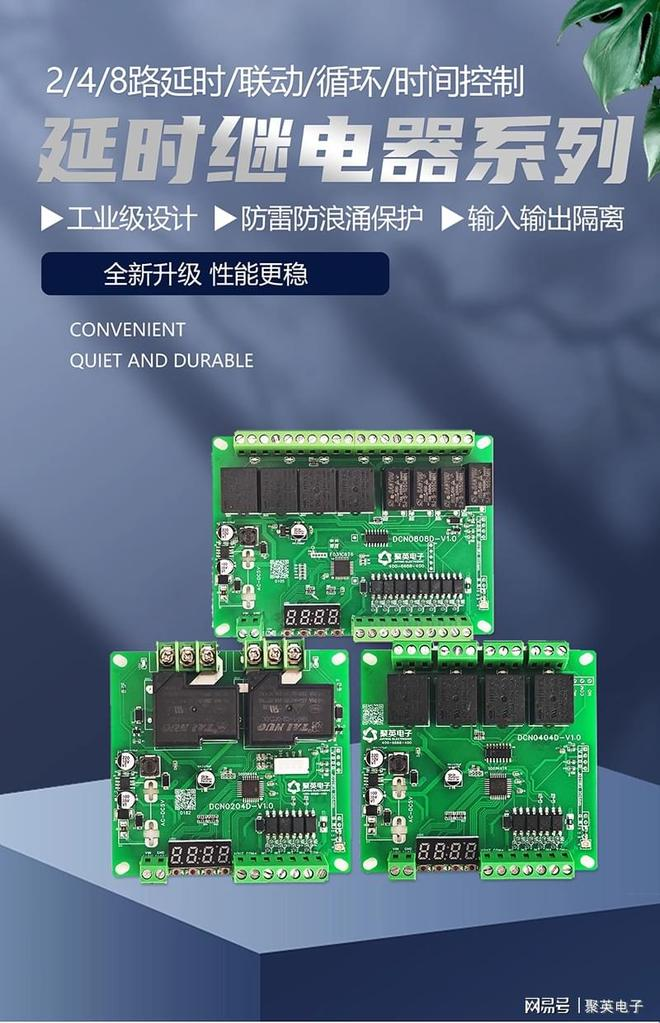
Delay relays are a control element that is widely applied in electrical systems to provide time management flexibility for applications by achieving time-locking or disconnecting controls in circuits。
Delay relays
Normally, the delay relay is triggered by a controlled voltage, which may be any voltage consistent with the function of the electrical equipment. Delay relays consist mainly of two important circuits: timer circuits and relay circuits. Timer circuits can be adjusted through external bits (or knobs) to achieve different time lags. Relay circuits are responsible for actions after the end of the unit delay, which users can adjust flexibly to specific application needs。
Description of parameters
Function list:
The entry-run mode is displayed after the three-second functionality interface is displayed on the device。
P-1: self-lock: enter a switch signal, corresponding to a relay conductor; re-enter the switch signal, and the relay is independent of each road;
(b) p-2: non-lock: always input a switch signal, corresponding to a relay guide; break the input switch signal, and break the relays independently of each other;
(a) p-3: interlocking: input switch signals, relays channeling other relays, re-entering switch signals, relays disconnecting, and only working at the same time;
P-4: enter a switch signal, which corresponds to a relay guide that is disconnected after a certain period of time, is configured, the switch signal is not entered again during the time extension and only works at the same time;
P-5: enter a switch signal, corresponding relay conductor is disconnected after a certain period of time, time is configured, the switch signal is recalculated during the time extension and only works at the same time;
P-6: enter a switch signal, which corresponds to a relay guide that is disconnected for a period of time and is configured, and enters a switch signal relay again during the time extension, and works only at the same time;
P-7: enter a switch signal, which corresponds to a relay guide that is disconnected after a certain period of time, is configured, the switch signal is not entered again during the time extension, each road is independent of the other, and multiple routes are available at the same time;
P-8: enter a switch signal, which corresponds to a relay guide that is disconnected after a certain period of time, is configured, re-enters the switch signal during the time extension, is independent of each other, and multiple routes are available at the same time;
(a) p-9: enter a switch signal, corresponding relay conductor is disconnected for a period of time, time is configured, the switch signal relay is again disconnected during the time extension, each road is independent of the other, and multiple routes are available at the same time;
(a) p-10: enter switch 1: relay 1 leads to time a, followed by relay 2 leads to time b, followed by relay 3 leads to time c, followed by relay 4 leads to time d; and enter switch 1 to repeat previous actions;
Enter switch 2: relay 1 leads to time a, followed by relay 2 leads to time b, followed by relay 3 leads to time c, followed by relay 4 leads to time d; unlimited cycle。
Input switch 3: relay 1 leads 100 ms off, wait a time, relay 2 leads 100 ms off b time, relay 3 leads 100 ms off c time, relay 4 sorption 100 m off d time; infinite cycle
P-11: enter switch 1: repeater 1 time extension a time extension, followed by extension 2 time extension b time delay, followed by extension 3 time delay c time period, followed by extension 4 time delay d time time period;
Enter switch 2: disconnect after relay 1 time extension a time, then after extension 2 time extension b time, then after extension 3 time extension c time, then after extension 4 time extension d time;
Enter switch 3: all relays are disabled;
P-12: enter switch 1: disconnect after a-time, delay b, cycle c (wheel irrigation mode)
Enter switch 3: all relays are disabled;
P-13: enter switch 1: disconnect after relay sequence channel a, delay b, unlimited cycle (wheel irrigation mode)
Enter switch 3: all relays are disabled;
P-14: always input switch 1: relay 1 is disconnected at a time, waiting for b time, unlimited cycle;
Disconnect input switch 1: relay 1 disconnected;
Always enter switch 2: relay 2 to c time disconnected, waiting for d time, endless cycle
Disconnect input switch 2: relay 2 disconnected;
Always enter switch 3: relay 3 power e time disconnected, waiting for f time, endless cycle
Disconnect input switch 3: relay 3 disconnected;
Always enter switch 4: relay 4 connects to g time, waiting for h time, endless cycle
Disconnect input switch 4: relay 4 is broken;
P-15: enter switch 1: relay 1 control a time disconnect
Enter switch 3: relay 2 conductor b time off;
Over time c: no switch 2 entered and relay 2 conduit b disconnected;
P-16: always enter switch 1: relay 1 lead, disconnect input switch 1: relay 1 break
Enter switch one, relay two, switch one, relay two
Enter switch one, relay three, switch one, relay three
Enter switch one, relay four, break input one, relay four, break:
Recycle implementation;
P-17: always enter switch 1: relay 1 conductor, disconnect input switch 1: relay 1 delay a time after time;
Once again, enter switch 1: relay 2 conductor, disconnect input switch 1: relay 2 delay b time after break;
Enter switches once again: relay 3 conductor, disconnect input switch 1: relay 3 time c time after c time;
Once again enter switch 1: relay 4 conductor, disconnect input switch 1: relay 4 time extension d time after break;
Recycle implementation;
Apply scene
The functions of the time-delay relays are diverse and powerful, and multiple functions, such as automatic control, security protection and so forth, can be achieved through the rational setting of the time-delay parameters to improve the reliability and stability of the system。
Equipment characteristics:
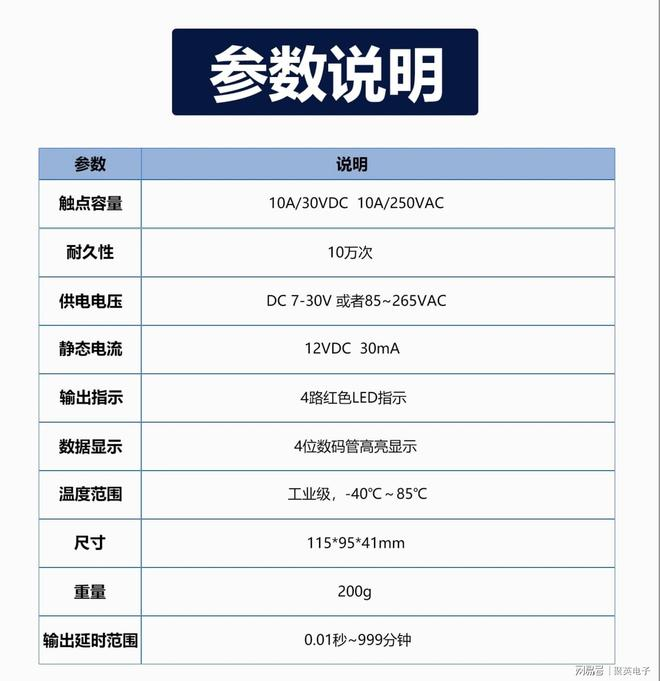
1. The time delay is broad: it is broad and usually varies according to the specific model, generally ranging from a few milliseconds to a few hours to accommodate the needs of multiple application scenarios。
2. High precision and stability: high time-delayed accuracy and stability, allowing long periods of steady work to meet the need for precise controls under various environmental conditions。
3. Time delay is truncable: it is time delay that allows users to adjust the time delay according to actual needs to meet different application needs and is practical。
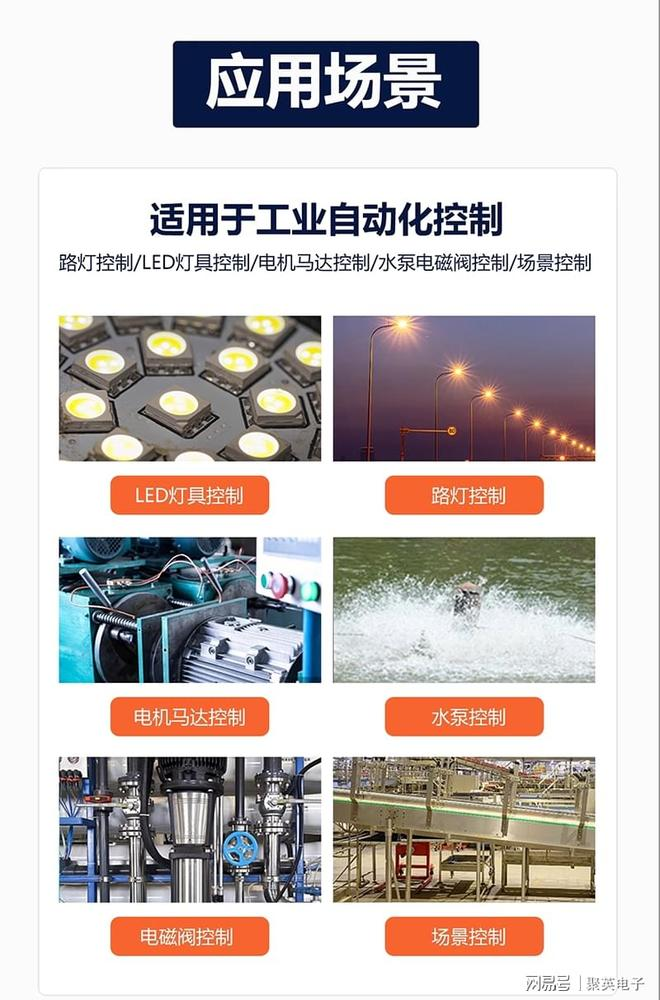
4. Broad application: the use of late relays is extensive, including, but not limited to, automated production lines, mechanical equipment, instrumentation instruments, street lights, household appliances, led lighting, motor motors, pumps, electromagnetic valves, etc。
Strong support is provided for the safe, reliable and efficient operation of electrical systems through scientific applications of time-delay relays。



