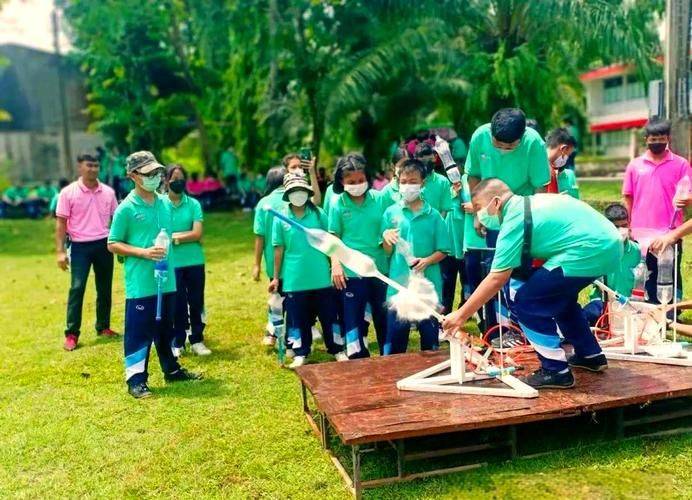
On the morning of 27 july, the institute of physical and telecommunications engineering conducted a specialty science and technology water-making rocket campaign at the secondary school service in windward. Students at the royal high school are keenly interested in life creative production with physical knowledge. The aim of this scientific and technological production of aquatic rockets is to increase the hands-on ability of students to discover physical phenomena from life and to use the physical principles around them to complete the production of a water rocket。
In the classroom, teachers broadcast a two-minute water rocket flight video based on the principles of water rocket production, boosting the interest of students in the course and helping them understand the application of newton iii in life. The classroom response is very active and actively involved in the discussion of issues related to atmospheric pressure, force and reaction in the classroom, which has achieved the desired results. The teacher produced the model of a water rocket and its decomposition, and the students followed the teacher's explanation and modeled it with ready plastic bottles and tape, and the students were intoxicated in the ocean of physics and the classroom atmosphere was particularly active. In the course of the production, despite the difficulties encountered by the students, they completed the complete water rocket model with the careful guidance of their teachers and mutual assistance。
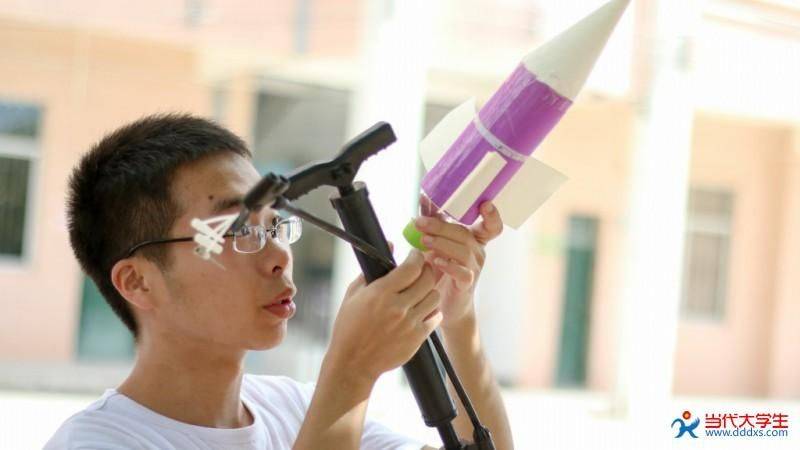
The launching of rockets would have to be costly and not physically experienced. However, a model of a water rocket produced by plastic bottles instead of rocket casings and by pressured air and water instead of rocket gas can simulate rocket up. This water-rocketing campaign has stimulated interest in scientific exploration, increased the hands-on practical skills of students, increased environmental awareness of recycling and enhanced communication and friendship between members of the teaching community and chinese high school students。
Author: huang hee-hyun
Reader: sun zheng yun
Contribution: board of the faculty of physics and telecommunications engineering, china teachers university, ycl
27 july 2016