Application for free probation, counselling telephone: 400-8352-114
Hydraulic unit failure testing and diagnosis
Summary: based on theoretical learning, basic knowledge of the hydraulic test test principles, the cause of vibration, vibration analysis, mechanical vibration analysis, the diagnostic content, methods, etc. Of the malfunction of the aircraft. An analysis of the current configuration of large hydroelectric units and their causes of failure, combined with the operationalization of the power grid and hydroelectric plants, and the establishment of a system for monitoring the operational stability of large hydroelectric units and for the diagnosis of failure, provide an effective and reliable basis for the diagnosis of the stabilization of the aircraft。
Keywords: hydropower units
Introduction: as industrial production and science and technology develop, the sophistication of electrical and electrical equipment becomes more sophisticated and the level of automation increases accordingly, and in the event of a failure of the equipment, the equipment will not only be damaged but will also pose a great threat to people's lives and lives. Thus, ensuring the proper and safe operation of the large hydroelectric power units, detecting their operational status, detecting signs of failure in a timely manner, ensuring that “pre-screening” is not an ideal for the engineering community and is the direction in which the large power plants are being overhauled。
The stability of the work of the water turbine generators is an important indicator of their performance, and the problems of stability are manifested in different forms of vibration. As a result, the analysis of vibrations became an important introspection for the stability of the crew. Large-scale electrical equipment, which is vital to the lifeline of the national economy, ensures the normal and safe operation of the large-scale hydroelectric power plant, monitors its operational status, detects signs of failure in a timely manner, makes it an ideal for the engineering community to pre-empt the damage, and is the direction of the major power plant。
I. Overview of crew failures
Fault research, forecasting and analysis technologies
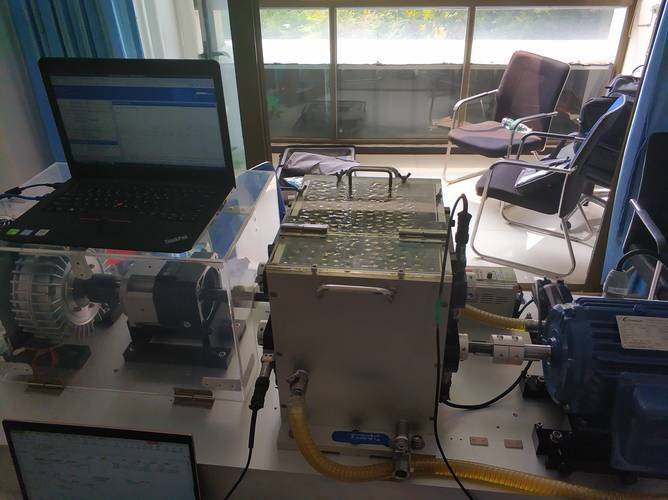
The failure factor study is the basis for the failure diagnosis of mechanical equipment. An in-depth study of the kinetic properties of mechanical equipment during exercise and the interrelationship between components, as well as of the symptoms and possibilities arising from normal operation of the equipment and its failure, is a prerequisite for state monitoring and failure diagnosis of the mechanical equipment. Theoretical research consists mainly of vibration theory, friction theory, aerodynamics theory, material failure theory, etc. Associated with mechanical equipment。
Fault forecasting is one of the important tasks of equipment diagnostics. An analysis of the changing status trends and maintenance status of the entire equipment and the computation of its residual life will effectively determine the entire service life and end-of-service time of the equipment and provide the basis for system maintenance, end-of-life and improved design。
The strategies and methods used for forecasting and analysis include, inter alia, failure prediction methods based on state models, process-based long-term forecasting methods and integrated failure forecasting systems。
Diagnostic decision-making techniques
By diagnosing the malfunctions, it is possible to identify the parts of the malfunctions, analyse the causes of the malfunctions and propose methods for their removal, thereby improving the suitability and integrity of the equipment and reducing the financial life-cycle costs of the equipment。
Various diagnostic decision-making methods, such as model identification, neural networks and specialist systems, have been developed over the years at home and abroad, in particular the establishment of a large number of specialized fail-diagnosis specialist systems。
Question of the diagnosis of failure in the operation of the plant unit:
The vibrations of the water turbine generator set are significantly different from those of a power machine, and the causes and factors that cause and affect the vibrations of the water turbine generator set are more numerous and complex than those of a power machine, not only because the components that make up the entire system interact with each other, but also because of the dynamics of the crew。
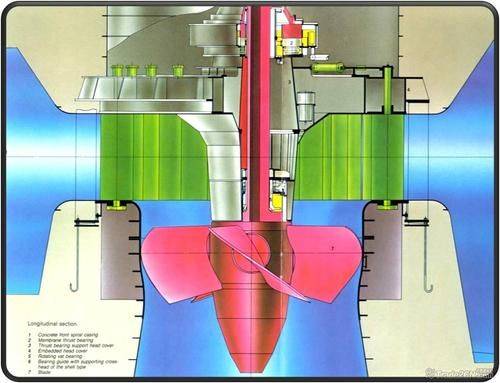
Ii. Characteristics of vibration faults in water wheel generators
Inevitably, the cutting machine operates with varying degrees of vibration. As with other power machines, there is also a degree of vibration in the water tanker generator set in operation. However, due to the special nature of the work of the water turbine generator sets, their vibration failure varies considerably from that of the general power machinery, and is complex, conjunctive and non-one-size-size-fits-all。
(i) complexity of vibrations of water turbine generator sets
The main examples are:
1. There are often several sources of vibration that are present at the same time, and it is difficult to distinguish between priorities and their interrelationships
A combination of individual parts or parts, as well as components and parts
3. Both general shock and resonance, as well as multiple frequency and self-heated vibration
4. There is a wide variety of vibrating forces, with the combination of the various vibrating forces operating at random groups operating differently (disable magnetics, airborne magnetics, loads, adjustments)。
(ii) concordability of the vibration of the water turbine generator team
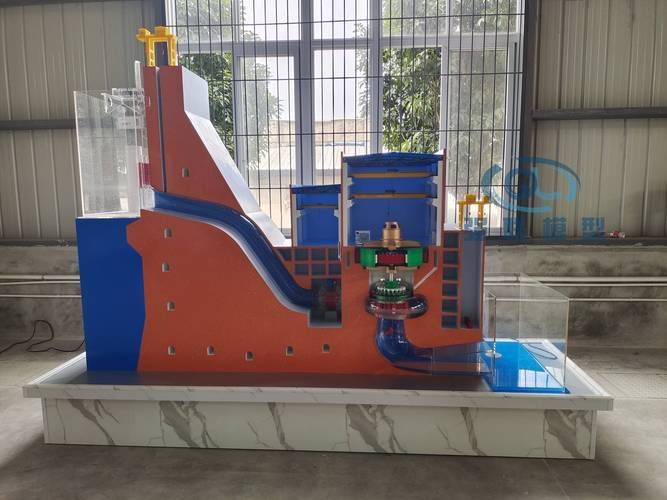
Conjunctiveness is manifested not only in the interaction of the parts that make up the system as a whole, but also in the interaction and constraints between the factors that cause the crew vibration. In the case of vertical vibrations of the crew axial systems caused by water pressure pulses, this would result in vibrations of the rotor's locomotives and magnetic poles, which would result in an uneven air gap between the generator's rotor and the fixed, resulting in asymmetric magnetic pull, which would in turn exacerbate or block the vibration of the rotational parts of the unit。
Thus, for the vibration of the water turbine generator set, in addition to considering the vibration of the rotating or fixed parts of the unit itself, consideration should be given to the impact of the hydro-power extraction system caused by the water-handling pressure of the liquid flow, the overflow components of the water turbine and the electromagnetic power of the generator on the vibration of the unit。
(iii) non-compatibility of vibration failure and features of the water turbine generator team
The failure characteristics of the water turbines ' vibrations are often reflected in multiple ways, there is a marked cross-section of the different features of the failure, the failure and the characteristic are not a one-to-one relationship, and a malfunction is characterized in multiple ways. At the same time, ultra-normal vibrations in a given part may be the sum of several faults, while vibrations caused by a given malfunction may also be reflected to varying degrees in several parts。
The combination of these characteristics of the vibrations of the water turbines, which are present in the aircraft, makes it difficult to describe the degree and existence of the vibrations in an accurate language, which undoubtedly poses some difficulties for the analysis of the failure, and is one of the reasons for the slow development of the technology to diagnose the failure of the water turbines。
Iii. Motivation of water tanker generator sets
Although the vibrations of the water turbine generator sets are complex and conjunctive, when analysing the cause of their vibrations, it is very difficult to study them exclusively in terms of their coupling. It is difficult to establish mathematical models that can be used for analytical calculations, and even taking into account the interaction of these genes in the experiment is not easy to draw conclusions. We therefore also begin with the three main factors that trigger its vibrations, by studying the dynamics of its vibrations to extract information that will help solve the problem。